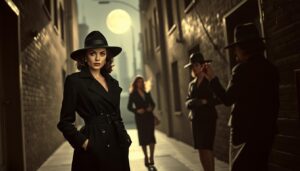
Let’s go back to a time when World War II’s smoke was barely gone. The movies were reflecting the trauma, but not with happy tunes. Instead, they showed dark shadows, cynicism, and a low hat.
1947 was more than just a year. It was the peak of film noir, a mix of cultural worries, studio demands, and bold director moves. Imagine it as the genre’s big coming-of-age party, with a twist of deep sadness.
Post-war America was full of contrasts: victorious but worried. With tighter budgets, movies turned gritty and real. They focused on the tense vibe of a wet alley, not glamour.
So, why did 1947 stand out for its dark movies? Let’s explore the reasons behind this year’s intense noir films. We’re getting ready to see how these movies shaped a whole generation’s thoughts.
Top Noir Films Released
In 1947, 53 noir films flooded the screens. Choosing a “top ten” is more fun than serious. Each film showed the world’s cynicism, a unique reflection of the postwar era. It’s not about picking the best, but seeing which nightmares have become timeless.
Out of the Past by Jacques Tourneur is unforgettable. Robert Mitchum’s voiceover sets a tone of doom. Nightmare Alley shows Tyrone Power’s descent into geekdom, a story of ambition that’s more relevant today.
Brute Force captures the era’s tension and rage in a prison setting. Burt Lancaster is at its core. Born to Kill features Lawrence Tierney as a chillingly amoral character, a force in a sharp suit.
What makes these films last? They bravely explored the human condition.
- Crossfire weaves a murder mystery with a strong anti-Semitism message.
- Kiss of Death introduces Richard Widmark’s Tommy Udo, a debut that redefined villains.
- T-Men uses a documentary style to make crime fighting seem dangerous.
- Possessed shows female neurosis as a terrifying aspect of noir.
Even lesser titles in 1947 were innovative. The Lady from Shanghai has Orson Welles’ iconic finale. Dark Passage uses first-person perspective. To see the best of the genre, many 1947 films are at the top.
The top films of 1947 share a common theme: an honest look. They examine broken systems, corrupted souls, and the truth. They’re not just entertainment. They’re a mirror, cracked and smoked, asking, “See anything familiar?”
Notable Directors & Debuts
Behind every iconic frame of 1947’s noir output stood a director. This year’s lineup was a murderer’s row of visual stylists. It was a director’s playground where established maestros sharpened their tools and new voices arrived with something vicious to say.
What separates a mere shot-caller from a true stylist? Look at the work. Jacques Tourneur didn’t just film Out of the Past; he painted with shadows and moral ambiguity. Anthony Mann brought a jarring, docu-noir grit to T-Men, making every dollar bill and sweat stain feel terrifyingly real.
Then you had the actors stepping behind the lens. Robert Montgomery took the helm for the oddly titled Ride the Pink Horse, bringing a performer’s intuition to the director’s chair. It was a year of fascinating experiments.
The sheer volume of talent is staggering. Consider this roster who helmed key releases in 1947:
- The psychological stylists: Robert Rossen, Vincent Sherman, Curtis Bernhardt.
- The masters of tension: Jules Dassin, John Cromwell, Edward Dmytryk.
- The versatile veterans: Delmer Daves, Robert Wise, Henry Hathaway, Edmund Goulding.
- The looming giants: Orson Welles and Elia Kazan, forever changing the game.
Jules Dassin, for instance, delivered two distinct tones. Brute Force was a brutal, claustrophobic prison drama. The Naked City (filmed in ’47, released in ’48) would later pioneer location-based realism. Curtis Bernhardt offered sophisticated, psychological torment in Possessed.
But perhaps the most seismic debut of the year wasn’t behind the camera. It was in front of it. Richard Widmark’s cackling, wheelchair-pushing Tommy Udo in Kiss of Death instantly etched a new archetype of psychotic villainy into Hollywood’s DNA. His performance was so direct, so controlled, it felt like a form of authorship itself.
These directors used the noir framework to conduct their own dark symphonies. They took the standard script and filtered it through their unique lenses. The result was a year where the director’s signature became as important as the star’s name on the marquee for these key releases. This creative explosion defined the cinematic texture of 1947, making it a foundational year for auteur-driven noir.
Analysis of Noir’s Cinematic Trends
The year 1947 was a turning point for noir films. It set the stage for the genre’s future. The techniques used then became the standard for all dark thrillers.
Noir films were more than just black and white. They were a way of seeing the world. Cinematographers like Nicholas Musuraca and John Alton used light and shadow to create mood. A simple blind became a symbol of confinement.
Storytelling in noir films was also innovative. In Dark Passage, the camera was a character. It showed the world through the eyes of the protagonist, creating a sense of unease.
Flashbacks in films like Brute Force were not just for backstory. They were a way to show the harsh contrast between freedom and prison. This contrast was a form of psychological torture.
The dialogue in noir films was unique. It was short, witty, and often menacing. It felt like the characters were speaking from the streets, adding to the tension.
Despite small budgets, noir films were grounded in reality. They used real locations and simple sets. This made the stories feel more real and intense.
T-Men used a documentary style to tell its story. This added to the film’s sense of authenticity, making the fiction even more chilling.
This table shows the key elements of 1947’s noir revolution. Each technique helped create a world of moral complexity and fear.
| Technique | Film Example | Purpose / Effect | Key Practitioner |
|---|---|---|---|
| Subjective Camera (First-Person POV) | Dark Passage | Forces audience identification with the protagonist; creates disorientation and paranoia. | Director: Delmer Daves |
| Chiaroscuro Lighting | Out of the Past | Sculpts with darkness to hide, reveal, and symbolize moral grayscale. It turns shadows into characters. | Cinematographer: Nicholas Musuraca |
| Psychological Flashback | Brute Force | Contrasts past hope with present despair; uses memory as a tool of psychological torture. | Director: Jules Dassin |
| Snappy, Pulp-Fiction Dialogue | Kiss of Death, Crossfire | Establishes character and era quickly; adds rhythmic, hardboiled wit and tension to every exchange. | Writers: Ben Hecht, Charles G. Booth |
| Documentary-Style Realism | T-Men | Lends authentic, procedural gravity to the narrative; makes the fictional threat feel terrifyingly real. | Cinematographer: John Alton |
In conclusion, 1947 was a peak year for noir films. It wasn’t just about following a formula. It was about artists finding new ways to explore fear, desire, and truth. Their work continues to influence us today.
Cultural Impact
Watching a 1947 noir film is like feeling the pulse of postwar America. The war was over, but the peace felt chaotic. These films showed the nation’s hidden fears in black and white.
The haunted veteran was more than a character; he was a neighbor. Millions of G.I.s came home with PTSD. The films showed unstable, paranoid heroes who couldn’t trust themselves or the world.
The women in these films were not just fantasies. They were a reflection of women’s newfound freedom. Women had worked in factories and homes while men were away. Now, they were not going back to their old roles quietly.
These films were not just entertainment. They were a call for new realism. The public had seen too much. The films’ gritty look was partly due to budget cuts.
The House Un-American Activities Committee (HUAC) cast a shadow over everything. Their hunt for communist influence affected the industry. Body and Soul, a boxing noir, was a critique of corrupt systems. Its writer, Abraham Polonsky, was soon blacklisted.
Even glamour was not safe. The Lady from Shanghai showed Orson Welles’ wife, Rita Hayworth, in a new light. He made her a cold-blooded manipulator. The public was shocked, wanting the “Gilda” fantasy instead.
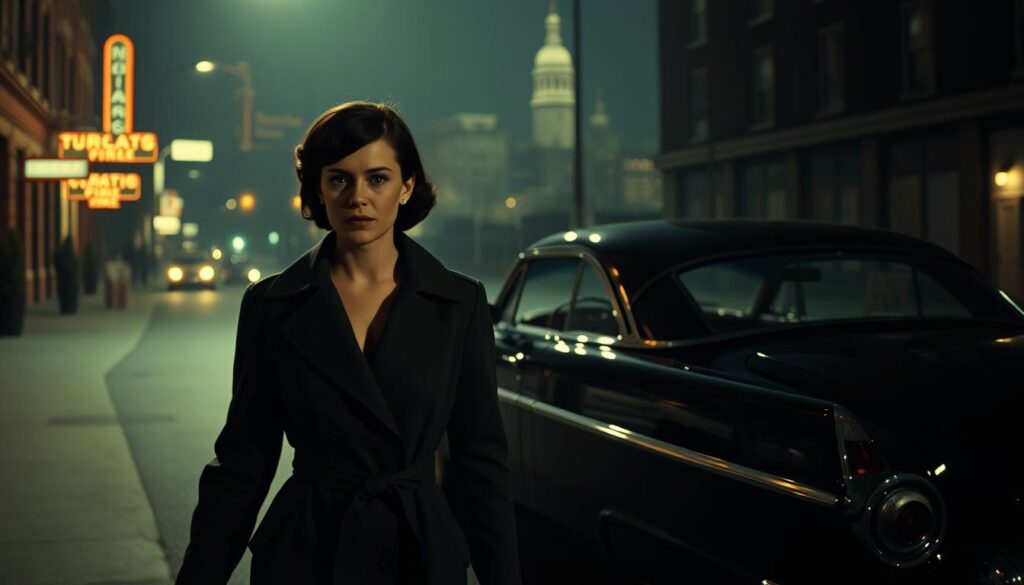
The 1947 noir films were like a collective therapy session. They tackled the era’s fears: mistrust, corruption, and lost certainties. The private eye was not just solving cases; he was navigating a lost society.
The connection between the films and real America is clear. The table below shows this mirror effect:
| Noir Trope On-Screen | 1947 Reality Off-Screen | Film Example |
|---|---|---|
| The Haunted, Unstable Veteran | Returning G.I.s with undiagnosed PTSD & adjustment trauma | Crossfire (prejudice as a symptom of trauma) |
| The Independent, Dangerous Femme Fatale | Women’s newfound economic & social independence post-WWII | Out of the Past (Jane Greer’s utterly self-possessed Kathie) |
| Corrupt Systems & Untrustworthy Authorities | The rise of HUAC, blacklists, and political paranoia | Body and Soul (the boxing racket as a metaphor) |
| Claustrophobic Urban Decay & Low Budget Aesthetics | Loss of foreign film revenues leading to cheaper production | Kiss of Death (gritty, location-based New York realism) |
| The Cynical, Isolated Protagonist | The atomization of society and erosion of community trust | Dark Passage (a man literally and figuratively on the run) |
In conclusion, the 1947 noir films did more than define a genre. They captured a national mood. They showed that popular culture can reflect and critique its time. This year in review shows that the most powerful shadows are often our own.
Star Performances (e.g., Robert Mitchum)
Forget the red carpet; 1947’s key releases were a masterclass in cinematic self-sabotage by A-list talent. This wasn’t the year for the heroic close-up. It was the year for the sweat-stained close-up, the paranoid glance, the performance of glorious, inevitable failure.
The anti-hero became the only role worth playing. Major stars used the noir framework to pick apart their own gleaming Hollywood images. What emerged was a darker, more complex vision of desperation that forever changed how we see the leading man and woman.
Let’s start with the blueprint: Robert Mitchum in Out of the Past. Mitchum didn’t just play a private eye; he performed a philosophy. His sleepy-eyed, fatalistic cool wasn’t an act—it was a resignation notice to a corrupt world. He made passivity look like the only rational, even stylish, response. This was the birth of a specific kind of cinematic cool we’re all copying today.
Then came the voluntary falls from grace. Tyrone Power, the ultimate matinee idol, dove headfirst into the sleazy abyss of Nightmare Alley. Watching his charismatic mentalist Stanton Carlisle degrade into a drunken geek was a shocking, brilliant betrayal of his own heartthrob status. It was a star telling his audience, “This glamour you love? Let me show you the grime underneath.”
Joan Crawford performed a parallel demolition. In Possessed, she traded her signature shoulder-pad power for a gripping, Oscar-nominated psychological unraveling. Her descent into obsession and madness was raw, unglamorous, and terrifyingly effective. Crawford proved the most powerful performance could be one of complete collapse.
Other actors built new archetypes from sheer physical and psychological force. Burt Lancaster’s contained, volcanic fury in Brute Force gave us stoicism as a ticking time bomb. And who could forget Richard Widmark’s iconic debut in Kiss of Death? His giggling, psychopathic Tommy Udo wasn’t just a villain; it was an electric jolt of pure, scene-stealing menace that rewrote the rules for bad guys.
| Actor | Film | Performance Archetype | Lasting Impact |
|---|---|---|---|
| Robert Mitchum | Out of the Past | The Fatalistic Anti-Hero | Codified “cool” as weary resignation; the blueprint for doomed protagonists. |
| Tyrone Power | Nightmare Alley | The Deconstructed Idol | Proved a star’s greatest power could be the willing destruction of his own image. |
| Joan Crawford | Possessed | The Psychological Unraveling | Elevated female hysteria into a complex, Oscar-worthy study of obsession. |
| Burt Lancaster | Brute Force | The Stoic Pressure Cooker | Demonstrated that silent, physical rage could be more compelling than dialogue. |
| Richard Widmark | Kiss of Death | The Iconic Menace | Created a new template for the cerebral, unnervingly cheerful psychopath. |
Collectively, these performances were a statement. They moved the needle from simple heroics to complicated humanity. They explored the darker facets of masculinity—the weakness, the rage, the resignation—and gave us a female lead defined by psychological fracture, not romance. The stars of 1947 didn’t just act in noirs; they used them to excavate something real, messy, and profoundly modern. The Hollywood archetype never fully recovered, and we’re all the better for it.
Retrospective Reviews
What do you call a film that fails at the box office, gets slammed by critics, and later becomes a classic? A typical 1947 noir. The first reactions to these films were harsh. Studio heads must have needed a drink. Critics were sharp, and most people stayed home.
Born to Kill is a prime example. The New York Times‘s Bosley Crowther called it trash. Now, it’s known for its deep psychology and bold themes. It was too intense for 1947.
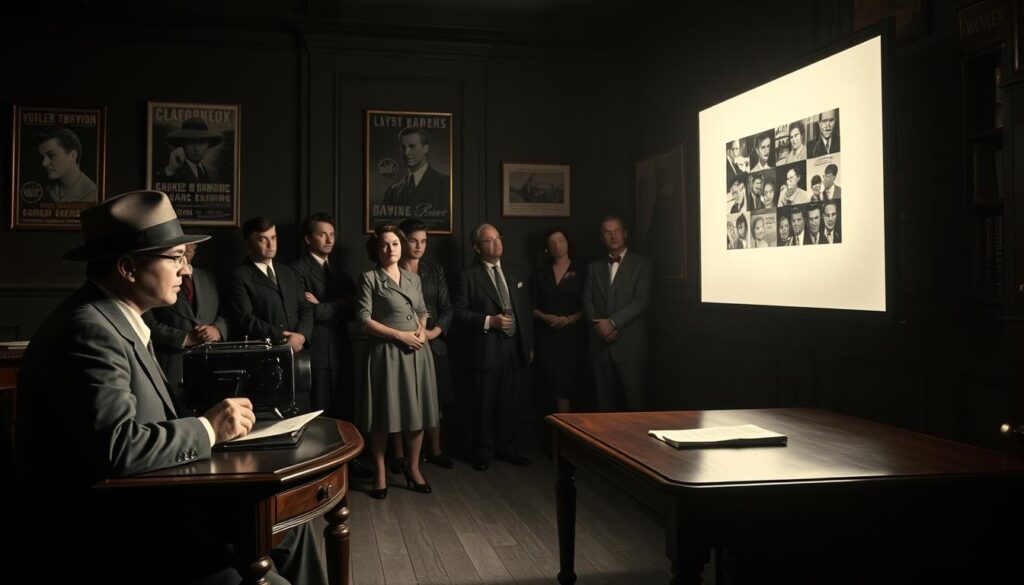
The Lady from Shanghai is another case. Orson Welles’ famous finale is now a highlight. But back then, it was a flop. The studio messed it up, making it confusing. It was too complex for its time.
Nightmare Alley also faced rejection. Tyrone Power played a desperate carny. His fans were puzzled. The film lost money, but now it’s a cult classic.
So, why do we now see these films as masterpieces? It’s simple: we see them as uncompromising art. They were just too early for their time. Their themes of doubt and complex heroes are now seen as prophetic.
Today, we distrust institutions and question morals. This year in review is a celebration of these films. They were too dark and strange for their time but are now key to understanding our world.
Some films, like Out of the Past, were loved from the start. It’s a classic that shows even in 1947, some films were ahead of their time.
The lesson is clear. Time is the ultimate critic. And time has shown us that the 1947 noir films were not wrong. We were just late to appreciate them.
Legacy of 1947 Noir
So, what’s the final reel on 1947’s noir legacy? It wasn’t just a peak. It was the summit.
This year in review shows a genre firing on all cylinders. The DNA of key releases like Out of the Past and Kiss of Death spliced itself into future cinema. The French New Wave borrowed its existential cool. Modern neo-noir owes it a debt.
The archetypes born here became reusable templates. The doomed private eye, the ambiguous femme fatale, the corrupt businessman—they all got their definitive polish in ’47. As Tyrone Power’s carnival barker in Nightmare Alley learned, some visions you can’t unsee.
Hollywood looked into its own polished crystal and projected a fractured reflection. The 1947 roster had many more films of merit than we can list. Their long, stylish shadow proves that the best year in review is one we’re all watching.