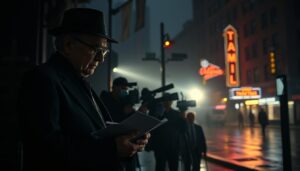
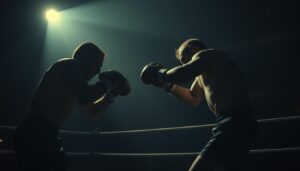
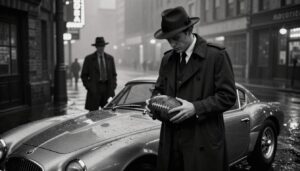
Let’s take a closer look at the so-called Golden Age. Imagine postwar America, full of smiles and shiny dreams. But there was a nervous tick in the air.
Political paranoia was everywhere, thanks to the House Un-American Activities Committee (HUAC). They were spraying it all over.
In Hollywood, the mood changed from creative to corrosive. HUAC made actors, writers, and directors name names. They had to expose communist sympathizers or face career death.
This wasn’t just about politics. It was a chilling change in the creative rules.
So, how did art survive when speaking out could get you blacklisted? It learned to speak in code. The looming threat didn’t kill creativity in 1950s cinema. Instead, it led to a brilliant, shadowy evolution.
This tense environment became the twisted muse for film noir. Forget the red carpet—this was the era of red scares. I’ll explore how fear and censorship didn’t just silence artists. They fundamentally changed how stories were told, giving birth to a genre where shadows on screen mirrored the ones in the boardroom.
Rise of Studio Blacklist
HUAC set the stage, but the studio bosses built the gallows. They made a deal that drained creativity. The blacklist started when executives chose safety over art.
The Waldorf Statement in November 1947 was the spark. Major studio heads met at New York’s Waldorf-Astoria. They decided to publicly fire the “Hollywood Ten” and not hire anyone suspected of being communist. This was a cowardly move, hiding behind patriotism.
The purge was efficient and scary:
- Loyalty Oaths: You had to swear allegiance to work.
- The “Cleared” List: Approved writers could work, but had to deny past ties.
- The Black Market: Writers like Dalton Trumbo worked secretly, getting paid little.
The cost was huge. People were forced to betray friends. Those who named names were seen as traitors. Others were silenced or left the country.
Directors like Otto Preminger were banned. Writers hid in the shadows. The impact was real, causing financial and family problems.
The blacklist era is a painful memory. Debates about naming names versus staying silent are common. The studio boardrooms became like HUAC, with worse effects.
| Mechanism | How It Worked | Direct Human Impact |
|---|---|---|
| The Waldorf Doctrine | Studio pact to fire & not employ “subversives.” | Instant unemployment for the Hollywood Ten; set industry-wide precedent. |
| Loyalty Oath System | Contractual requirement to swear political allegiance. | Forced public renunciations; created an atmosphere of coerced conformity. |
| Cleared List vs. Blacklist | Two-track employment: approved writers vs. banned ones. | Fostered a culture of informing; careers depended on political clearance, not talent. |
| Fronts & Pseudonyms | Blacklisted writers sold scripts under fake names for lower pay. | Financial exploitation; artistic credit stolen; lived in constant fear of exposure. |
The studios didn’t just fold. They created the system for the purge. The drama turned bureaucratic, and the art form suffered.
Ways Censorship Changed Scripts/Tone
In the 1950s, censorship didn’t cut out words like scissors. Instead, it warped stories into odd shapes. Scripts from before the war were bold and clear. But they had to change, becoming darker and more complex.
Makers of movies became like Houdinis. They hid messages in stories. For example, The Prowler told of a man trapped by a corrupt system. Invasion of the Body Snatchers showed the fear of being controlled.
Even though censorship was strict, creativity found ways to survive. Writers and directors worked secretly, using fake names. This hidden work brought out the most daring ideas.
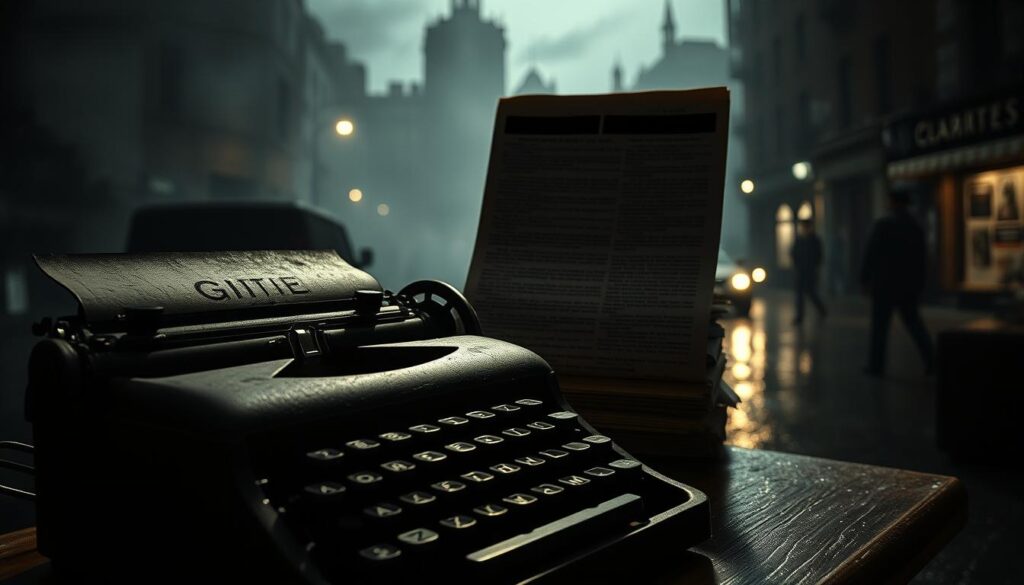
Noir films became perfect for hiding messages. The voiceovers were like whispers of doubt. The complex plots reflected the confusion of being accused.
The heroes in these films were often outsiders. They showed the deep distrust of authority. This made the films both dark and thought-provoking.
| Narrative Element | Pre-Blacklist Expression | Post-Blacklist Substitution |
|---|---|---|
| The Hero | Hopeful, populist figure; a man of the people. | The alienated anti-hero; a paranoid outsider trapped by the system. |
| Central Conflict | Clear good vs. evil, often with social reform as the goal. | Ambiguous moral quagmires; the individual vs. an omnipresent, corrupt establishment. |
| Dialogue & Subtext | Direct, often preachy social commentary. | Metaphor-laden, cynical banter. The ominous silence between lines said everything. |
| Visual Style | Well-lit, stable compositions reflecting clarity. | Extreme chiaroscuro (light/shadow), canted angles, and claustrophobic frames reflecting anxiety. |
| Resolution | Justice served, society improved. | Ambiguous or downbeat endings; the maze has no exit. |
The tone of films changed from hopeful to disillusioned. This shift attracted a new audience. They learned to understand hidden meanings. This subtlety, born from fear, gave noir its lasting charm.
Notable Blacklisted Noir Creators
The blacklist was like a machine trying to clean out Hollywood. Dalton Trumbo was its most stubborn and clever ghost. His story is not just about censorship; it’s a lesson in beating industry politics. Let’s name the ghosts in the machine.
Trumbo, a key figure in the Hollywood Ten, didn’t disappear. He went underground. From his bathtub, he became a secret writer. Studios wanted his sharp scripts but not his name. So, he wrote under names like “Robert Rich.”
His noir work from this time reflects his real-life struggles. Gun Crazy is a dream of outlaw love. The Prowler cuts through police corruption with sharp precision. He Ran All the Way is a pure, bottled fear. In a clever move, Trumbo even voiced a disc jockey in The Prowler. It was a hidden sign on a masterpiece written in secret.
This wasn’t just a job for Trumbo. It was a direct link from his life to the screen. The fear of being found out, the distrust of institutions, and the feeling of being hunted were real for him. They weren’t just plot devices.
Then there’s Joseph Losey. A director known for his sharp eye on moral decay, he made The Prowler from Trumbo’s script. When the subpoena came, Losey chose to leave. He went into exile in Europe, rebuilding his career.
Their stories show two different ways to deal with the blacklist. One became a ghostwriter in his own town. The other became a fugitive. The table below compares their survival strategies.
| Creator | Primary Role | Blacklist Survival Strategy | Key Noir Work (Blacklist Period) | Long-Term Outcome |
|---|---|---|---|---|
| Dalton Trumbo | Screenwriter | Became the king of the “black market,” writing under multiple front names while based in the U.S. | Gun Crazy (1949), The Prowler (1951) | Officially broke the blacklist with credits for Spartacus and Exodus (1960). Won two Oscars for work done under pseudonyms. |
| Joseph Losey | Director | Fled the U.S. to avoid testifying, continued his career in the United Kingdom and Europe. | The Prowler (1951), M (1951 remake) | Forged a celebrated, if exiled, career directing art-house classics like The Servant (1963). Never worked in Hollywood again. |
| The “Network” | Various | An informal underground of blacklisted writers, sympathetic producers, and front men who kept scripts moving. | Countless uncredited polishes and full scripts for major films. | Demonstrated the resilience of creative talent against institutional purges. A case study in subverting studio power games. |
The system chose its targets based on leverage, visibility, and lack of “cooperative” friends. Trumbo was loud and unapologetic. Losey was talented and well-connected. They set examples for others.
Their secret network was like a noir plot. They had secret meetings, coded messages, and payments under the table. It was a mirror of the conspiracy thrillers they wrote. The personal cost—the betrayal, the surveillance—didn’t break them. It became their ink.
So, when you feel the paranoia in a classic noir, remember it might not be just a style choice. It could be the real fear of a writer typing in hiding, or a director packing a bag for a midnight flight. Their art wasn’t just shaped by censorship. It was forged in its fire.
Sports Noir Under Scrutiny
The boxing ring wasn’t immune to political scrutiny during the blacklist era. It became a symbol of a rigged system. Let’s explore the world of sports noir.
Films like Body and Soul (1947) and The Set-Up (1949) seem to be about boxing. But they’re really about the American dream’s dark side. The idea of a self-made athlete is twisted into a deadly trap.
The ring is a microcosm of corruption. Greedy promoters and mobsters control everything. The fighter is just a pawn, facing corruption and destruction. It’s not just about a fixed fight; it’s about a fixed society.
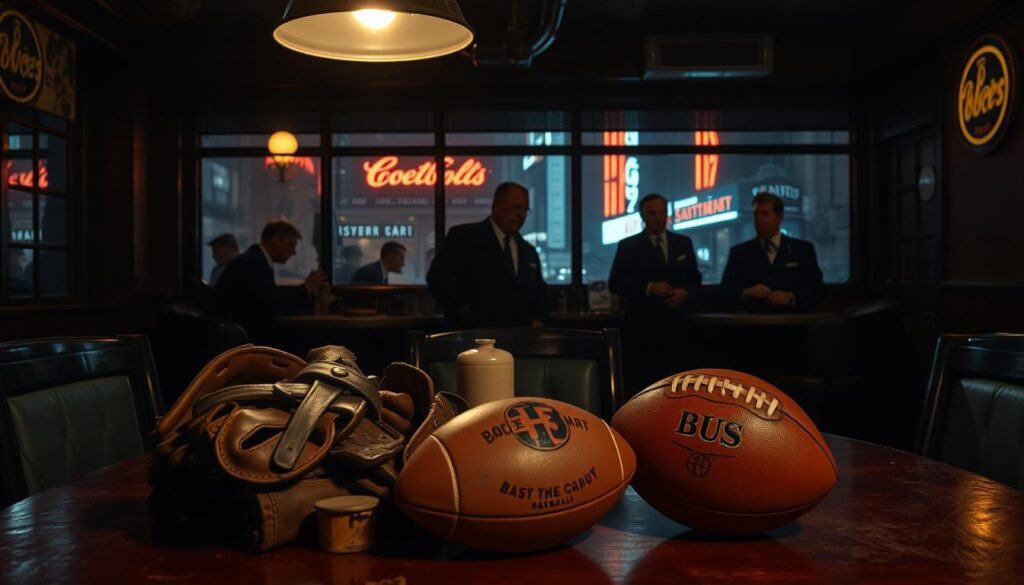
This reflects the left’s deep disillusionment. The 1930s’ anger turned into distrust. Noir shows how ambition can lead to a trap. The boxer’s dream of success is a warning of the system’s flaws.
| Film | Year | Central Metaphor | Blacklist Connection | Legacy |
|---|---|---|---|---|
| Body and Soul | 1947 | Capitalism as a rigged fight. The protagonist sells his integrity for fame, controlled by syndicate money. | Written by Abraham Polonsky, who was later blacklisted. The film’s critique of predatory success is a direct product of pre-blacklist leftist thought. | A classic study of corruption, proving subversive ideas could hide in plain sight within a popular genre. |
| The Set-Up | 1949 | The aging athlete in a system that discards the used. The fight is fixed, but his refusal to throw it is a doomed act of rebellion. | Director Robert Wise worked within the studio system, but the film’s bleak view of opportunistic exploitation resonated with the era’s suppressed dissent. | A brutal, real-time indictment of a world where honor has no market value. It’s noir in its purest, most hopeless form. |
| Common Thread | Late 1940s | The boxing ring as a courtroom where the American dream is found guilty. Success is exposed as a collaboration with corrupt power. | Both films exemplify the type of content that made Hollywood’s elite nervous. They didn’t need a party card to be subversive; their ideology was in the story structure. | They cemented sports as a powerful arena for social critique, a tradition that continues in film today, albeit with less fear of a congressional summons. |
Raymond Chandler once said, “Success is always and everywhere a racket.” These films turned that idea into a bloody spectacle. The boxer’s fall represents every compromised principle in our culture.
The blacklist aimed at more than just political views in these movies. It targeted the idea that success is impossible. Sports noir punched a hole in the myth of meritocracy. And for that, it faced censorship.
Lingering Effects on Movie History
The blacklist changed the way stories were told in movies. It moved from “we the people” to “the lone wolf.” The 1950s cinema scandals left a lasting mark on American film.
A new kind of film was born: American independent film. Blacklisted creators didn’t disappear. They built a secret talent network. This underground became the blueprint for the indie movement.
The blacklist also changed politics in movies. It made stories more personal. Before, heroes were about the group. After, it was about the individual standing up for themselves.
This change lasted for years. Heroes were no longer about the group. They were the lone wolf, fighting against the system. This shift made personal rebellion seem noble.
In a twist, the blacklist helped break the studio system’s grip. It made room for individual stories in movies. Today’s political films carry this complex legacy.
Legacy and Resurgence
The story of the blacklist is far from over. It reflects our ongoing debates about creativity. Today’s “cancel culture” and online censors are just new twists on old power struggles.
The blacklist’s impact is complex. It was a major failure in censorship. But it pushed artists to be clever. They learned to hide messages in plain sight.
Why do we see a comeback of the blacklist’s spirit? Movies like *Trumbo* speak to us because the old tactics are alive. Filmmakers facing strict rules learn from noir’s hidden messages. Big studios are wary of daring stories. The ghosts of the blacklist linger.
The fear of Communist influence was a lie. But many films managed to sneak in harsh truths about society. Their fight teaches us a lasting lesson. To protect artistic freedom, we must stand up against censorship. The shadows they cast continue to shape our world.