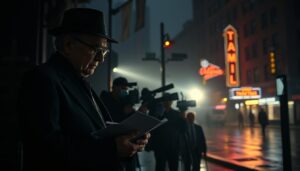
Before a word is spoken, before a gun is drawn, there is often a trumpet.
Not triumphant. Not celebratory. But muted — bent slightly off pitch, as if unsure whether it should rise or fall. In classic film noir, jazz does not decorate the frame. It destabilizes it. It coils beneath dialogue, lingers in pauses, and swells just enough to suggest that betrayal is already in motion.
The relationship between jazz and noir is more than historical coincidence. Both emerged from postwar uncertainty. Both thrived in smoke-filled rooms and midnight hours. And both understood that tension is most powerful when restrained.
To understand why jazz feels inseparable from classic noir, we must listen not just to melody — but to silence.
The Birth Of A Nocturnal Sound
In the 1940s and 1950s, urban America pulsed with bebop experimentation and nightclub improvisation. Film studios, searching for a sonic identity that matched noir’s shadow-drenched visuals, found in jazz a language of instability.
Unlike sweeping orchestral scores common in melodrama, jazz was intimate. Small ensembles. Sparse arrangements. Space between notes. That space — the breath between trumpet phrases or the brush of a snare drum — mirrored the moral ambiguity on screen.
The muted trumpet became emblematic. Its softened tone suggested secrecy. Its wavering phrasing implied hesitation. In crime narratives driven by suspicion and fatalism, that hesitation mattered.
Jazz did not announce danger. It suggested inevitability.
Nightclubs As Narrative Pressure Points
Few spaces in classic noir are more symbolically charged than the nightclub. Tables lit by small lamps. Cigarette smoke suspended in low light. A singer framed in silhouette against a narrow stage.
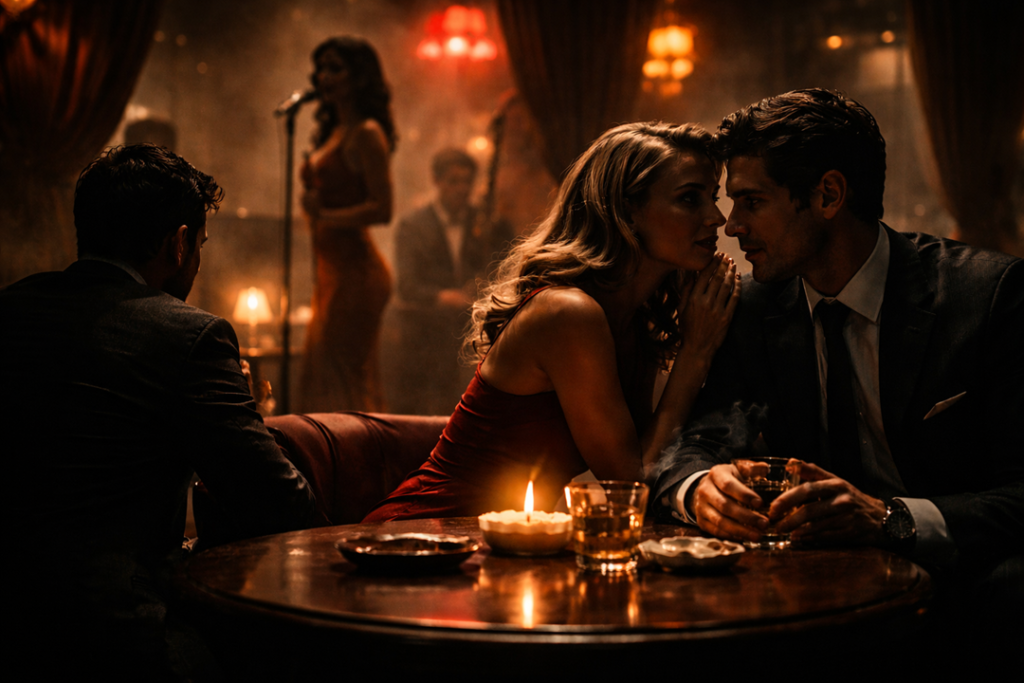
Within these interiors, jazz often functions diegetically — performed inside the story world — yet its emotional resonance extends beyond the scene.
The nightclub is rarely neutral. It is a site of confession, seduction, or surveillance. The band plays while deals are whispered. The drummer keeps time as loyalties fracture.
Cinematically, directors use jazz to intensify tension in three primary ways:
| Jazz Element | Cinematic Use | Narrative Effect |
|---|---|---|
| Muted trumpet | Underscores private conversations | Suggests secrecy and suppressed emotion |
| Upright bass pulse | Sustains low rhythmic tension | Implies inevitability |
| Brushed snare | Soft percussive texture | Creates intimacy and unease |
| Sparse piano phrasing | Minimal melodic guidance | Reinforces ambiguity |
The music does not overpower dialogue. It hovers beneath it, like suspicion.
Silence As Structural Device
Jazz is as much about what is not played as what is. That philosophy aligns seamlessly with noir storytelling.
Moments of silence — after a line lands, before a confession surfaces — often carry more weight than crescendos. Directors understood that cutting the music entirely could heighten dread.
In interrogation scenes or private confrontations, the absence of jazz becomes conspicuous. The viewer, accustomed to its nocturnal presence, feels the vacuum immediately.
This interplay between sound and silence parallels the visual strategies explored in our examination of architecture in crime movies, where corridors and stairwells amplify tension through spatial restraint. In both cases, structure — whether sonic or architectural — defines emotional stakes.
Jazz, then, is not constant accompaniment. It is strategic release.
Improvisation And Moral Ambiguity
Improvisation lies at the heart of jazz. Musicians respond to one another in real time, bending rhythm and melody unpredictably. Film noir protagonists operate similarly — navigating danger without a fixed score.
The connection is thematic.
A detective follows a lead, uncertain where it will end. A femme fatale shifts tone mid-sentence. A criminal recalculates when plans unravel. Like a saxophonist extending a phrase beyond expectation, characters stretch beyond moral boundaries.
Directors frequently mirrored this improvisational ethos in scene construction. Loose camera movement, overlapping dialogue, and ambient sound layers evoke the spontaneity of a live performance.
Jazz’s unpredictability becomes a metaphor for unstable allegiance.
Instrumentation And Emotional Geography
Not all jazz in noir functions identically. Instrument choice and arrangement signal emotional geography.
A lonely tenor sax suggests introspection. A sharp trumpet accent implies confrontation. Vibraphone tones introduce dreamlike detachment.
Consider how instrumentation shapes atmosphere:
| Instrument | Emotional Association | Typical Context |
|---|---|---|
| Tenor saxophone | Isolation, introspection | Late-night reflection, solitary walks |
| Trumpet (muted) | Seduction, secrecy | Femme fatale encounters |
| Upright bass | Underlying tension | Negotiations, hidden motives |
| Vibraphone | Dreamlike ambiguity | Flashbacks, morally uncertain exchanges |
These sonic cues operate subconsciously. The audience may not consciously register instrumentation shifts, yet tension rises or softens accordingly.
The Cultural Roots Of Noir Jazz
The convergence of jazz and noir was not merely aesthetic — it was cultural. Jazz clubs were spaces of racial integration and artistic experimentation during a period of social tension. Film noir, too, grappled with disillusionment and fractured identity in postwar America.
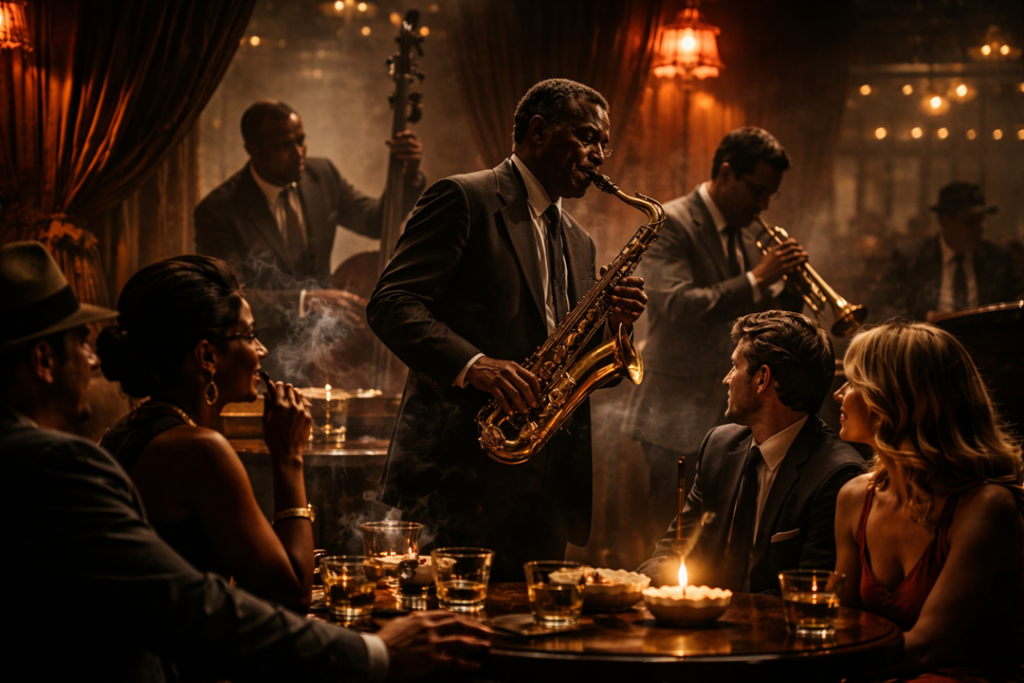
Music historians and film scholars alike have noted this intersection between urban modernity and sonic experimentation. The British Film Institute’s overview of film noir history and style outlines how postwar anxieties shaped both narrative tone and stylistic innovation.
Jazz embodied that anxiety. It rejected rigid orchestration. It embraced dissonance. In doing so, it offered noir filmmakers a soundscape aligned with psychological unrest.
From Background Score To Narrative Engine
Over time, jazz in noir evolved from subtle accompaniment to narrative engine. In certain films, extended jazz sequences slow the pacing deliberately, allowing tension to simmer rather than spike.
Long takes of musicians performing create temporal suspension. The plot pauses — but anxiety deepens. The audience waits for rupture.
This technique anticipates later neo-noir experimentation, where jazz becomes mood architecture rather than mere atmosphere.
Just as lighting carves faces into chiaroscuro, jazz carves silence into expectation.
Why Smoke And Silence Endure
Even in contemporary reinterpretations of noir, jazz remains a shorthand for nocturnal tension. Digital production may replace analog grain, but the muted trumpet persists.
Why?
Because jazz understands restraint. It knows that tension does not require volume. It requires space.
In classic film noir, smoke curls through lamplight while a bass line hums beneath whispered dialogue. The music does not command attention. It unsettles it.
The result is narrative tension sustained not through spectacle, but through suggestion.
When the trumpet fades and silence lingers, betrayal feels closer than ever.