There’s something inherently unsettling about a crime that happens under sunlight.
That Night, the recent Netflix thriller centered around three sisters entangled in the aftermath of a dead police officer, builds its tension not in dark alleyways, but in spaces that should feel safe—vacation homes, coastal settings, shared rooms where laughter once echoed.
This is where the series quietly disrupts noir tradition.
The crime is still there. The secrecy, the fear, the moral ambiguity—they all remain. But the environment has shifted. Instead of shadowy cities, we are given openness, brightness, and isolation. And in that contrast, something more disorienting emerges:
Noir is no longer confined to darkness—it thrives in places where darkness shouldn’t exist.
The Rise Of Vacation Noir
Traditional noir depends on confinement—tight streets, enclosed offices, suffocating interiors. That Night flips this expectation by placing its narrative in a setting defined by space and escape.
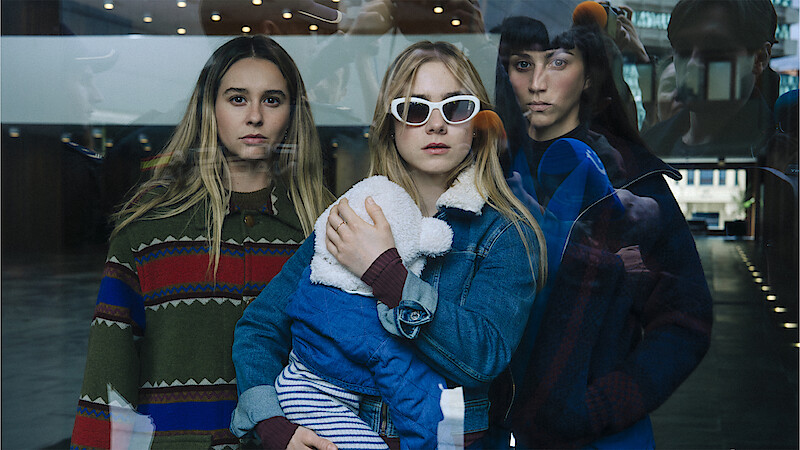
Yet paradoxically, that openness becomes a trap.
Vacation noir operates on a different psychological level. The characters are removed from their normal lives, stripped of routine and stability. This displacement creates a fragile environment where identity becomes fluid and decisions feel detached from consequence—until it’s too late.
| Element | Classic Noir Setting | Vacation Noir Setting (That Night) |
|---|---|---|
| Environment | Urban, claustrophobic | Open, isolated, unfamiliar |
| Emotional Tone | Oppressive tension | Uneasy calm masking tension |
| Conflict Trigger | Crime within corruption | Crime disrupting temporary escape |
| Psychological Effect | Trapped by system | Trapped by isolation and proximity |
The setting doesn’t reduce the danger. It amplifies it—because it removes the illusion of control.
Female Perspective As Narrative Core
What fundamentally reshapes That Night is not just where the story takes place—but who carries it.
The narrative is driven by three sisters, and their perspective transforms the structure of the thriller. This is not a story about solving a crime. It is about surviving the emotional consequences of being entangled in one.
Their decisions are not calculated in the way traditional noir protagonists operate. They are reactive, layered with fear, loyalty, resentment, and instinct. The result is a narrative that prioritizes emotional truth over procedural logic.
This shift introduces a different kind of tension:
- Not just “What happened?”
- But “How do we live with what happened?”
The answer is never stable.
Intimacy As A Source Of Suspicion
One of the defining features of That Night is how it weaponizes intimacy.
The sisters’ relationship is both the story’s foundation and its greatest vulnerability. Trust becomes conditional. Conversations carry subtext. Silence becomes as revealing as confession.
The closer the characters are, the less certain they become of one another.
This aligns with a broader evolution in noir storytelling, where relationships replace institutions as the primary source of tension. As explored in the 56 days analysis, modern noir increasingly shifts its focus from external investigation to internal emotional collapse, where the real mystery lies in human behavior.
In That Night, the danger isn’t just the crime—it’s the possibility that those closest to you may not be who they appear to be.
Light As A New Form Of Darkness
Visually, the series operates in a space that feels almost anti-noir at first glance. Natural light, coastal tones, and open environments dominate the frame.
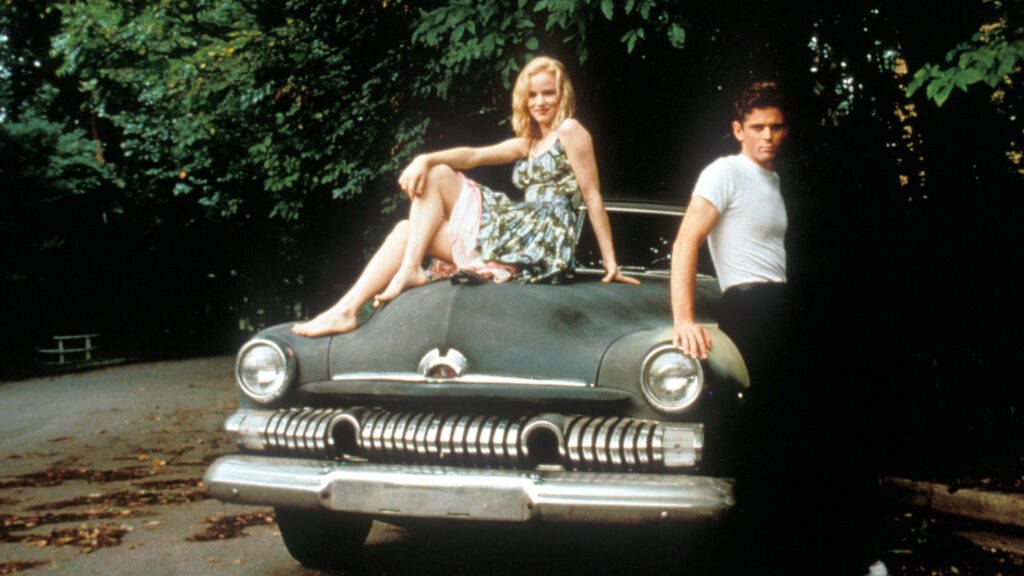
But this brightness is deceptive.
Instead of hiding secrets in darkness, That Night exposes them under light—creating a different kind of discomfort. There is nowhere to hide, yet nothing feels fully visible. The clarity becomes disorienting.
This inversion of noir lighting reflects a deeper thematic shift:
- Darkness is no longer visual—it is psychological
- Shadows are internal, not environmental
The audience is forced to confront the idea that visibility does not equal understanding.
The Collapse Of Moral Certainty
Classic noir often operates within a moral gray area, but it still maintains a structure where right and wrong can be identified, even if blurred.
That Night dissolves that structure.
The characters are not clearly innocent or guilty. Their actions are shaped by circumstance, fear, and emotional impulse. As the narrative unfolds, moral lines shift constantly, making it impossible to anchor judgment.
| Moral Framework | Classic Noir | That Night |
|---|---|---|
| Right vs Wrong | Blurred but present | Constantly shifting |
| Protagonist Role | Anti-hero with code | Emotion-driven, inconsistent |
| Justice | Partial or ironic | Uncertain or irrelevant |
| Audience Position | Observer of conflict | Participant in ambiguity |
This instability is what gives the series its psychological weight. The audience is not guided toward a conclusion—they are left navigating uncertainty alongside the characters.
Streaming Thrillers And The Evolution Of Noir
The rise of streaming platforms has allowed stories like That Night to exist in a space that traditional formats rarely supported.
Extended runtimes, episodic structure, and character-focused pacing create room for tension to build slowly. The emphasis shifts from plot progression to emotional accumulation.
According to , That Night blends crime, drama, and mystery within a layered narrative that unfolds through character relationships rather than procedural investigation.
This reflects a broader transformation in the genre. Noir is no longer defined by its structure—it is defined by its atmosphere and psychological depth.
A Genre Moving Away From The Crime Itself
Perhaps the most significant shift represented by That Night is how little the crime itself matters.
It is the catalyst, not the core.
What lingers is:
- The tension between characters
- The weight of shared secrets
- The slow erosion of trust
The story does not build toward solving the mystery. It builds toward understanding the damage.
This is where modern noir finds its strength—not in resolution, but in emotional residue.
The Darkness That Travels With You
In the end, That Night redefines noir by removing it from its traditional environment and placing it somewhere far more intimate.
The darkness is no longer tied to a city, a system, or even a crime scene.
It travels.
It exists in relationships, in memory, in the quiet spaces between people who thought they knew each other.
And in that space, far from the expected shadows of noir, the genre becomes something even more unsettling:
A story where escape is possible—but understanding is not.