A crime enters the frame—violent, unexpected, disruptive—and fractures the world around it. But Run Away, Netflix’s 2026 adaptation of Harlan Coben’s novel, reverses that logic entirely.
The fracture is already there.
Premiering on January 1, 2026, the eight-episode series follows investment banker Simon Greene (James Nesbitt) as his seemingly stable life unravels after his daughter Paige disappears.
What begins as a missing person case quickly reveals something deeper:
The family was never intact to begin with.
The Illusion Of The Perfect Family
At the center of Run Away is a familiar noir motif disguised in modern form—the illusion of normalcy.

Simon’s life appears structured, successful, and controlled. But that structure is fragile. His daughter’s disappearance doesn’t introduce chaos—it exposes it.
The series builds its tension around a core contradiction:
- The family appears unified
- The individuals within it are not
As Simon searches for Paige, he uncovers secrets not just about her, but about his wife Ingrid (Minnie Driver), their past, and the hidden connections binding them together.
The investigation becomes less about locating a missing person and more about confronting a truth long buried:
The family itself is the mystery.
Domestic Noir And The Shift In Setting
Traditional noir thrives in public spaces—streets, offices, institutions where anonymity enables crime. Run Away relocates that tension into private life.
The home becomes the primary setting of instability.
| Element | Classic Noir | Domestic Noir (Run Away) |
|---|---|---|
| Setting | Public, urban environments | Private, domestic spaces |
| Threat | External criminal force | Internal family fracture |
| Narrative Focus | Investigation of crime | Breakdown of relationships |
| Emotional Core | Suspicion of strangers | Distrust of loved ones |
This transformation signals the rise of domestic noir, where the most dangerous space is not the city—but the family unit itself.
When Parenthood Becomes The Investigation
Simon’s role in the series is not that of a detective, but of a father forced into investigation.
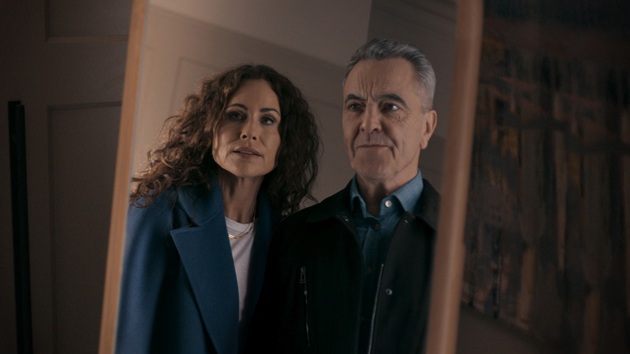
This distinction matters.
He is not approaching the case with objectivity. Every discovery is filtered through guilt, responsibility, and emotional attachment. His search for Paige becomes a confrontation with his own failures—what he missed, what he ignored, what he chose not to see.
This creates a different kind of noir protagonist:
- Not hardened by experience
- But destabilized by proximity
The closer Simon gets to the truth, the less certain he becomes of his own role within it.
The Underworld Beneath The Suburbs
As the narrative expands, Run Away introduces a darker layer beneath its domestic surface.
Simon’s search leads him into a network of:
- Drug use
- hidden relationships
- and violent encounters
What begins as a family issue quickly intersects with a broader criminal underworld. But even here, the distinction between internal and external danger blurs.
The outside world does not corrupt the family.
It reveals how closely the family was already connected to it.
According to coverage of the series’ release and narrative structure, the story unfolds through multiple perspectives and intertwining plotlines, gradually exposing how deeply personal secrets intersect with criminal activity.
The Collapse Of Trust As Narrative Engine
What drives Run Away is not the mechanics of the crime, but the erosion of trust.
Each revelation destabilizes relationships:
- Between parent and child
- Between husband and wife
- Between past and present
The series replaces traditional noir suspicion—directed outward—with something more intimate and unsettling.
Suspicion turns inward.
This aligns with the evolution explored in Land of Sin analysis , where modern noir shifts from external systems to relational and emotional instability, placing tension within the connections between characters.
Memory, Guilt, And Fragmented Truth
As Simon reconstructs Paige’s life, the narrative reveals how memory itself becomes unreliable.
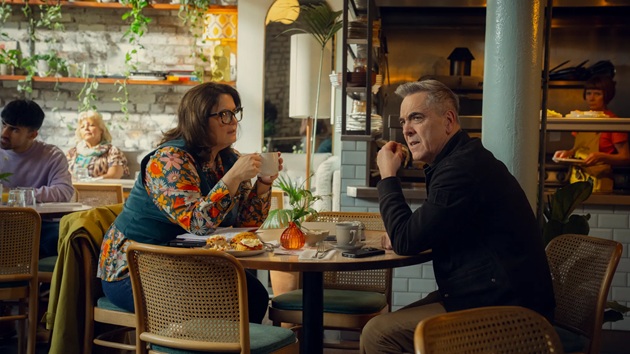
Moments from the past—conversations, behaviors, subtle changes—take on new meaning. What once felt ordinary now appears significant, even incriminating.
This creates a layered narrative structure:
- The present investigation
- The reinterpreted past
- The uncertain connection between the two
Truth is no longer something hidden waiting to be found. It is something reassembled, piece by piece, through shifting perspectives.
The Influence Of Real-World Anxiety
Part of what makes Run Away resonate is its grounding in contemporary fears.
The series was inspired in part by Harlan Coben’s own experience of discovering troubling signs in his daughter’s life—an event that led him to explore how quickly a family’s perception of itself can change.
This real-world influence shapes the narrative’s tone.
The danger does not feel abstract. It feels immediate, plausible, and deeply personal. The story reflects a broader cultural anxiety:
That we do not fully know the people closest to us.
When The Crime Becomes Secondary
Like many modern noir narratives, Run Away gradually shifts its focus away from the crime itself.
The murder, the disappearance, the investigation—these elements remain important, but they are no longer central. What persists is the emotional fallout.
| Narrative Element | Traditional Crime Story | Run Away |
|---|---|---|
| Crime | Central focus | Catalyst |
| Investigation | Primary structure | Secondary framework |
| Resolution | Objective clarity | Emotional ambiguity |
| Impact | External consequences | Internal collapse |
The story is not about solving the crime.
It is about understanding what the crime reveals.
Streaming Noir And The Expansion Of Intimacy
The structure of Run Away—eight episodes released simultaneously—allows for a depth of exploration that traditional formats often limit.
Streaming enables:
- Multiple perspectives
- Slow narrative expansion
- Emotional accumulation over time
This format supports noir’s evolution into something more introspective, where tension builds not through action alone, but through prolonged uncertainty.
For a deeper look at how streaming continues to reshape crime storytelling, this analysis on modern Netflix thriller trends provides insight into the platform’s ongoing shift toward character-driven narratives.
A Family That Cannot Be Reconstructed
In the end, Run Away does not offer a clean resolution.
Secrets are uncovered. Truths are revealed. But the damage remains.
The family does not return to its original state—because that state never truly existed. What appeared stable was always fragile, held together by assumptions rather than understanding.
This is the defining feature of modern noir:
The collapse is not temporary. It is permanent.
The Darkness Within The Familiar
What Run Away ultimately reveals is a fundamental shift in noir’s focus.
The city is no longer the primary site of danger. The criminal is no longer a distant figure. The investigation is no longer the central journey.
Everything has moved closer.
- Into the home
- Into the family
- Into the relationships we trust most
And in that proximity, noir becomes something more unsettling than ever before.
Because the darkness is no longer something we encounter.
It is something we live with.