Do you remember when sports movies were more than just victories? The Reagan era brought us films like Slap Shot and Hoosiers. These movies hid deep messages about economic struggles and decline in the rust belt.
Historian David Heineman says these stories manufactured public memory. They turned simple sports tales into deep social commentary.
Think about Rocky Balboa’s training in a meat locker. While we cheered for him, the old factories in Philly told a different story. They showed how blue-collar jobs were fading away.
These films didn’t just show history; they refracted it through nostalgia goggles. They made tough truths easier to accept with inspiring music.
What makes these films so impactful? They used sports heroes to reveal deep problems. The coach’s speeches weren’t just about winning. They were about fighting against decline.
We’ll explore how these movies used emotions to show the harsh effects of late capitalism.
Introduction: Why Sports Films Reflect Society
Why do we cheer for Rudy’s moment? Sports films are more than just fun. They are deep looks into our culture. Miracle on Ice was not just a hockey game. It was a statement about the Cold War.
Disney’s The Mighty Ducks taught us about teamwork. But it also showed us the value of following the rules. Moneyball showed how business rules even sports. These films tell us who we are.
The Sports Film as Cultural Mirror
Classic sports films are also cultural critics. Here are three ways:
- Time capsules: Rocky IV shows the Cold War through a sports lens
- Class warfare: Slap Shot reflects the 1970s economic struggles
- Myth-making: Rudy turns Notre Dame into a symbol of American greatness
| Film | Era | Surface Story | Cultural Subtext |
|---|---|---|---|
| Miracle (2004) | Post-9/11 | Underdog hockey victory | National unity through conflict |
| White Men Can’t Jump (1992) | LA Riots era | Streetball rivalry | Race and economic disparity |
| A League of Their Own (1992) | Second-wave feminism | Women’s baseball league | Gender roles in wartime America |
That hockey documentary you watched? It’s like Hoosiers but real. It shows us the real struggles in sports. The ice rink is like a courtroom, and the baseball field is a stage for debate.
Next time you watch a sports film, think about what it’s really saying. It might tell us more about society than any news report.
Class, Race, and Gender in Sports Stories
Sports films are more than just fun movies. They show us the cracks in our society. For example, white cleats in Remember the Titans seem to stand for unity. But they hide the real fight for racial equality in Virginia.
Hockey documentary The Last Gladiators tells a different story. It shows how leagues use and discard working-class athletes. This is a harsh truth, not just a story.
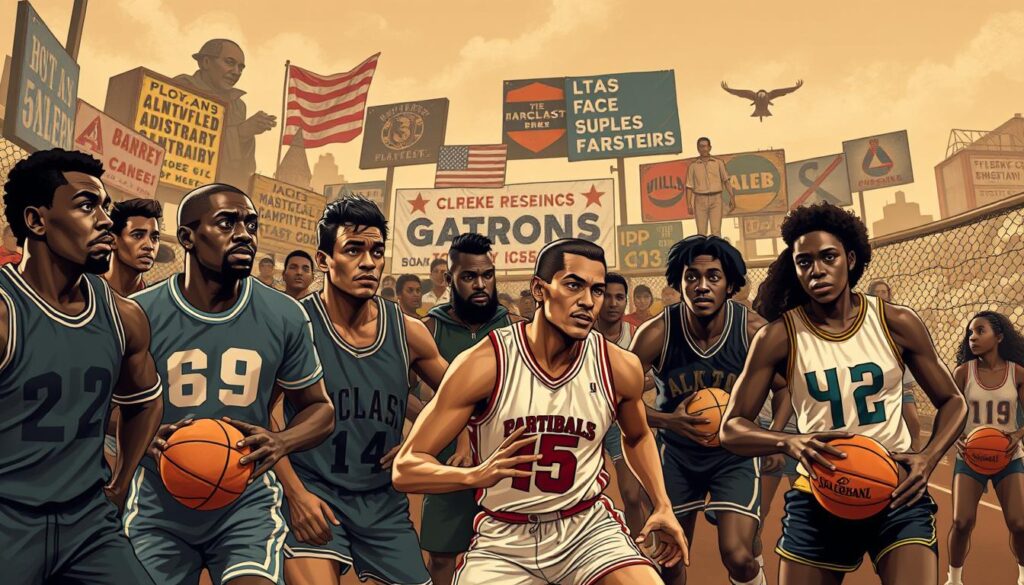
In A League of Their Own, women find their place in baseball. But it’s also about them leaving factories after World War II. The pink uniforms are a sweet reminder of the fight for equality.
Indigenous stories get their moment in The Surface. It’s about Cree players fighting for their land on ice. This is more than just a game; it’s a fight for their rights.
Soul on Ice uncovers the stories of Black hockey pioneers. These stories are buried deep, but they’re just as important as any other.
| Film | Social Layer | Commercial Compromise |
|---|---|---|
| Remember the Titans (2000) | Race relations | Disneyfied civil rights struggle |
| The Surface (2023) | Indigenous rights | Crowdfunded vs studio funding |
| A League of Their Own (1992) | Gender roles | Merchandised feminism |
Commodification in sports movies is nothing new. Those “based on true story” titles often hide the real issues. Friday Night Lights shows how booster clubs can buy championships. This is a harsh truth about Texas.
Retro movies often rewrite history. Hoosiers makes rural Indiana the birthplace of basketball. But it ignores the Harlem Rens, who were true pioneers in the 1920s. Yet, who can resist Jimmy Chitwood’s heroics?
Inspirational or Subversive? Hidden Agendas
Sports films are more than just entertainment. They carry messages about culture and values. Two films, in particular, use inspiration to sneak in radical critiques.
Bend It Like Beckham and Underrepresented Groups
Bend It Like Beckham seems like a simple story about a girl who loves soccer. But it’s really about how sports reflect cultural battles. Jess Bhamra fights not just on the field but also against:
- Gender expectations in traditional Punjabi households
- Eurocentric beauty standards in athletic culture
- The colonial hangover of British soccer institutions
The film cleverly contrasts Jess’s quiet strength with the aggressive masculinity of David Beckham. While men are celebrated for their toughness, Jess’s skill is seen as unbecoming.
Rocky: Underdog Myths & Urban Reality
Stallone’s Rocky didn’t just start a franchise; it redefined the american dream in sports films. Rocky Balboa’s world isn’t just a backdrop for his story. The iconic training scenes are set against:
| Film Element | Surface Narrative | Subversive Critique |
|---|---|---|
| Meat-punching scenes | Blue-collar work ethic | Union-busting era labor exploitation |
| Apollo Creed rivalry | Rags vs. riches showdown | Racial tension in post-civil rights America |
| Adrian’s transformation | Love story progression | Traditional gender roles in working-class communities |
The film’s brilliance is in making us root for the underdog, even when he’s fighting a losing battle. Rocky’s victory is not in winning but in enduring. The locker room talks are actually about the dangers of never giving up.
Media and Commercialization Critique
Sports movies used to warn about selling out. Now, they’re sponsored by the brands they once critiqued. The American Dream in sports films has shifted from personal triumph to corporate gains. The game has been overshadowed by the halftime show.
Stadiums have changed from community hubs to “shopping malls with bleachers”. They now feature NFT jersey scams and influencer-branded Gatorade. This shift is a stark contrast to their original purpose.
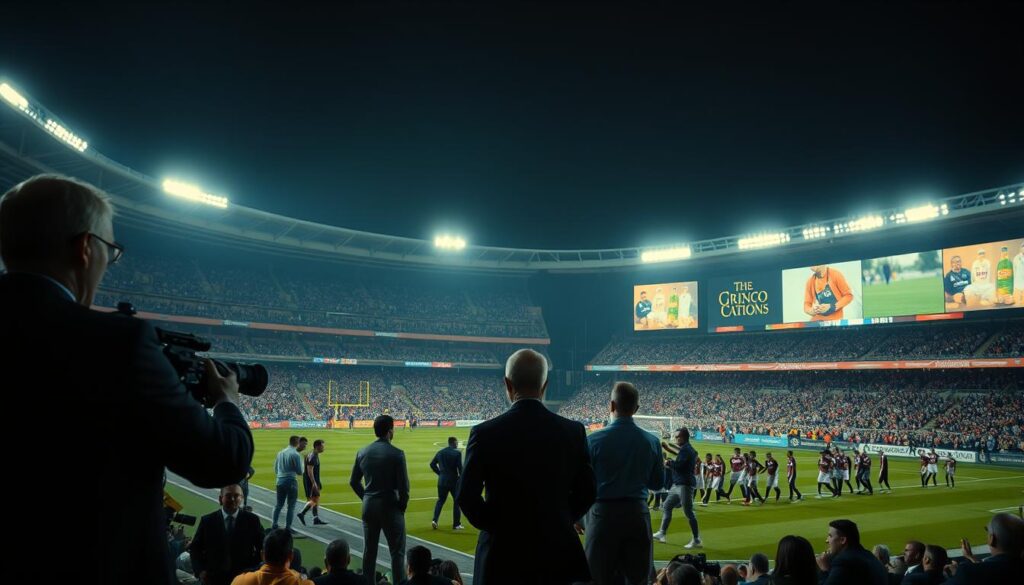
Heineman’s analysis of retro gaming commercialization is unsettling. Think of Varsity Blues exposing booster club corruption in 1999. Today, we see $20 “vintage” digital trading cards. The strategy remains the same: repackage nostalgia, monetize loyalty, repeat.
Modern sports films reflect this commodification in sports movies. Every underdog story is now filled with product placement opportunities.
Consider the progression of sports capitalism:
- 1980s: Mighty Ducks’ Coach Bombay fights for community funding
- 2000s: Friday Night Lights’ Dillon Panthers grapple with ESPN deals
- 2020s: Athletes become walking billboards for crypto partnerships
Films criticizing commercialization now air on streaming platforms owned by their corporate foes. Nike isn’t just making shoes anymore. They’re producing documentaries about “empowerment through consumer choices.” It’s capitalism’s greatest magic trick: convincing us to pay premium prices for our own memories.
| Era | Commercialization Vehicle | Film Response |
|---|---|---|
| Pre-2000 | Local sponsorships | Moral panic about “selling out” |
| 2000-2010 | TV broadcast deals | Satirical takes on media circus |
| 2020s | Metaverse integrations | Silence (or tacit endorsement) |
We’ve reached peak irony in sports dramas. They use “authentic grassroots storytelling” as a marketing tagline. The game hasn’t changed—we’re just better at ignoring the scoreboard counting corporate dollars instead of points. Next time you watch a climactic championship scene, ask yourself: Is that emotional swelling music… or a Shopify ad jingle?
The Coach, The Hero, The Antihero: Types of Cultural Propaganda
Why do sports films make coaches seem like gods or devils? They’re not just teaching plays; they’re spreading messages. Viktor Tikhonov in Red Army turned hockey players into symbols of Soviet power. His training was about more than just hockey; it was about showing off communist ideals.
American films take a different path. Al Pacino’s “Inches” speech in Any Given Sunday is more about capitalism than football. The film shows athletes as if they’re chasing money, just like in the business world. It’s a mix of individualism and teamwork, where winning is everything.
Let’s look at the three main types of propaganda in sports movies:
| Archetype | Cultural Agenda | Real-World Parallel | Film Example |
|---|---|---|---|
| The Patton Coach | Militaristic discipline as virtue | Cold War-era nationalism | Miracle (2004) |
| The Rebel Savior | Anti-establishment individualism | Silicon Valley “disruption” myths | Moneyball (2011) |
| The Fallen Guru | Questioning blind loyalty to leaders | Post-2008 financial distrust | Foxcatcher (2014) |
Locker room speeches are now like TED Talks. They say “winning isn’t everything” but really mean “maximize your human value.” Even when films show bad coaches, they make abuse seem worth it for success. We’re caught in a cycle of wanting strong leaders but questioning their methods.
The real trick in sports movies is what happens outside the screen. By showing coaches as either good or bad, these films influence how we see leadership everywhere. When was the last time you heard a CEO quote Rocky instead of Lombardi? Exactly.
Conclusion: What We Learn About Society from the Old School Screen
Looking back at old sports movies, we see more than just fun times. They show the cracks in America’s love for competition. Field of Dreams is not just about baseball. It’s about the pain of Vietnam and family troubles.
Bruce Babington says sports movies are like safety valves for our worries. They let us release our fears and doubts.
Ice Breakers is a hockey movie that hits hard, telling stories of Indigenous athletes fighting racism. These films make us think we’re cheering for heroes. But really, we’re learning about class and gender.
Jess Bhamra’s soccer in Bend It Like Beckham was more than just a game. It was a challenge to stereotypes about immigrants.
So, what do we learn? Every victory is not just a win. It’s a story about who’s left behind. Rocky Balboa’s journey is not just about winning. It’s about overcoming poverty and finding success.
These movies make us question why we love them so much. Are we cheering for the characters or the systems they’re in?
Next time you watch an ’80s sports movie, look beyond the surface. The real story is in the messages about politics and racism. Enjoy your popcorn, but think critically too.