Imagine sweat-soaked gloves and dark moral choices. That’s Champion, a proto-noir boxing flick that left viewers with more emotional scars than any punch. Mark Robson’s 1949 film didn’t just make Kirk Douglas a star. It changed how movies show the cost of winning at all costs.
Kirk Douglas’s Midge Kelly is a far cry from today’s heroes. This isn’t your old Ring Lardner adaptation. It’s a dark tale of corruption, lit with shadows that make you feel like you’re in a Caravaggio painting. The film’s six Oscar nominations, including Douglas’s first lead actor nod, showed Hollywood’s respect for its bold story.
While The Set-Up in 1949 was more straightforward, Champion went for the heart. Robson’s camera captures the real pain – not just in the ring, but in the emotional battles of love and loyalty. It’s a sports drama as Greek tragedy, with a hero who’d do anything to win.
This isn’t just old news. Even today, Kelly’s relentless pursuit of success echoes our world of social media fame. The real question isn’t “Would you do the same?” It’s “How many of us already have?”
Overview of Champion
Before Rocky Balboa, there was Midge Kelly—a boxing antihero. Champion (1949) is more than a sports drama. It’s a morality play, where every punch is a moral blow. Director Mark Robson and screenwriter Carl Foreman turned a short story into a noir sports movie.
This film is a powerful punch:
- The Faust Factor: Midge’s rise to fame costs him his humanity. His success is built on broken relationships.
- Editing That Throws Punches: The film’s editing won an Oscar. It set the standard for sports broadcasting. Every Creed training sequence owes a debt to this.
- Mobsters in Fedoras: The real villains wear suits, not gloves. They turn boxing into a racket, long before Raging Bull.
Foreman’s script cuts deep. Kirk Douglas’s smile turns from charming to sinister. It’s like Body and Soul, but darker.
Champion is about more than boxing. It’s about post-war America’s hustle culture. Midge throws away his morals, lovers, and friends. The ring is where capitalism gets its applause.
75 years later, Champion’s influence is clear. Every classic noir sports movie owes a debt to this film. Its shadowy locker rooms and corrupt promoters are timeless.
Kirk Douglas: A Complex Hero
Kirk Douglas’ muscles in Champion told a story. His strong body showed America’s fears after the war. It was a mix of strength and hidden flaws.
Unlike other actors, Douglas’ character, Midge Kelly, was different. Kelly fought like he was fighting his own demons. It was as if he was trying to save the American Dream.
Douglas’ acting made every scene intense. His famous dimpled chin showed his character’s inner struggle. He even fought real boxers until his hands were bloody.
Was he trying to be real, or was he punishing himself? It’s hard to tell.
The film’s most shocking scene is when Kelly assaults his brother’s wife. Douglas played it with a cold, shark-like stare. This scene came out when HUAC was pressuring witnesses to name names.
Douglas’ own experiences with the blacklist added depth to Kelly’s character. It made Kelly’s actions even more disturbing.
Douglas made us want to cheer for Kelly, despite his flaws. In one scene, Kelly looks at himself in the mirror. He looks triumphant but also empty.
This scene is a harsh look at post-war America. It shows how success can destroy people, like an athlete who uses everyone for his own gain.
Douglas changed what sports movies could be. He showed how success can come with a cost. His role made him a favorite villain in Hollywood, but he kept fighting.
Visual Storytelling and Noir Techniques
If film noir had a gym membership, Champion would be its personal trainer. It’s smart, tough, and loves shadows. Franz Planer’s cinematography lights up the boxing ring in a way that questions ambition. Every drop of sweat shows the moral trade-offs.
Planer’s locker rooms are like confession booths, lit by guilt. The sports noir lighting cuts through steam, making fighters look like sinners. The ring is a place where spotlights judge harder than any referee.
The montage in Champion is intense. It mixes butcher hooks with punches, making it feel like a fight to the death. This isn’t just boxing; it’s a brutal dehumanizing experience.
| Film | Lighting Style | Key Visual Motif | Noir Influence |
|---|---|---|---|
| Champion (1949) | High-contrast interrogation lighting | Steam-filled confessionals | Moral ambiguity in shadows |
| Body and Soul (1947) | Claustrophobic close-ups | Floating cigarette smoke | Urban corruption themes |
| The Set-Up (1949) | Neon-drenched desperation | Clock close-ups | Fatalistic pacing |
Champion is a key film noir sports movie. It views sports as a crime scene. The camera focuses on injuries like evidence. Even the crowd looks like a chorus of bloodlust.
Planer’s skill is in making victory look worse than defeat. When Midge Kelly wins, he’s shrouded in shadows. The brighter the light, the darker the soul. Scorsese, take note—this is how you show a fall from grace.
Major Themes: Ambition and Betrayal
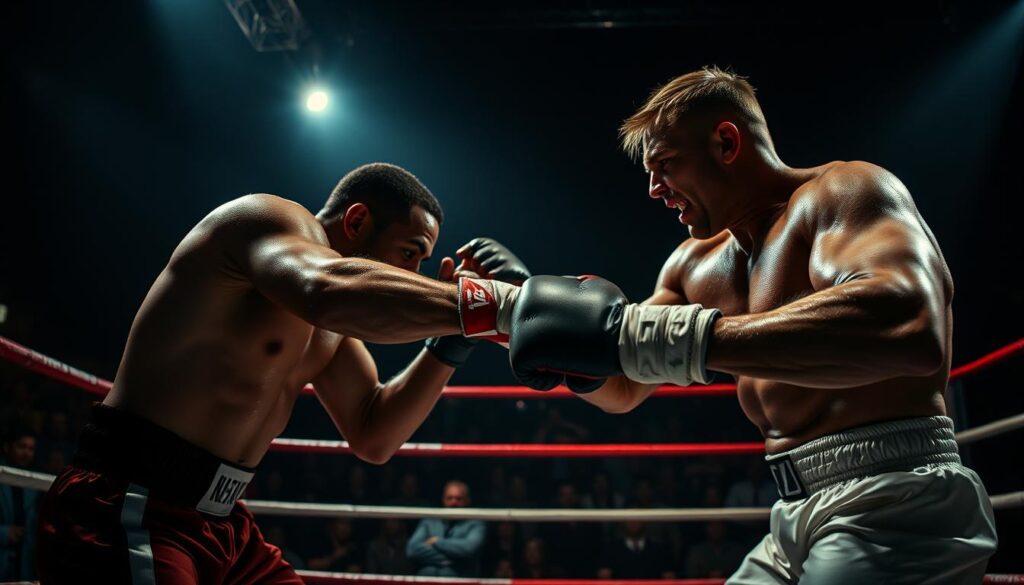
What’s more American than a boxing ring? Try a knife fight in a phone booth. Champion doesn’t just critique the American Dream—it sucker-punches it with brass knuckles. Kelly’s rise from hungry underdog to corrupted champ isn’t Rocky Balboa’s feel-good montage. It’s a slow bleed of humanity, where every victory costs a pound of flesh from someone he loves.
The film’s genius lies in its dual betrayals: Kelly abandons his crippled brother (Arthur Kennedy’s career-best performance) like yesterday’s gym socks, then treats Marilyn Maxwell’s showgirl as human collateral. But here’s the twist—they’re all playing the same rigged game. Maxwell’s character isn’t some innocent victim; she’s running her own gold-digging playbook in this noir-tinged sports drama.
Let’s talk about that Howard Hughes-shaped elephant in the room. When RKO sued The Set-Up for allegedly copying Champion, they accidentally proved the film’s central thesis: Hollywood eats its young faster than a hungry contender. The lawsuit becomes meta-commentary—a real-life mirror to Kelly’s ring wars, complete with backroom deals and shattered alliances.
Three brutal truths Champion reveals about ambition:
- Loyalty has a price tag (see: Kelly’s brother trading dignity for crumbs)
- Love becomes transactional (watch Maxwell’s smile harden into a sneer)
- Victory tastes like ash (Douglas’ post-fight stares could freeze hell)
This isn’t just one of the underrated noir sports films—it’s a cautionary tale that swings harder than Joe Louis. When Kelly raises that championship belt, the crowd’s cheers sound like a funeral dirge. The real knockout punch? Recognizing our own reflection in his bloodshot eyes.
Standout Scenes and Performances
If film noir had a heavyweight division, Champion would be its undisputed titleholder. The 1949 classic is packed with jaw-dropping moments. Each scene is a mix of sweat, shadows, and symbolism.
The slow-motion knockout: Before Scorsese’s work in Raging Bull, Mark Robson created a knockout that defies physics. Midge Kelly’s punch seems to caress the camera lens through Vaseline. You’ll almost smell the liniment.
The training montage is another standout. It’s a sweaty dream that feels like Nietzschean propaganda. Franz Planer turns Douglas’s torso into a Greek statue, blending muscle with moral compromise. The montage’s restoration has sparked heated debates.
| Version | Shadow Depth | Blood Clarity | Noir Authenticity |
|---|---|---|---|
| Original B&W | Crushed blacks | Abstract smears | 10/10 |
| Colorized | Muddy browns | Ketchup-red | 3/10 |
The final close-up of Douglas is unforgettable. His battered face makes Bogart’s look like spa-day accessories. The blood is not makeup but existential residue. It asks, “was victory worth this?” in perfect noir cynicism.
The “newsreel” sequences are also noteworthy. Shot on real 16mm fight footage, they add a gritty edge. It’s like watching Raging Bull’s grandfather shadowbox in a hall of mirrors.
Through these iconic noir scenes, Champion shows a sports movie that’s more about losing than winning. The ring is a confessional booth, not a battleground.
Critical and Audience Reception
When Champion hit theaters in 1949, critics were split. The film won an Oscar for Best Film Editing, but it was more than that. Kirk Douglas’ performance as Midge Kelly was a highlight, earning a Best Actor nomination. Many thought he should have won without a doubt.
The Academy recognized the film’s power, nominating it in six categories. This was a big deal, showing the film’s impact.
Reviews were mixed, like a love letter with mixed feelings. The New York Times loved its energy but was worried about its morals. Despite this, the film was a hit, making $4 million (about $50 million today). It showed America’s love for noir boxing movies with a bite.
The ending was a topic of much debate. It sparked more arguments than a big boxing match:
| Aspect | 1949 Reception | Modern Reappraisal |
|---|---|---|
| Academy Awards | 6 nominations, 1 win | Considered “robbed” in acting categories |
| Critical Consensus | “Too brutal but brilliant” | “Pioneering sports noir masterpiece” |
| Ending Debate | “Moralistic cop-out” | “Subversive Code-era compromise” |
Today, scholars debate the film’s ending. Was Midge’s death a result of the Production Code, or did the screenwriter sneak in a darker vision? The truth is hidden, much like the film itself.
In today’s streaming world, Oscar-nominated film Champion has found new fans. On Letterboxd, it’s rated higher than 82% of 1940s films. Even Martin Scorsese has praised its influence on Raging Bull. It’s a testament to the film’s lasting impact, despite initial mixed reviews.
Champion’s Place Among Sports Noirs
While Rocky trained in pastels, Champion sparred in chiaroscuro – a sweaty ballet of shadows that redefined boxing films. This 1949 knockout sits at the crossroads of sports drama and hardboiled tragedy. Its fingerprints are visible in films like Raging Bull‘s smoky gyms and Night and the City‘s back-alley desperation.
Let’s settle the 1949 heavyweight bout: Robert Wise’s The Set-Up versus Mark Robson’s Champion. Both films throw jabs at the American Dream. But where Wise’s aging pugilist clings to dignity, Douglas’ Midge Kelly sells his soul wholesale. The real TKO? Champion made moral decay as visceral as a liver shot.
| Film | Noir Flavor | Body Count (Souls) | Legacy |
|---|---|---|---|
| Champion (1949) | Moral rot martini, shaken | 3 marriages, 1 brother | Blueprint for Fat City |
| The Set-Up (1949) | Existential dread neat | 1 career, 0 illusions | Inspired Requiem for a Heavyweight |
| Body and Soul (1947) | Redemption chaser | 1 mobster, 1 conscience | Paved way for The Wrestler |
Modern takes on underrated noir sports films owe Midge Kelly’s ghost royalties. His arc – from hungry contender to human wrecking ball – makes Mickey Goldmill look like a Cub Scout den mother. Robson lets us taste the blood and sweat of ambition, then shows us the toilet bowl it eventually swirls down.
What keeps Champion relevant in the sports noir pantheon? It’s the last round where the antihero doesn’t find redemption. Kelly’s final stare into the mirror isn’t self-realization – it’s the hollow gaze of a man who traded his humanity for a championship belt. Now that’s a knockout punch modern filmmakers struggle to land.
Conclusion
Seventy-five years haven’t softened Champion’s impact. Kirk Douglas’s Midge Kelly is cinema’s ultimate Faustian boxer. He trades punches for pennies in America’s post-war shadows. This film is more than a noir boxing movie; it’s a mirror showing the dark side of sports.
Modern viewers finding this Champion 1949 review classic see something raw. Douglas’s Oscar-nominated role doesn’t ask for pity; it demands a hard look. Every smirk and punch tells us a harsh truth: we help create monsters by mixing ambition with virtue.
The film’s influence is seen in many sports dramas today. From De Niro’s raging bull to Jordan Belfort’s story, Champion stands out. It doesn’t offer happy endings or uplifting music. Its strength comes from the harsh reality of boxing.
For fans of noir, Champion changed what sports movies could be. It’s not about winning; it’s about the struggle. The next time someone says sports films need to be uplifting, show them this film. It shows the true victory is in facing our failures.