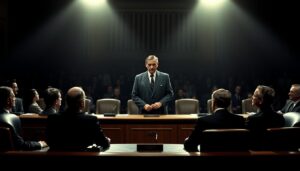
Imagine a gym filled with smoke, where sweat marks the walls like shadows on Humphrey Bogart’s coat. That’s the gritty world of sports noir. Here, jump ropes snap like fate’s whip, and every locker holds a secret.
Robert Wise’s The Set-Up (1949) is like a ticking bomb in a boxing match. The ring is a courtroom where men’s souls are judged as much as their punches.
These stories aren’t about winning. They’re about the harsh realities of society. In Body and Soul (1947), John Garfield’s boxer says “Everybody dies!”. It’s not just trash talk—it’s a harsh truth about postwar America.
Kirk Douglas’s character in Champion (1949) shows the dark side of capitalism. It’s a world where only the strongest survive.
Why do these classics hit harder than modern sports documentaries? It’s because 1940s filmmakers used shadows to reveal the truth. Those dark shadows didn’t just hide cheap sets—they showed the rot beneath America’s shiny surface. Noir by the numbers? It’s a mix of sweat, betrayal, and survival.
Introduction: Sports as a Noir Backdrop
Imagine a boxing ring where the ropes aren’t just boundaries but moral tripwires. Post-WWII America didn’t just need heroes – it needed mirrors. Sports film noir emerged, where athletes became philosophers in sweat-soaked singlets. Forget Gene Kelly’s sunny optimism; Kirk Douglas in Champion (1949) threw punches that echoed like bankruptcy notices.
Mark Vieira’s lighting studies show the real game: chiaroscuro as social commentary. Those locker rooms? They’re confessionals. The steam rising isn’t from showers but from compromised souls – like John Garfield’s punch-drunk boxer in Body and Soul (1947), a walking moral conscience noir movie prototype. His footwork? A dance with postwar disillusionment.
Why did filmmakers graft sports onto noir’s DNA? Simple: nothing exposes capitalism’s underbelly like a fixed horse race. The diamond or the racetrack became Petri dishes for studying ambition’s decay. Baseball bats swung like scythes through America’s wheat fields of innocence.
This wasn’t recreation – it was existential bookkeeping. Every jab at a heavy bag counted the cost of the American Dream. The real victory? Surviving another round in an economy where the house always won. Film noir sports tropes didn’t just entertain – they diagnosed a nation’s spiritual anemia through jump cuts and shadow play.
Not Just Boxing: Horse Racing, Baseball, Wrestling, Pool
Film noir wasn’t just about boxing. It also explored drama in baseball and horse racing. Body and Soul showed us fighters in pain, but noir’s real focus was on corruption in sports. Let’s look at the lesser-known sports in noir, where every game was fixed before it started.
The Rogue’s Gallery of Noir Athletics
Baseball was often portrayed as corrupt in noir films. The 1951 Angels in the Outfield showed how mobsters influenced the game. Even fly balls carried the smell of tragedy in film noir sports.
The Set-Up showed a boxer facing real challenges. But the real shock was the audience’s hunger for violence.
Horse racing was also depicted as corrupt. In The Hard Way, jockeys faced moral dilemmas. Wrestling films like Night and the City showed wrestlers struggling with their own demons. Even pool halls were seen as places of deceit.
Why did noir focus on these sports? It was a way to reflect the rot in postwar America. Baseball, racing, and wrestling were seen as mirrors of society’s flaws. The games themselves became characters, with rules that were as twisted as a drunk’s morality. The whole scoreboard was rigged, making a knockout punch unnecessary.
Statistical Look: Most Popular Sports in Noir
Let’s swap trench coats for spreadsheets and look at noir’s sports interests through data. If Humphrey Bogart ran a sportsbook, he’d find these odds fair. But he might take a 10% cut.
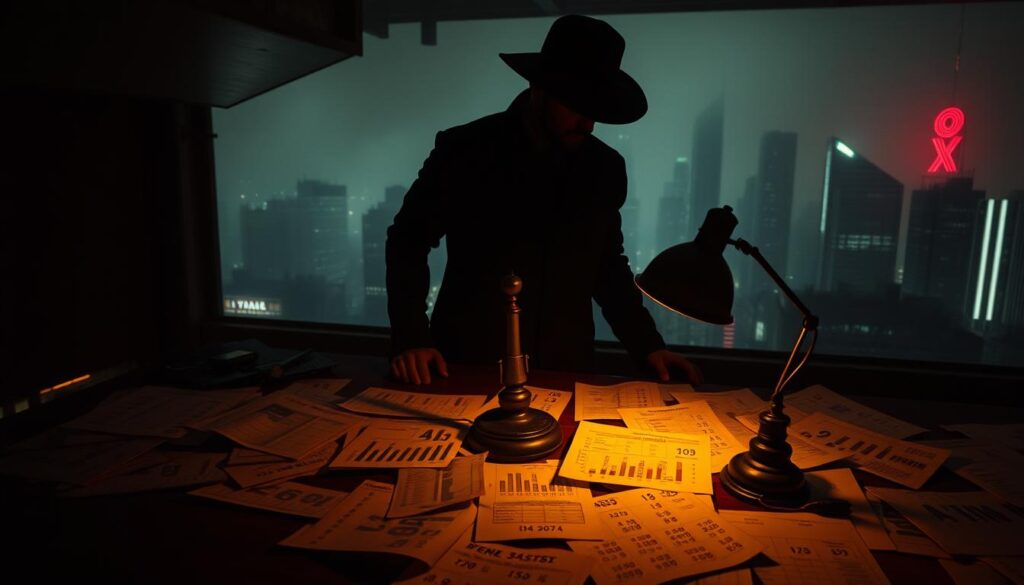
Noir by the Numbers
Mark Vieira analyzed 82 noir films and found a rigged game. Boxing is the clear winner, appearing in 62% of stories. But there are other contenders too:
| Sport | % of Films | Notable Examples |
|---|---|---|
| Boxing | 62% | Body and Soul, The Set-Up |
| Horse Racing | 22% | The Leather Saint, Boot Polish Bribes (1948) |
| Miscellaneous* | 16% | Bowling (Gutterballs of Fate), College Football (Scandal Bowl) |
*Includes the greatest crime in noir history: 1952’s Split Alley, where a pro bowler’s wrist brace hid microfilm. Even the lanes weren’t safe.
Warner Bros. released 7 boxing noirs in 1949. This was enough to make Rocky Balboa retire early. But ice hockey stayed clean until 1977’s Slap Shot showed even toothless goons could carry existential dread.
Boxing’s primal stakes matched noir’s survival-of-the-fittest theme. Horse racing offered corruption, thanks to dishonest jockeys. Bowling alleys were perfect for secret bribes, with the sound of falling pins covering the deals.
Why Writers Turned to Sports
Why did noir writers add sports to their stories? It was a way to say things they couldn’t say directly. With the Production Code limiting what could be shown in the 1940s, sports became a secret way to talk about big issues. They used sports to explore America’s problems like greed and corruption.
Bloodsport as Social X-Ray
In 1947, Body and Soul came out. It seemed like just another boxing movie. But it was really a strong critique of capitalism. John Garfield’s character, Charlie Davis, fights not just in the ring but against corrupt promoters.
It was more than a movie. It was a commentary on the times. The movie’s release in 1947 was a key moment. It was when Hollywood faced McCarthyism head-on. Garfield himself would face the House Un-American Activities Committee (HUAC) in 1951.
Noir writers used athlete archetypes to tell stories about everyday people. The washed-up wrestler stood for veterans who were forgotten. The jockey who threw races showed the struggle of workers against big machines.
Here’s how it worked:
- Boxing rings were like courtrooms for class battles
- Racetracks showed how unfair capitalism can be
- Pool halls highlighted the loneliness of city life
Studio bosses thought they were just making sports movies. But viewers saw deeper messages about inequality and red-baiting.
This was a clever way to sneak in messages. When saying too much meant getting blacklisted, sports movies were a safe way to critique society. And people loved watching, not realizing they were seeing hidden truths.
Common Tropes: Gambling, Corruption, Redemption
Film noir didn’t start sports drama, but it made it darker. It focuses on gambling corruption noir sports themes. These include rigged games, corrupt managers, and athletes facing huge pressures.
The Fixed Game Playbook
In Champion, Midge Kelly is a classic brooding champion film noir figure. He’s like a mix of Rocky Balboa and Mr. Rogers, but with a darker twist. His story shows how sports can be tainted by greed.
What’s striking is how obvious the fix is from the start. It makes you wonder about the true nature of sports.
From Locker Rooms to Back Rooms
The Set-Up turns a boxing match into a tense drama. Every round feels like a countdown to disaster. The real story happens in secret meetings, where film noir tropes sports come alive.
Here, deals are made in the shadows. Dreams are crushed faster than a boxer facing Tyson.
| Locker Room Ideals | Backroom Realities | Human Cost |
|---|---|---|
| Fair play | Fixed odds | Broken ribs |
| Training montages | Money laundering | Lost innocence |
| Glory | Gambling debts | Empty wallets |
Noir’s sports tales pose a tough question. It’s like asking: What’s heavier—a championship belt or a pawnshop pistol? The answer is often bloody, sweaty, and full of betrayal.
Key Examples (Films, Scenes, Directors)
If film noir had a gym membership, it’d be punching bags at midnight – these classics sweat desperation through every frame. Let’s lace up the gloves and step into the ring with two masterclasses that redefine boxing history in film noir.
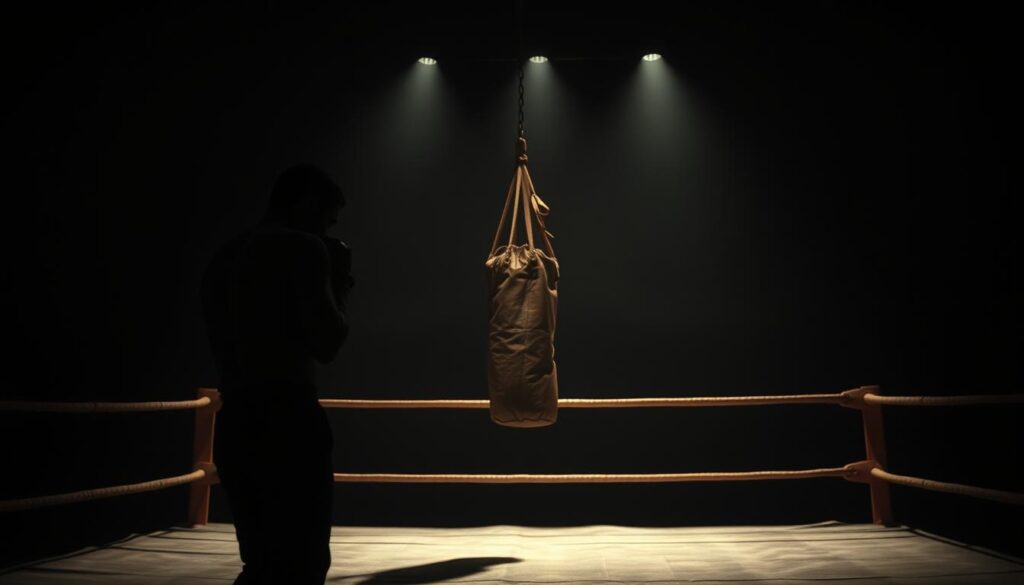
Required Viewing for Cynics
Robert Wise’s Ticking Clock (The Set-Up)
Wise’s 1949 knockout The Set-Up isn’t just a classic boxing movie – it’s a wristwatch thriller. The entire runtime syncs with a washed-up fighter’s 72-minute bout, each punch landing like a second hand on fate’s clock. Here’s the twist: the fix’s already in, but nobody told our palooka protagonist. Wise turns sweat stains into existential countdowns – you’ll check your own watch just to feel alive.
Rossen’s Capitalist Canvas (Body and Soul)
John Garfield’s 1947 slugfest Body and Soul throws haymakers at the American Dream. Director Robert Rossen paints contracts as blood oaths, turning locker rooms into boardrooms. When Garfield’s Charley Davis debates whether to take a dive, it’s not just sports ethics on trial – it’s the entire post-war economic system. Fun fact: Scorsese studied these shadowy corners before crafting Raging Bull’s poetic brutality.
These films don’t just document punches – they autopsy ambition. The ring becomes a courtroom where every jab argues against hope itself. Want proof that boxing film noir is alive and kicking? Watch any modern sports drama’s third act – you’ll find Wise and Rossen’s DNA in the sweat-stained corners.
The Allure of Risk and Athletic Melancholy
Modern sports dramas focus on winning, but noir sports stories love defeat. They show athletes facing loss, not just empty lockers but also empty pockets. Even winning seems like a trap for the next fall.
Beauty in the Breakdown
John Garfield’s Body and Soul is a prime example. He plays a boxer who sells his soul for money. His last fight isn’t about winning; it’s about making it through to regret his choices. Unlike Rocky, who climbs stairs for hope, noir athletes keep going even when the stairs fall.
Sports noir analysis is all about harsh truth. These films use sports to show the dark side of capitalism. A failed boxer becomes a warning about American greed. In The Lusty Men, a corrupt jockey shows how exploitation works in the rodeo, using both humans and animals until they’re broken.
Today’s retro sports movies mix in some sadness but also add a nostalgic glow. They show the hard work but rarely the emptiness that follows. Noir, on the other hand, showed that the real tragedy is knowing the game was rigged from the start.
Why do we find this bleakness appealing? It’s because it’s true. Every athlete knows their body will fail them before their dreams do. Noir was brave enough to say it first, with a cigarette and a bottle of bourbon nearby.
How Sports Defined Noir’s Social Themes
Noir filmmakers used sports to show the dark side of postwar America. Athletic arenas reflected racial tensions, class struggles, and the decay of capitalism. All this happened while audiences enjoyed the show.
Ringside Seats to the American Nightmare
In Champion, Midge Kelly fights his way up but ends up corrupted. His boxing gloves symbolize the corruption of Wall Street. Noir films showed us the flaws in our systems and asked us to question them.
Jackie Robinson’s integration of baseball in 1947 was mirrored in noir films. Movies like The Set-Up showed the harsh realities faced by Black fighters. Sports became a way to highlight the unfairness in society.
| Sport | Noir Film | Social Critique |
|---|---|---|
| Boxing | Body and Soul | Capitalism’s body count |
| Horse Racing | The Leather Saint | Religious hypocrisy |
| Baseball | It Happened in Flatbush | Racial tokenism |
| Wrestling | Night and the City | Immigrant exploitation |
Noir films asked tough questions. If a fixed fight is wrong, why do we accept rigged markets? When a corrupt promoter is punished, why do real-life culprits go free? These stories were about the nation’s flaws, not just sports.
The genre’s greatest trick was making us root for athletes while criticizing our own role. We leave these films feeling battered but wiser. We start to question any system where the house always wins.
Impact on Later Sports Dramas
Classic noir didn’t disappear; it just changed its look. It moved from crime films to sports dramas, where winning can mean losing your values. You see its influence in Scorsese’s films and online shows about athletes who bend the rules.
Ringside Redux
Is Raging Bull (1980) by Martin Scorsese just a boxing film? No, it’s a noir twist. The close-up shots of fists were inspired by The Set-Up (1949). Scorsese updated it with Jake LaMotta’s inner struggle.
Today’s movies and shows borrow from noir. The Creed series uses dark lighting to tell Rocky’s story. Even The Last Dance shows Michael Jordan’s drive as both strength and weakness.
| Noir Element | Classic Example | Modern Adaptation | Impact |
|---|---|---|---|
| Moral Ambiguity | Body and Soul (1947) | Nightcrawler (2014) | Antiheroes replace clean-cut champions |
| Corrupt Institutions | The Harder They Fall (1956) | Moneyball (2011) | Systems, not individuals, become the villain |
| Visual Style | High contrast lighting | Euphoria’s football episodes | Neon noir meets Friday Night Lights |
Sports video games also tell noir stories. FIFA’s Ultimate Team mode is like a 1947 betting scheme. It shows how we’re betting on games, but now with better graphics.
This isn’t just nostalgia. It’s how noir has evolved. Today’s retro sports movies tackle new issues like CTE and social media. The shadows in sports movies now highlight different problems.
Conclusion
Classic noir sports films never leave us. They keep coming back, like a fighter who won’t quit. Their attacks on capitalism and corruption are as strong as ever. Films like Body and Soul and The Set-Up show us why sports in noir films are perfect for showing rigged systems.
The real fight wasn’t in the ring. It was in smoky offices where men made bets on people’s lives.
Today’s viewers are shocked by these truths. The Set-Up, a 1949 film about gambling, feels like it was made yesterday. It shows how corporate sponsorships control athletes’ lives. Noir films used wrestling and horse racing to show America’s love for winners and losers.
These films saw every underdog story as a way to hide the truth. They showed us that every story has three people counting their money.
When you watch a sports drama about corruption or desperate athletes, remember the classics. They started it all. They taught us to look for the unexpected punch, not the fair fight. Every game is a chance to lose, and the lessons of classic noir sports stay with us, like smoke in a room.