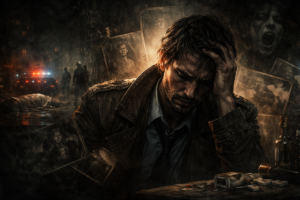
What makes a sweaty locker room as dark as a wet alley? Imagine a battered heavyweight under lights as bright as a detective’s lamp, his gloves full of blood. It’s not just about fighting—it’s about our love for winning, no matter the cost.
Filmmakers from the 1940s-60s didn’t just show sports. They showed the dark side beneath. In Body and Soul, Humphrey Bogart plays a promoter who deals with fixed fights and broken dreams. These stories ask tough questions: When does competition turn to corruption? Why do we cheer for heroes who aren’t really heroes?
These films show the dark side of capitalism. Stadiums became places to buy and sell athletes. They showed us that the real fights aren’t in the ring but in secret deals. Through smoke and cynical voices, they revealed the truth behind closed doors.
Defining Noir in Sports Films
If Humphrey Bogart traded his trench coat for boxing gloves, you’d get the DNA of sports noir. This genre doesn’t just show athletes sweating under stadium lights—it drags them through moral quicksand. Noir aesthetics thrive where sweat stains meet shadowy alleyways, turning locker rooms into labyrinths of existential dread.
Let’s dissect the playbook. Traditional sports films preach triumph; gloomy sports films dissect the cost of victory. Take Fritz Lang’s obsession with angular shadows—now picture them slicing across a boxing ring. That chiaroscuro isn’t just mood lighting; it’s visual philosophy. Empty bleachers filmed in Dutch angles? That’s capitalism’s hollow applause.
Three pillars define the genre’s foul-play flavor:
- Lighting as moral compass: High-contrast beams don’t illuminate—they interrogate
- Voiceovers that scratch at dreams: “I coulda been a contender” becomes “I sold my soul for tickets sold”
- Urban decay as co-star: London’s foggy docks morph into smoky gyms reeking of broken promises
| Noir Element | Traditional Sports Films | Noir Sports Films |
|---|---|---|
| Protagonist Motivation | Glory, teamwork, legacy | Survival, desperation, revenge |
| Visual Style | Sunlit fields, locker room pep talks | Rain-slicked streets, flickering neon |
| Resolution | Trophy lifts & smiling crowds | Ambiguous endings & lingering debts |
Gene Phillips called this “capitalism’s shadow boxing”—and he wasn’t wrong. Modern superhero flicks spoon-feed morality, but noir sports films make you choke on the aftertaste. Why root for underdogs when you can watch them bite?
The tracking shot through empty arenas isn’t just cinematography—it’s autopsy. These films don’t ask “Who won?” They whisper, “Was it worth losing everything?” Now that’s a halftime show worth dissecting.
The Golden Age: 1940s-1960s Examples
Forget Disney-style underdogs—Golden Age sports noirs traded inspiration for whiskey-stained realism. This era saw sports films stop cheering and start sneering. They exposed locker rooms as places of greed and existential dread. Let’s lace up our metaphorical cleats and dive into the muck.
The Harder They Fall (Boxing’s Shadow)
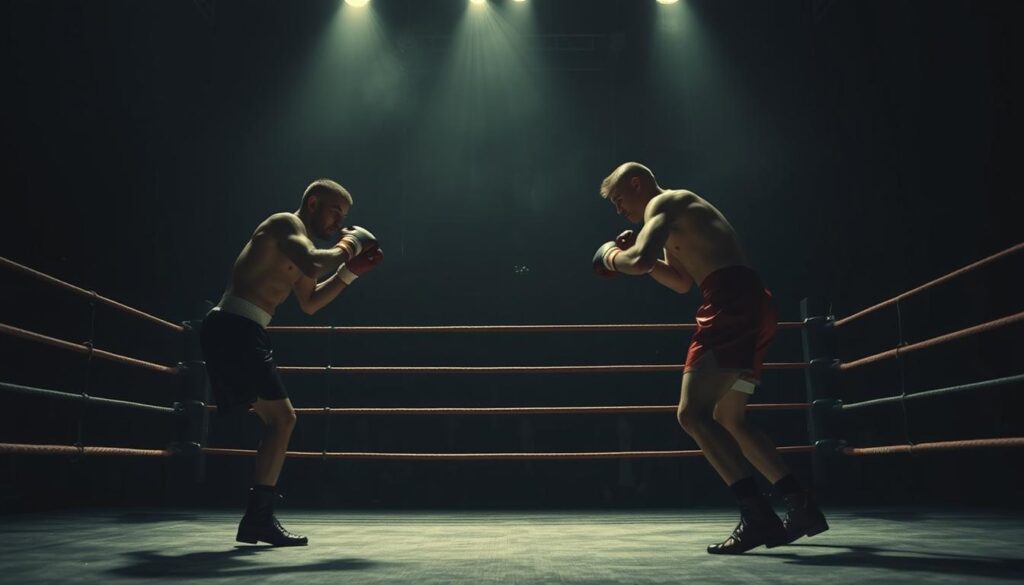
Bogart’s final film role was a “sports journalist” turned promoter in The Harder They Fall. It’s a masterpiece that makes Don King look like Mr. Rogers. The film’s genius is in its slow burn, showing Bogart’s character evolve from cynical observer to active participant in boxing’s meat grinder.
Sound familiar? Swap fedoras for UFC merch, and you get Dana White’s playbook.
Source 1’s analysis nails it: This isn’t just about sports corruption movies. It’s about capitalism’s sucker punch. Fighters become literal commodities—their battered faces mirroring post-war America’s bruised psyche.
Body and Soul
John Garfield’s Charlie Davis doesn’t just throw punches—he becomes the punchline. This 1947 film asks: What’s more dangerous—a mobster’s bullet or your own ambition? The Marxist subtext isn’t subtle: Garfield’s boxing gloves might as well be factory tools in a rigged economic system.
The Carter Collection frames this as noir boxing movies at their most brutally poetic. That final bout? Not a Rocky moment, but a desperate man swinging at capitalism itself.
Gritty Tennis, Football, and Baseball in Noir
Why did America’s sunniest sports get noir makeovers? Because nothing says “American Dream” like a tennis pro throwing matches for mortgage money. These outliers reveal noir’s true power—it’s not about the sport, but the rot beneath the stadium lights.
Take 1950’s Right Cross: A Mexican-American boxer faces racism sharper than any jab. Or baseball noir The Killing—Kubrick’s pre-Strangelove masterpiece where the real crime isn’t robbery, but believing in the game’s purity.
These films asked uncomfortable questions: Was McCarthyism just another form of bench-warming fascism? Did locker rooms breed conformity? The answers are as painful as a fastball to the ribs.
Cinematic Techniques: Lighting, Voiceover, Moral Ambiguity
Let’s cut through the fog of nostalgia—noir aesthetics in sports films aren’t just about shadows. They’re about turning sweat into existential dread. Imagine that iconic low-angle shot of a battered quarterback. His knees buckle, helmet cracked, with stadium lights like venetian blinds in a detective’s office. It’s pure Orson Welles meets Monday Night Football.
Lighting in these gloomy sports films doesn’t illuminate—it accuses. Source 1’s analysis shows how “The Harder They Fall” turned boxing rings into interrogation rooms with overhead lamps. Every punch cast three shadows: the fighter’s, the promoter’s, and the audience’s guilty conscience. Today’s CGI stadiums lack the moral residue of old films.
Voiceovers in classics like “Body and Soul” are like Raymond Chandler’s street poetry. John Garfield’s monologues were confessions masked as trash talk. Imagine a Tucker Carlson segment rewritten by James Ellroy: sparse, biting, and selling nihilism as breaking news.
The real magic lies in the moral fog machines. Golden-age filmmakers used cigarette smoke and cramped locker rooms to question: “Is that champion a hero or a patsy?” Today’s sports dramas prefer floodlit redemption arcs. But can you hide an athlete’s sins in the shadows when their pores are visible? Some questions hit harder than a 1940s left hook.
Key Performances: Bogart, Garfield, Conte
Humphrey Bogart didn’t just play Eddie Willis in The Harder They Fall. He created a character that showed existential exhaustion. He smoked like a chimney, showing the dark side of boxing.
His final scene is a 3 AM confession. It’s a deep look into a man who knows his own fate.
John Garfield’s Charley Davis in Body and Soul is a tale of athletic tragedy. He acted like a fighter, showing his character’s inner turmoil. His performance is raw, full of desperation.
When he says “Everybody dies!”, you feel the weight of his words.
Richard Conte’s characters in The Big Combo and other films are slick. They show the art of the deal-with-the-devil handshake. His smile is as dangerous as a loaded glove.
These characters are not just villains. They are the corrupt ones, dressed in suits.
These roles paved the way for De Niro’s Raging Bull. Bogart, Garfield, and Conte’s performances mixed to create LaMotta’s story. The real battle is in the performance of being a man.
Why do these roles hit hard? They show the bloody poetry of sports. The real danger is not in the ring but in the world outside.
Noir Tropes: Doomed Hero, Femme Fatale, Corrupt Promoters
Sports corruption movies are all about sweat, betrayal, and rigged games. At their heart is the doomed hero with a $200,000 debt. These athletes lose more than games; they lose their souls to sports movies manipulation.
The femme fatale has changed. No longer are they just gold-diggers. Now, they’re team owners’ daughters with contracts tighter than a chokehold. They’re like Joan Klein from The Cold Six Thousand, mixing business with pleasure.
The real stars of sports noir are the corrupt promoters. They’d sell anything for a cut. From The Harder They Fall to FIFA, they turn sports into crime. They treat athletes like products and fans like marks.
| Trope | Classic Example | Modern Parallel | Real-World Link |
|---|---|---|---|
| Doomed Hero | El Toro Molina (The Harder They Fall) | Bankrupt MMA fighters in Warrior | NFL concussion scandals |
| Femme Fatale | Alice (Body and Soul) | Team heiresses in Draft Day | FIFA’s “hospitality” deals |
| Corrupt Promoter | Nick Benko (Champion, 1949) | Biogenesis scandal brokers | 2026 World Cup bid investigations |
What keeps sports corruption movies alive? They expose the dark side of sports. Today’s scandals, like Russian doping or NBA referee issues, are like noir stories come to life. The stadium lights don’t shine; they cast long shadows.
Noir’s Influence on Modern Sports Drama
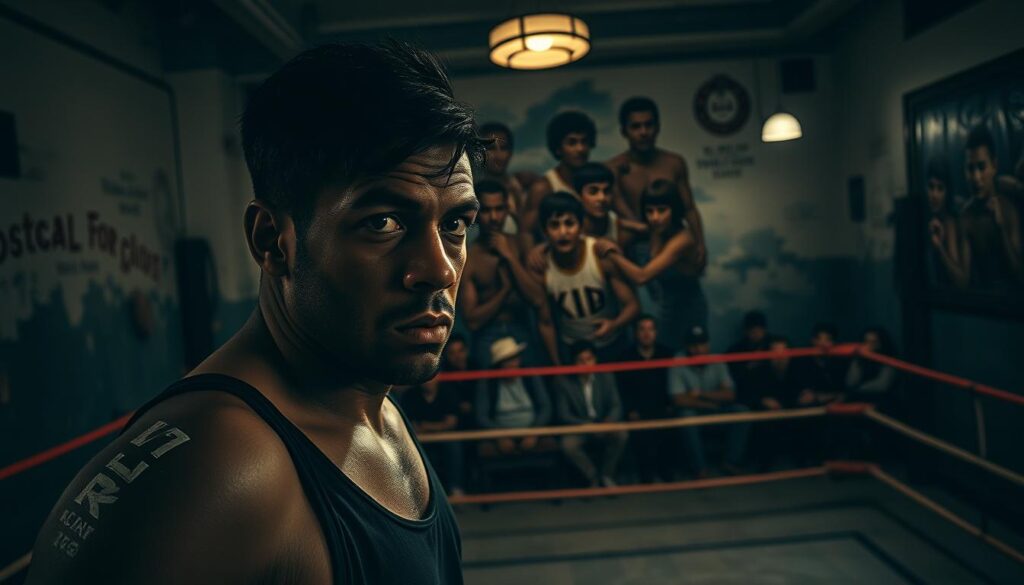
Modern sports dramas might look different, but they carry a noir vibe. Moneyball is a prime example. It’s about baseball stats, but it’s really about the emptiness of numbers. Brad Pitt’s character fights against the cold, calculating world of algorithms, echoing noir’s themes of despair.
Today’s sports movies often mix truth with moral gray areas, just like noir:
- Foxcatcher (2014): Wrestling is used to show how wealth can corrupt, with Steve Carell’s character as a modern villain
- Nightcrawler (2014): Not strictly a sports movie, but it shows how media feeds off human suffering for ratings
- I, Tonya (2017): This ice skating movie uses unreliable narration, much like a femme fatale’s secrets
These films use dramatic lighting to hide their noir roots. Empty stadiums stand in for dark alleys, and corporate deals are the new crime syndicates. Both exploit people for their gain.
Nope (2022) by Jordan Peele is a sports noir masterpiece. It’s about a Black rodeo crew facing an alien threat. This film turns the classic American cowboy story into cosmic horror. The real horror is our desire for shocking entertainment, a theme that would resonate with noir fans.
Streaming services have made sports struggles into easy-to-watch content. They’re like digital fight promoters. Every sports documentary now comes with a price – our personal data and trauma are sold. The virtual ring may be new, but the manipulation is as old as noir.
Conclusion: Why Noir’s Gloom Stills Captivates Retro Fans
Scratched film prints of sports noir movies don’t just whisper nostalgia—they scream uncomfortable truths. The Carter Collection’s battered 35mm reels of The Set-Up or yellowed Body and Soul paperbacks aren’t relics. They’re mirrors. In today’s world, where fame is more important than talent, retro noir’s dark truths feel eerily familiar.
Robert Wise’s shadow-drenched frames predicted our era of algorithmic gambling and sponsored integrity. John Garfield’s sweat-soaked desperation in Body and Soul? It’s like today’s world, where digital tricks replace real deals. These films didn’t glamorize the hustle—they exposed it. That’s why Criterion’s 4K restorations sell out fast. We’re drawn to their raw honesty.
Sports noir movies thrive because they plant doubt. Their stories are filled with betrayal, not just sports victories. When Humphrey Bogart’s Eddie Willis in The Harder They Fall says “We’re all suckers,” he’s not just talking about old boxing. He’s warning us about today’s scams. The genre’s power? It never pretended the game was fair. It showed us the truth about people.
So we keep watching these gritty films. Not for old-time’s sake, but to understand today’s world. Every corrupt figure and deceitful woman feels all too real. The message is clear: They warned us about the fix. Yet, we keep betting on the underdog.