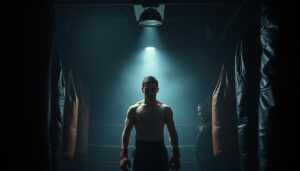
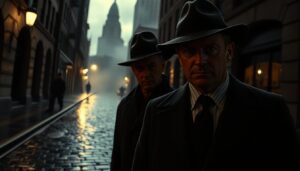
Before neon reflections soaked city streets in film noir, before detectives narrated their regrets in dim offices, the visual grammar of crime stories was already evolving across multiple mediums. Cinema shaped the mood, but comics carried that mood into a different dimension — a world where shadows could stretch impossibly long and silence could occupy entire panels.
Noir comics did not simply imitate film. They absorbed its techniques and translated them into ink, composition, and pacing. Artists borrowed cinematic lighting, camera angles, and urban atmosphere to create a visual storytelling language uniquely suited to the printed page.
The result was a hybrid form — part cinema, part graphic art — where each panel functions like a frozen frame from a lost noir film.
The Cinematic Origins Of Noir Comics
Film noir’s influence on comic storytelling emerged most clearly during the mid-20th century, when crime and detective comics began embracing darker themes and visual experimentation. Artists studied the stark lighting contrasts of black-and-white cinema and realized that ink could replicate — and sometimes exaggerate — those same dramatic effects.
High-contrast chiaroscuro, a lighting technique central to noir cinematography, translated naturally into pen-and-ink illustration. Black shapes swallowed backgrounds. Street lamps became isolated pools of light. Characters stepped out of darkness rather than into it.
What filmmakers achieved with lighting rigs and lenses, comic artists achieved with brush strokes and negative space.
The influence was not accidental. Many comic artists were avid filmgoers, absorbing the visual rhythm of noir movies and adapting those patterns to page layouts.
Framing Panels Like Camera Shots
One of the most direct cinematic borrowings in noir comics is framing. Comic panels often replicate the language of camera placement: wide establishing shots, close-ups of tense expressions, and dramatic angles that distort perspective.
Artists learned that panel composition could mimic cinematic storytelling techniques. By shifting the visual “camera,” they guided the reader’s emotional focus.
| Cinematic Technique | Panel Translation | Narrative Effect |
|---|---|---|
| Wide establishing shot | Full-page cityscape panel | Establishes mood and environment |
| Close-up framing | Tight character portrait panel | Reveals emotional tension |
| Low-angle shot | Upward perspective panel | Emphasizes power or menace |
| High-angle shot | Overhead panel composition | Suggests vulnerability |
Through these compositional choices, noir comics transformed static imagery into dynamic narrative movement.
Readers do not merely see the story — they experience it sequentially, as though watching frames unfold on screen.
Lighting And Shadow As Narrative Structure
In noir comics, shadows are not decoration. They carry narrative weight.
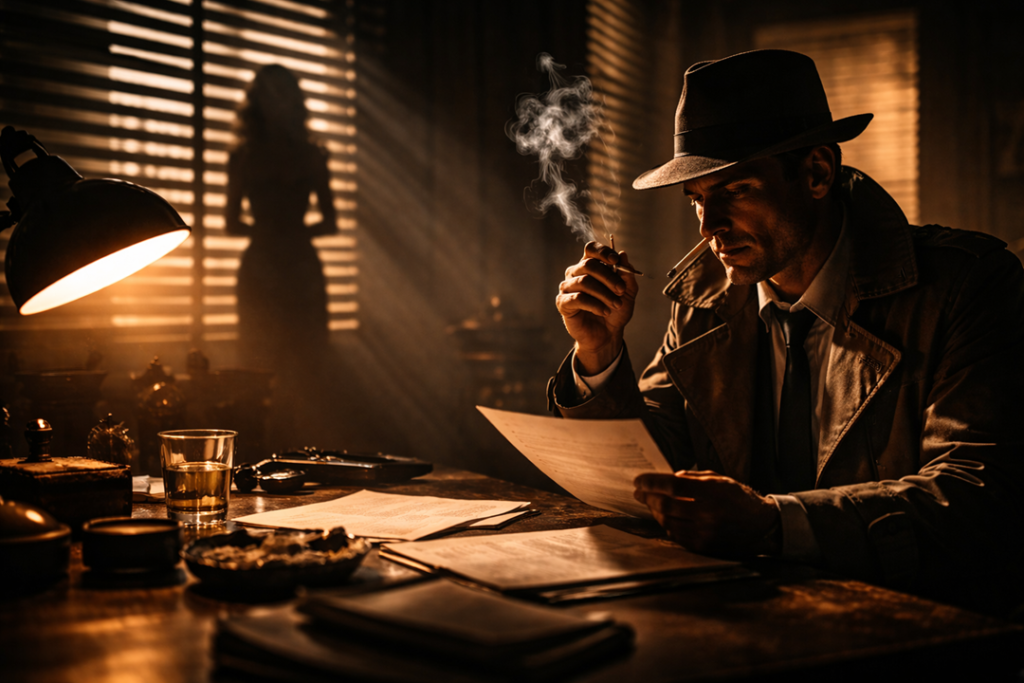
Artists frequently allow darkness to occupy large portions of the page, letting characters emerge from black shapes that resemble alleyways or doorways. This approach mirrors the visual design of classic noir films, where lighting directs attention while concealing information.
The technique reinforces the central themes of noir storytelling: uncertainty, secrecy, and moral ambiguity.
Consider how shadow placement shapes reader perception:
| Visual Element | Artistic Technique | Emotional Impact |
|---|---|---|
| Alley shadows | Heavy black ink blocks | Suggests danger and confinement |
| Window blinds | Parallel shadow lines | Evokes interrogation and suspicion |
| Silhouettes | Minimal detail figures | Heightens mystery |
| Streetlight pools | Isolated illuminated panels | Focuses attention on key action |
These visual strategies echo the cinematic approach discussed in our exploration of jazz tension in classic film noir, where mood and atmosphere communicate meaning before dialogue ever begins.
Both mediums rely on suggestion rather than exposition.
Urban Environments As Visual Characters
Cities dominate noir comics just as they dominate noir cinema. Skyscrapers loom above narrow streets. Fire escapes zigzag across brick facades. Rain collects in reflective puddles that mirror neon signs.
These environments are rarely neutral. The city becomes a character — oppressive, watchful, and unpredictable.
Artists often exaggerate architectural scale, making buildings appear taller and alleys narrower than they might be in reality. This distortion enhances the psychological pressure experienced by the characters within them.
Urban noir landscapes typically rely on recurring visual motifs:
- Narrow alleyways disappearing into darkness
- Flickering streetlights casting sharp shadows
- Office windows glowing in otherwise black skyscrapers
- Rain-soaked pavement reflecting distorted city lights
The architecture traps characters in visual mazes that echo their moral dilemmas.
Sequential Storytelling And Cinematic Rhythm
Unlike cinema, comics do not unfold automatically. The reader controls the pacing. Yet noir comic artists found ways to simulate cinematic rhythm through panel arrangement.
A rapid sequence of small panels might depict a tense pursuit through city streets. A sudden full-page illustration can freeze time at the moment of revelation. Silence occupies the gutters between panels, creating narrative pauses that resemble cuts in film editing.
This structural similarity explains why noir comics often feel cinematic even without motion.
Panel transitions function like edits. Composition changes mimic camera movement. And the reader’s eye performs the role of the camera itself.
In effect, noir comics transform the act of reading into a form of visual editing.
The Evolution Of Noir Comics In Modern Graphic Storytelling
While classic crime comics drew directly from mid-century cinema, modern graphic novels continue refining the relationship between film language and illustrated storytelling.
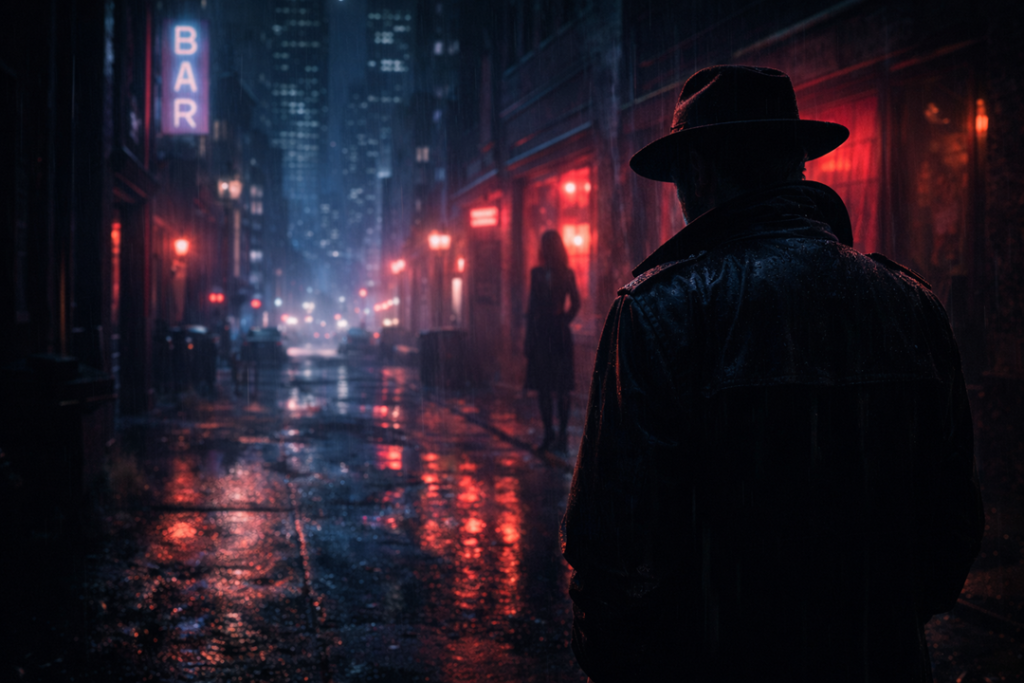
Artists experiment with digital shading, color palettes, and unconventional panel layouts while maintaining the core noir aesthetic: contrast, atmosphere, and urban isolation.
The influence of cinema remains unmistakable. Contemporary graphic noir frequently references film lighting, camera angles, and narrative pacing as foundational design principles.
Scholars of visual storytelling often note this exchange between mediums. The Museum of Modern Art’s examination of graphic storytelling traditions in comics and illustration highlights how comic artists draw inspiration from cinematic techniques to shape narrative composition.
The relationship between film and comics, therefore, is not one-directional imitation. It is an evolving dialogue.
Why Noir Translates So Naturally To The Comic Page
At its core, noir storytelling is about atmosphere. It thrives on implication rather than explanation, tension rather than resolution.
Comics, with their ability to freeze moments and manipulate visual contrast, provide an ideal platform for that atmosphere.
A single panel can capture what a film frame might only suggest — a detective’s silhouette beneath a streetlamp, a femme fatale framed in window light, a shadow stretching across an empty hallway.
The language of noir is visual before it is verbal.
And in the silent spaces between panels, where readers imagine movement and sound, the cinematic spirit of noir continues to breathe.