Long before game engines could render reflective rain puddles and neon-lit skylines, film noir had already perfected the atmosphere of urban isolation. Dim alleyways, shadowed interiors, and morally uncertain protagonists shaped the visual identity of mid-century crime cinema.
Video games eventually inherited that language — but they did something cinema never could. They placed the player inside it.
Modern noir-inspired games do not merely depict detectives wandering rain-soaked streets. They invite players to inhabit those streets, to make choices inside morally ambiguous worlds where lighting, architecture, and sound design shape the experience as much as the narrative itself.
The rise of video game noir is therefore not just aesthetic. It represents the transformation of noir from passive viewing into interactive atmosphere.
From Film Frames To Digital Streets
Early video games had limited graphical capabilities, which meant noir aesthetics appeared only in fragments — dark palettes, detective characters, or crime-driven plots. But as technology improved, developers began replicating the cinematic vocabulary of classic noir more faithfully.
Real-time lighting, dynamic shadows, and reflective surfaces allowed game environments to mirror the visual strategies once reserved for black-and-white cinema. Rain became more than environmental decoration. It turned streets into mirrors for neon light, creating depth and atmosphere.
Game designers increasingly borrowed from cinematography techniques such as:
| Cinematic Noir Technique | Video Game Adaptation | Narrative Effect |
|---|---|---|
| Low-key lighting | Dynamic shadow rendering | Creates tension and mystery |
| Venetian blind shadows | Environmental shadow patterns | Suggests secrecy or surveillance |
| Rain-soaked streets | Reflective surfaces in real-time engines | Enhances mood and depth |
| Isolated light sources | Spotlighted characters or interiors | Directs player focus |
These techniques transformed virtual cities into playable noir landscapes.
Interactive Atmosphere And Player Perspective
Cinema frames a story through a fixed camera. Video games, by contrast, allow the player to become the camera.
This shift fundamentally changes how noir atmosphere operates. Instead of observing a detective walking into danger, the player chooses when and how to step into the shadows.
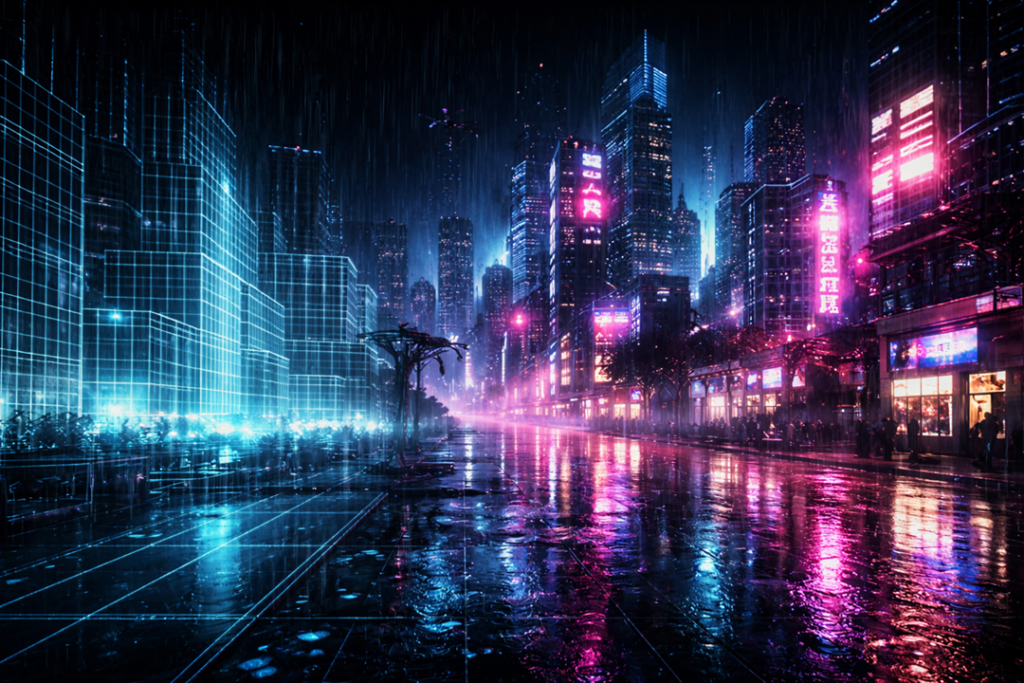
First-person perspectives intensify immersion, making environmental details — flickering lights, distant sirens, reflections on pavement — feel immediate. Third-person perspectives echo classic noir framing, placing the protagonist’s silhouette against looming cityscapes.
The interactive dimension means that tension is not merely observed. It is experienced.
Every alleyway explored, every neon sign reflected in rainwater, reinforces the atmosphere of uncertainty central to noir storytelling.
The Digital City As Noir Protagonist
In both film and games, cities play an essential narrative role. Yet in video game noir, urban environments become even more dominant because players move freely within them.
Developers often design cities that feel oppressive or labyrinthine. Narrow streets lead to dead ends. Elevated highways divide neighborhoods into isolated districts. Flickering signage and dim interiors reinforce the sense that danger lurks beyond every corner.
These environments mirror the architectural tension explored in the analysis of urban design in crime movies, where corridors, stairwells, and alleyways become visual metaphors for moral conflict.
In video games, however, those architectural metaphors become navigable terrain.
Players do not simply witness the maze. They wander through it.
Lighting Engines And The Modern Noir Aesthetic
One of the most significant developments enabling video game noir has been the evolution of lighting technology. Advanced rendering techniques allow developers to simulate subtle shadow gradients, reflections, and atmospheric fog.
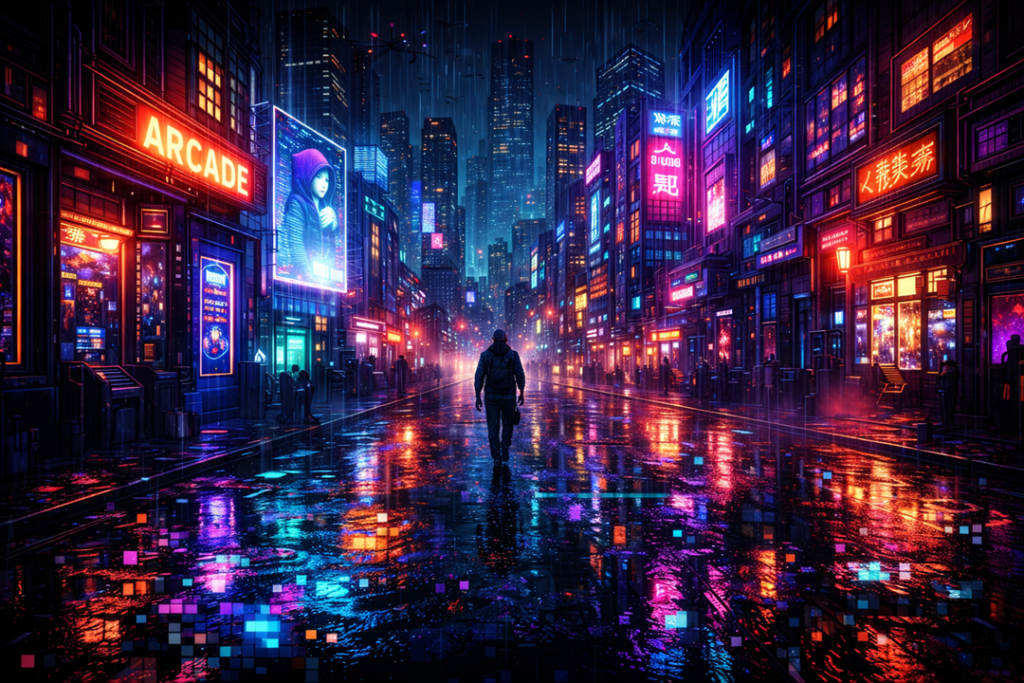
Modern engines replicate visual effects once associated exclusively with film cinematography:
| Rendering Technique | Visual Result | Atmosphere Contribution |
|---|---|---|
| Global illumination | Realistic light bounce | Softens contrast while preserving mood |
| Screen-space reflections | Dynamic reflective surfaces | Reinforces rain-soaked urban imagery |
| Volumetric lighting | Visible light beams through fog | Enhances dramatic tension |
| Dynamic shadows | Moving shadow sources | Creates uncertainty in dark spaces |
These technologies allow digital environments to mimic the chiaroscuro lighting patterns that defined classic noir cinema.
The difference is that the lighting now reacts to player movement, shifting the visual narrative moment by moment.
Moral Ambiguity And Player Choice
Noir narratives have always centered on flawed protagonists navigating ethical gray areas. Video games expand this concept through branching choices and player agency.
In many noir-inspired games, players must decide whether to follow strict moral codes or compromise them for survival. Dialogue options, investigative paths, and character alliances shape the unfolding story.
The result echoes the improvisational nature of noir protagonists in film. Detectives adapt. Informants betray. Alliances fracture under pressure.
In interactive noir, the player becomes responsible for those decisions.
This dynamic reinforces the genre’s core theme: certainty is an illusion.
The Soundscape Of Digital Noir
While visuals often receive the most attention, sound design plays an equally vital role in establishing video game noir atmosphere.
Ambient noise replaces traditional musical scores in many scenes. Rain taps against pavement. Distant traffic hums through empty streets. Occasional jazz notes drift from an unseen nightclub.
These auditory textures mirror the role of music discussed in our exploration of jazz tension in classic film noir, where restrained instrumentation and silence build narrative pressure.
In games, sound cues also guide exploration. Footsteps echo in empty corridors. Neon signs buzz faintly overhead. The environment itself communicates mood.
The player listens as much as they see.
Why Noir Thrives In Interactive Worlds
Noir storytelling depends on atmosphere, ambiguity, and slow-building tension. These elements translate naturally into interactive environments where pacing can stretch and mood can deepen.
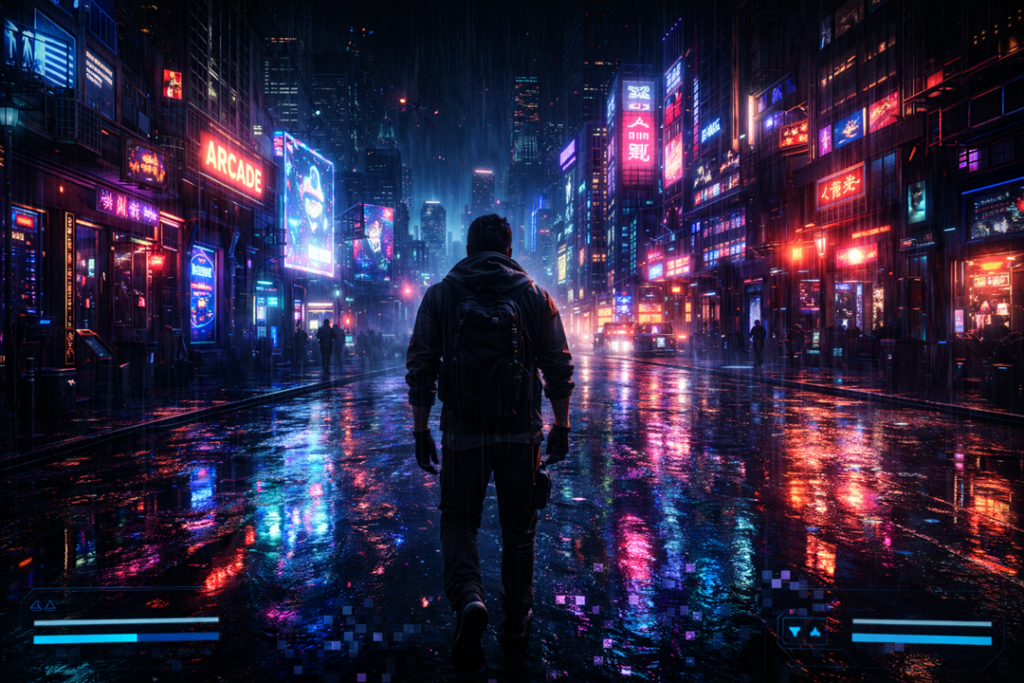
Unlike fast-paced action genres, noir games often encourage exploration and observation. Players linger in dim streets. They study reflections in puddles. They absorb the environment before making decisions.
The result is an experience closer to inhabiting a noir film than simply watching one.
Scholars of interactive storytelling frequently note how digital media expand cinematic language. The Smithsonian American Art Museum’s examination of video games as a visual storytelling medium highlights how interactive design reshapes narrative engagement through environment and player agency.
Video game noir demonstrates that transformation vividly.
The Future Of Pixelated Noir
As technology continues to evolve, the visual language of noir will likely grow even more immersive. Real-time ray tracing, advanced physics simulations, and increasingly detailed urban environments promise richer atmospheric experiences.
Yet the core elements of noir remain unchanged.
Neon reflecting on wet asphalt.
A solitary figure beneath a flickering streetlamp.
A city that feels both alive and indifferent.
In video game noir, players step into that city themselves — walking through shadows once confined to film frames.
The streets may be digital.
The tension, however, is timeless.