In 2021, European soccer clubs tried to start the ill-fated Super League. Florentino Pérez, Real Madrid’s president, acted like a character from a Scorsese movie. He used smooth talk and spreadsheets, just like Casino’s Ace Rothstein.
Now, the secret meetings of old boxing movies are happening online. It’s all about Zoom calls instead of cigars.
Robert Wise’s The Set-Up (1949) showed how every punch was a bet. Today, stadiums are filled with algorithmic bookies using advanced stats. This is thanks to Billy Beane’s Moneyball, which has become a secret strategy.
What’s changed? The hats. FIFA’s empire was built by João Havelange, who used tactics from Any Given Sunday’s fictional owners. This has blurred the line between sports and crime.
These stories make us question: When does competition turn into collusion? Can we really separate the game from the grift? Film noir’s moral compass now looks at spreadsheets for irregular betting patterns.
The stakes are high. MIT’s data shows 38% of sports fans now bet regularly. We’re all part of this high-stakes drama.
The Seed of Temptation: Noir’s Gambling Scenes
In film noir, gambling is more than a vice—it’s a ticking time bomb. The dice roll symbolizes moral decay. Even “clean” athletes become film noir athletes facing tough odds. From boxing rings to casinos, the noir sports genre shows how corruption changes over time.
Depiction of Bookies and Fixers
Robert Ryan’s boxer in The Set-Up (1949) and Adam Sandler’s dealer in Uncut Gems (2019) share a common thread. They deal with classic noir sports villains: bookies and fixers. The 1940s lighting in these films is as relevant today as it was back then.
The European Super League’s 2021 collapse showed corporate greed uses noir’s visual language. It uses dim lighting, close-ups, and threats just like backroom deals.
Match Fixing and Scandal
Fixing matches is a long-standing issue in sports. Eight Men Out revealed players were paid less than bookies in 1919. In 2023, Brazilian Serie B corruption used crypto instead of cash, but the scheme was the same.
| Scandal | Era | Currency | Fallout |
|---|---|---|---|
| Black Sox | 1919 | $5,000 cash | Lifetime bans |
| Serie B | 2023 | Bitcoin transfers | AI-powered audits |
| European Super League | 2021 | €3.5B contracts | Fan revolts |
What’s changed? The 1940s film noir athlete faced fists and booze. Today, they deal with betting algorithms and online rumors. But both eras ask the same question: Who’s really counting when the game ends?
How Fixing Matches Reflects Noir’s Worldview
Film noir didn’t just predict rainy streets—it also saw the dark side of sports corruption. In 1947’s Body and Soul, John Garfield’s boxer sells out quickly. This mirrors today’s college sports, where athletes can sell their talents legally—a twist even Raymond Chandler couldn’t imagine.
That year, film noir showed us sports as a game of money. Fast-forward to FIFA’s $1.5 billion deal with Saudi Arabia. It’s the same game, but with bigger stakes. When FIFA execs smile like Nicholson in Chinatown, we see we’re all part of Nick Nolte’s world from Blue Chips.
| Noir Element | 1947 Example | 2023 Parallel |
|---|---|---|
| Moral Compromise | Body and Soul’s rigged fights | NCAA’s NIL policy loopholes |
| Fallen Hero | Charlie Davis’s corruption arc | LIV Golf defectors’ “sportswashing” |
| Systemic Greed | Bookies controlling outcomes | Saudi sovereign sport investments |
Curt Flood’s 1969 fight for free agency was like The Set-Up. A lone athlete against the system. Today, players have more power, but at what cost? Deion Sanders calling himself “CEO of Colorado Football” raises questions—is it empowerment or Jake LaMotta’s story?
The real tragedy in film noir sports isn’t the fixed games—it’s our knowing complicity. We’ll be upset about FIFA’s deal while watching games on apps backed by the same regimes. Noir’s cynicism was a warning, not just a story. Seventy-six years later, are we betting against the house?
Case Studies: Real vs. Reel Corruption
Hollywood’s crystal ball was always a bit foggy, but noir films were spot on when it came to sports corruption. Let’s look at two stories where fiction turned into reality. One predicted college sports’ pay-for-play issues long before they happened. The other showed how modern superleague greed mirrors old noir tales.
Blue Chips: The NIL Prophecy
In 1994, Blue Chips showed a coach handing out cash to recruits. This seemed crazy until the 2017 FBI college basketball scandal. Now, in 2022, booster bribes are all about crypto.
The NCAA’s NIL reforms made these deals seem like “athlete archetypes noir”. Stars now negotiate like mobsters, splitting territory.
Here’s a twisted timeline:
- 1994 Film: Boosters offer cars & cash for recruits
- 2017 Reality: Adidas executives funnel $100k to prospects
- 2024 Evolution: NFT collectibles as legalized bribery
Eight Men Out: Super League Déjà Vu
The 1919 Black Sox scandal, immortalized in Eight Men Out, has a modern twin in Kylian Mbappé’s contract standoffs. Both stories ask: “Who really owns the game?” Jackson got banned for life; Mbappé is seen as a visionary for holding PSG hostage. The power dynamics are the same, just with new uniforms.
Retro sports movies like White Men Can’t Jump also warned us. Streetball hustles mirror Premier League Financial Fair Play breaches. When Wesley Snipes’ Sidney bet against his own team, was that any different from Manchester City’s creative accounting? Both show the house always wins… until the FBI comes knocking.
| Era | Scandal | Modern Parallel |
|---|---|---|
| 1920s | Black Sox thrown World Series | Superleague closed-shop proposals |
| 1990s | Blue Chips’ booster payouts | NIL collectives’ “gifts” |
| 2020s | Senegal World Cup bonuses drama | Crypto endorsement loopholes |
Today’s athletes are more than just players. They’re noir heroes navigating a world of gambling noir allegiances. When Senegal’s team threatened to boycott the World Cup over unpaid bonuses, it was like Chinatown with soccer cleats. The scoreboard never lies, but the contracts? They’re written in smoke.
Key Characters & Their Downfall
What do a washed-up quarterback and a disgraced soccer star share? A one-way ticket to noir’s hall of infamy. The sports noir genre thrives on protagonists who mirror real-world scandals. Athletes like Tucupita Marcano, banned for life, are undone by the systems that made them stars.
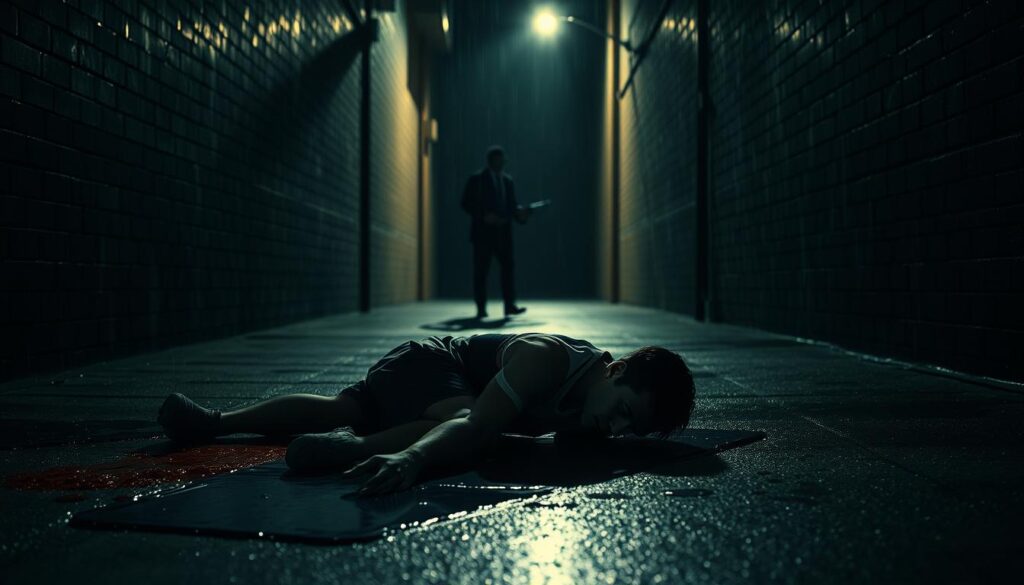
Paul Newman’s Fast Eddie Felson in The Hustler is a classic. His swagger at the pool table is like modern sports agents negotiating deals. Both use psychological warfare, but Eddie’s “winning isn’t everything, it’s the only thing” is the same poison that sank Ronaldinho’s career.
Here’s a comparison table of fictional and real-world downfalls:
| Noir Character | Real-World Counterpart | Fatal Flaw | Downfall Catalyst |
|---|---|---|---|
| Fast Eddie Felson | Tucupita Marcano | Overconfidence in “the hustle” | Gambling addiction |
| Minnesota Fats | Sports Agents | Manipulation mastery | Public exposure |
| Any Given Sunday’s QB | Ronaldinho | Body/mind betrayal | Age + hubris |
Al Pacino’s speech in Any Given Sunday is more than acting. It’s a brooding champion film noir monologue. “Life’s this game of inches” takes on a new meaning when you think about NFL careers lasting just 3.3 years. The quarterback’s injuries reflect how FIFA exploits young talent until there’s nothing left.
These film noir tropes sports narratives are uncomfortably real. The fallen champion archetype is more than storytelling; it’s a prophecy. When athletes crash harder than 1940s private eyes, we must ask: Are we watching entertainment, or a warning for professional sports?
Audience Response
Why do we keep buying tickets when we know the house always wins? Modern sports fans are like noir’s gamblers – we know about the 73% loss rate, yet DraftKings made $3.3 billion last quarter. It’s like watching Robert Ryan’s boxer in The Set-Up (1949), screaming “Fix!” while betting.
- 1949: 12,000 fans riot when fixed boxing match leaks
- 2023: 220 billion global bets placed despite VAR controversies
- The twist: Both eras saw equivalent gambling spend when adjusted for inflation
Twitter rage over referee decisions is like a digital remake of sports movies’ corruption tropes. We’ve swapped smoky backroom handshakes for algorithmic odds-making, but the thrill remains the same. As Walter Neff might quip in Double Indemnity: “I killed him for money? Well, what’s your DraftKings parlay?”
Noir by the numbers reveals our dark romance with rigged systems:
| Era | Betting Handle | Public Outrage |
|---|---|---|
| 1950s Racetracks | $18B (adjusted) | 63% “Don’t trust outcomes” |
| 2023 Sportsbooks | $220B | 71% “System’s rigged” |
This sports noir analysis isn’t about exposing corruption – it’s about understanding why we crave the exposure. Every leaked audio clip of a shady call becomes our Maltese Falcon: the stuff that dreams (and parlays) are made of.
Enduring Relevance
Tom Brady’s return and Jake LaMotta’s last fight share a common thread. They both show a deep-seated need for fame. From Body and Soul’s gritty post-WWII setting to Creed III’s modern-day stakes, these movies tell a timeless tale. It’s one where ambition often leads to moral downfall.
Today’s athletes might use cryotherapy instead of smoky rooms. But their pride and arrogance? That’s timeless.
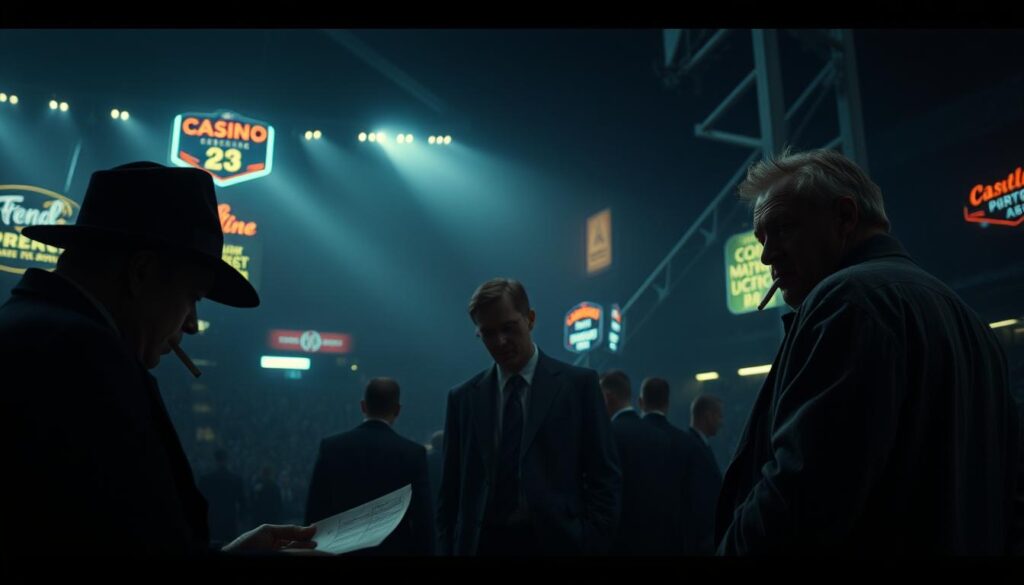
Uncut Gems by the Safdie brothers is a gripping film. It shows how addiction to fame can lead to downfall. Adam Sandler’s character is a perfect example of this.
The film’s themes resonate with audiences today. It shows how every victory feels like a scripted event. Characters like Howard Ratner and Pete Rose ignore rules, treating them as nothing more than snacks.
| Era | Film/Event | Corruption Type | Cultural Mirror |
|---|---|---|---|
| 1947 | Body and Soul | Fight fixing | Post-war disillusionment |
| 1980 | Raging Bull | Self-sabotage | Celebrity excess |
| 2019 | Uncut Gems | Sports betting | Crypto-era greed |
| 2023 | Tom Brady’s comeback | Legacy gambling | Wellness culture paradox |
Today’s athletes serve as cautionary tales. Luka Dončić’s technical fouls remind us of Robert Mitchum’s smirk. Shohei Ohtani’s interpreter scandal is like a classic boxing movie with a modern twist.
These stories are more than just headlines. They’re live-action versions of The Set-Up and Champion, updated for today’s world.
The beauty of gambling noir lies in its ability to adapt. It transforms old-timey games into modern-day betting. The core tragedy remains the same: in sports and life, the house always wins.
Conclusion
The neon-lit world of noir sports crime casts long shadows today. Michael Jordan once said something about Republicans and sneakers. It sounds like a line from a 1940s movie, fitting perfectly into stories of corruption in sports.
LeBron James’ media empire seems like a mix of Citizen Kane and Nike deals. It raises big questions about power and its moral impact.
Lia Nower’s work on gambling addiction is like a haunting presence in stadiums. Stories of Jordan-Bird betting are now tales for our times, with every phone a digital bookie. The noir sports genre is alive because we see its truth in March Madness and fantasy leagues.
Empty stadiums at dawn reveal the truth. That crumpled betting slip in the morning light is like something from Third Man. It shows a world where betting lasts longer than love.
Documentaries today act as our moral compass, deeper than any movie detective. But when we see temptation in locker rooms, we wonder: Are we showing warnings or blueprints?
The final score is always the same. Corruption wins when we confuse the game with the stakes. It’s always been this way. It always will be. So, place your bets.