In 1949, Robert Wise’s tour de fist shook up sports cinema in just 73 minutes. It didn’t just show a boxing match. It turned it into a real-time thriller, like a countdown in a Cold War movie. Every close-up and shadowy hallway was a round in a fight against corruption.
This film wasn’t your typical underdog story. The sports noir lighting made arenas into moral battlegrounds. Neon signs buzzed like guilty consciences, and bloodstains glowed like confessions. Raymond Chandler’s “sober vs crazy” idea is in every scene. A drunk’s shuffle is a desperate dance, and cornermen whisper deals that are as dark as a gambler’s drink.
What keeps these noir sports movies alive? It’s the mix of sweat and neon that turns jockstraps into tragic hero costumes. Wise’s camera focuses on a water bucket’s ripple, making our hearts race. In today’s binge-watch world, this 1940s film reminds us: real tension comes from the fight between hope and the abyss, round by round.
Introducing The Set-Up
Imagine mixing Body and Soul‘s strong moral sense with Champion‘s tough edge. That’s what Robert Wise did in 1949 with the bastard child of sports cinema. RKO wanted a hit, but Wise gave them a wake-up call.
The film is based on a poem about Black ambition in boxing. But it’s not as raw as the original. Instead, it’s a story of white desperation. It’s like art mirroring Hollywood’s own identity crisis.
Here are three reasons to watch this film:
- James Edwards’ performance as a trainer is groundbreaking. He’s the only Black character with depth.
- Wise’s filming makes you feel like you’re right there in the ring.
- The film is short, lasting only 73 minutes. It shows that less is more.
Body and Soul and Champion dealt with big themes. But The Set-Up focuses on something even more American: exploitation. It makes you feel bad for cheering on the violence. This is a trick many shows today try to pull off.
To 1949 RKO execs: If you want less social commentary, don’t hire the editor of Citizen Kane. Wise’s film is the shot of integrity sports noir needed. Even if Hollywood didn’t want it.
Plot Overview and Real-Time Narrative
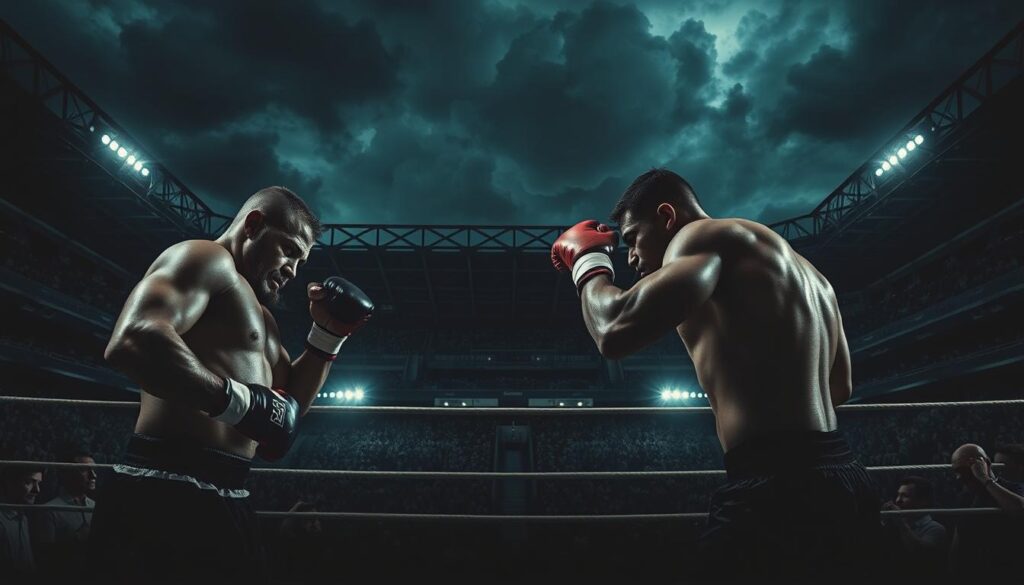
Imagine watching a stopwatch melt in real time. That’s the intense feeling of The Set-Up. It’s not just another boxing movie; it’s a tense countdown where every second counts. Time itself is the main enemy.
Real-Time Narrative Mechanics
The film lasts 72 minutes, just like the fight night. It’s either genius or madness. Director Robert Wise makes Paradise City feel like a pressure cooker.
- Trainers’ whispers carry the weight of confessions
- Locker room clocks tick louder than punch impacts
- Even the cigar smoke seems to swirl in real time
This film is different from High Noon. It’s about survival, not just moral battles. It shows boxing’s harsh side, where time is money. You’ll feel the tension by round three.
| Aspect | The Set-Up | Classic Noir | Sports Drama |
|---|---|---|---|
| Time Pressure | Real-time countdown | Flashback-heavy | Season-long arcs |
| Moral Ambiguity | Foggy as a dive bar mirror | Clear villains | Hero/villain dichotomy |
| Stakes | Existential survival | Financial gain | Championship glory |
This film is more than just a movie; it’s a psychological battle. The real-time story makes you feel the desperation. When it ends, you’re left with questions, not answers. That’s how noir sports movies make their mark.
Noir Atmosphere: Cinematic Techniques
If film noir were a boxing match, The Set-Up would be its Muhammad Ali. It’s lean, brutal, and throws visual punches that leave you seeing stars. Director Robert Wise doesn’t just use lighting; he weaponizes it. Forget subtlety – this is chiaroscuro with brass knuckles, a masterclass in using shadows like a Caravaggio painting gone rogue.
Sports Noir Lighting: Fluorescents vs Fire
The film’s genius lies in its bipolar approach to illumination. Locker rooms bathe fighters in cruel fluorescent light. This makes acne scars look philosophical and sweat stains existential. Then, the arena is a hellish disco of greed, where spotlights slice through cigar smoke like judgment day lasers.
It’s Val Lewton’s Cat People meets Vegas casino aesthetics. If the casino were run by Satan’s stage crew.
Shadowplay in the Ring
Wise turns boxing ropes into prison bars using projected shadows. Watch how the fighters’ silhouettes stretch and warp during bouts. Their dignity shrinks as their shadows grow monstrous. The flickering marquee lights outside? They’re not just set dressing.
Each dimming bulb mirrors our protagonist’s fading chances. It’s a visual countdown to oblivion. This could give a film student a nicotine habit from pure anxiety.
| Element | Locker Room | Arena |
|---|---|---|
| Light Type | Harsh fluorescents | Angular spotlights |
| Mood | Clinical despair | Chaotic euphoria |
| Symbolism | Naked truth | Distorted reality |
This isn’t just visual storytelling – it’s hieroglyphics for the morally bankrupt. The lighting design functions like a third protagonist. It whispers warnings through every slatted shadow and overexposed close-up.
When the final bell rings, you’re not just watching a boxing match. You’re witnessing street poetry written in light and blood.
Analysis of Iconic Scenes
Let’s dive into the heart of The Set-Up. The real magic lies in scenes that feel like dark, twisted art. They’re filled with desperation and moral questions. Watching these scenes is like getting a close-up look at a masterpiece.
The Fight Sequence Deconstructed
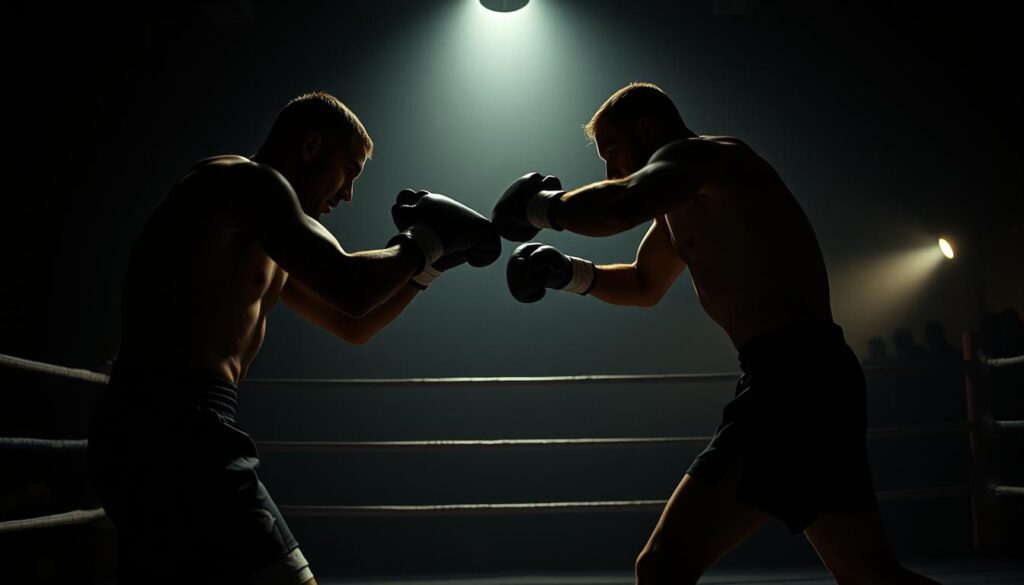
The 20-minute fight is more than a sport; it’s a deep dive into existential jazz. Listen to the sounds: gloves hitting like drums, and the rustle of money like snakeskin. Every punch is like a commentary from the gods.
Look at the crowd shots. They’re not just fans; they’re characters in their own right. Each face tells a story: the bookie’s nervous twitch, the socialite’s smudged lipstick, and the drunk’s shaking hand. Wise used real-life decay instead of CGI.
Scorsese owes a debt to Robert Wise. The Set-Up’s intense moments inspired Raging Bull. The sixth-round clinch in The Set-Up is where time seems to stretch. It’s a technique that De Niro later used to win an Oscar. Wise is waiting for Marty to return the favor with a drink.
- Soundtrack as character: Rattling chains > orchestral scores
- Lighting as fate: Overhead bulbs = judgmental gods
- Duration as torture: Real-time = no escape from consequences
This isn’t just a movie; it’s a journey into the dark world of boxing noir. We’re all drawn in, holding our popcorn like prayer beads.
The Portrayal of Desperation and Hope
If film noir tropes had a gym membership, they’d bench-press existential dread. The locker room is a temple of broken promises. It’s where fighters whisper prayers to gods who stopped listening.
Julie’s journey is like a mirror of this world. Both places are filled with survival instincts sharpened to the edge.
Character Dynamics in the Locker Room
In this place, ambition and delusion fight without rules. Every fighter holds onto their reality like a lifeline:
- The rookie believes in “one big break”
- The veteran relies on muscle memory
- The manager dreams of invisible money
It’s like Sunset Boulevard but with sweat towels. They’re all waiting for their moment, but the camera only sees blood. Empty lockers are like tombstones for careers that never made it.
Julie’s street hustle shows the same harsh truth. Her “negotiations” in alleys mirror the fighters’ deals. Both are trading pieces of their souls. The film shows hope as a dangerous, addictive, and rigged game.
Watch how the director uses:
- Low-angle shots make lockers seem like prison bars
- Mismatched dialogue shows the chaos
- The hum of flickering lights is the real soundtrack of desperation
This isn’t just a classic noir sports movie. It’s a lesson in how dreams can become weapons.
Impact and Influence
When The Set-Up premiered in 1949, critics saw it as a B-movie. They dismissed it quickly. But UCLA’s restoration in 2016 changed everything. This film noir gem is now a comeback story.
How many sports movies with noir aesthetics have been brought back to life? The Set-Up was first seen through Robert Wise’s lens. Then, digital magic cleaned it up after years of neglect.
Cinema’s Late-Round Draft Pick
The film’s spirit lives on in movies like Good Time and Uncut Gems. Wise’s 73-minute film was ahead of its time. It set the stage for today’s thrillers.
- Real-time tension that makes TikTok edits look sluggish
- Locker room psychodramas stripped of sports movie clichés
- Moral ambiguity that leaves audiences as sweaty as the fighters
Film scholar Grant Feller called it “noir’s ultimate speedrun.” Modern directors could learn from Wise’s approach. Why make a story long when you can hit hard in half the time?
The 4K restoration didn’t just remove grain. It showed the blueprint for underrated noir sports films. These films focus on atmosphere, not just applause.
Here’s the knockout punch: While modern movies focus on big franchises, The Set-Up shows the power of real tension. It’s as impactful as a right hook to the jaw. And twice as memorable.
The Set-Up in the Landscape of Sports Noir
Let’s settle this like two fighters in a smoke-filled arena: The Set-Up didn’t just enter the sports noir ring—it redefined what the genre could punch above its weight class. While most mid-century boxing films leaned on Rocky-esque underdog tropes (before Rocky existed), Robert Wise’s masterpiece turned the genre into a mirror reflecting society’s bloodied face. Nowhere is this clearer than when squaring up against its flashier cousin, Champion 1949.
Comparative Analysis With Champion 1949
Kirk Douglas’ Champion plays like a brass-knuckled sermon about ambition’s corrupting power. It’s all sweaty close-ups and moral grandstanding—the cinematic equivalent of a right hook to the jaw. But where Champion 1949 review circles might praise Douglas’ Oscar-nominated snarl, The Set-Up counters with Robert Ryan’s quiet devastation. One’s a fireworks display; the other’s a lit match in a gas leak.
Consider the math:
| Champion (1949) | The Set-Up (1949) | |
|---|---|---|
| Protagonist | Charismatic villain you love to hate | Broken hero you hate to love |
| Social Commentary | Fist-fights capitalism | Dissects spectator complicity |
| Narrative Device | Rags-to-riches-to-ruin arc | Real-time countdown to despair |
Here’s the uppercut: Champion wants you to hate the game. The Set-Up forces you to admit you are the game. Its real-time structure turns viewers into corner men, watching helplessly as the clock ticks toward inevitable tragedy. You don’t just watch Stoker Thompson’s downfall—you hold his spit bucket.
Both films share DNA, but where classic noir sports movies like Champion use the ring as metaphor, The Set-Up weaponizes it as indictment. It’s the difference between a poster child and a crime scene photo—both tell stories, but only one makes you an accessory.
Conclusion
The clock in The Set-Up doesn’t just count rounds. It marks the end of dreams. Robert Wise’s 1949 film is a key to understanding sports nihilism. It shows how hard work can lead to nothing.
This film is not just another sports movie. It’s a guide that shows the true nature of sports. The film’s real-time style, which won Cannes’ top cinematography award, makes us feel the desperation. It’s not just watching rounds; it’s feeling them.
Modern sports movies owe a lot to Wise’s work. The film’s dark lighting and final bell are powerful messages. They show that victory is not always what it seems. Even today, we’re trying to understand its deep meaning.
When you watch a fight drama, see it through Wise’s eyes. Does it show the beauty of struggle, or the harsh reality? The Set-Up’s clock is a reminder to artists. Will your work be about hard work, or the harsh truth?