Noir has always been a genre rooted in shadow — not just visual darkness, but moral ambiguity, hidden motives, and unresolved truths. Traditionally, these elements were grounded in urban crime and human psychology. Today, however, a new force is reshaping the genre from within: mythology.
Across global cinema, filmmakers are blending cultural folklore with crime narratives, creating a new form of noir that feels both ancient and modern. Films like Mergen demonstrate how myth is no longer a background element — it is becoming the narrative engine itself.
In this evolution, crime is no longer just an act. It becomes part of something older, deeper, and often unknowable.
The Return Of Myth As Narrative Structure
In classic noir, the story is typically driven by investigation: a crime occurs, and a protagonist seeks truth. Mythological noir disrupts this structure by introducing forces that cannot be fully explained.
Instead of linear cause and effect, we see cyclical storytelling, symbolic patterns, and narratives shaped by cultural memory.
| Traditional Noir Structure | Mythological Noir Structure |
|---|---|
| Linear investigation | Cyclical or symbolic narrative |
| Rational explanation | Supernatural or ambiguous forces |
| Clear resolution | Open-ended interpretation |
| Individual conflict | Collective or ancestral tension |
This shift transforms noir into something closer to folklore itself — where answers are less important than meaning.
Cultural Identity As The Core Of Modern Noir
The integration of folklore allows filmmakers to ground their stories in specific cultural identities, making each narrative distinct.
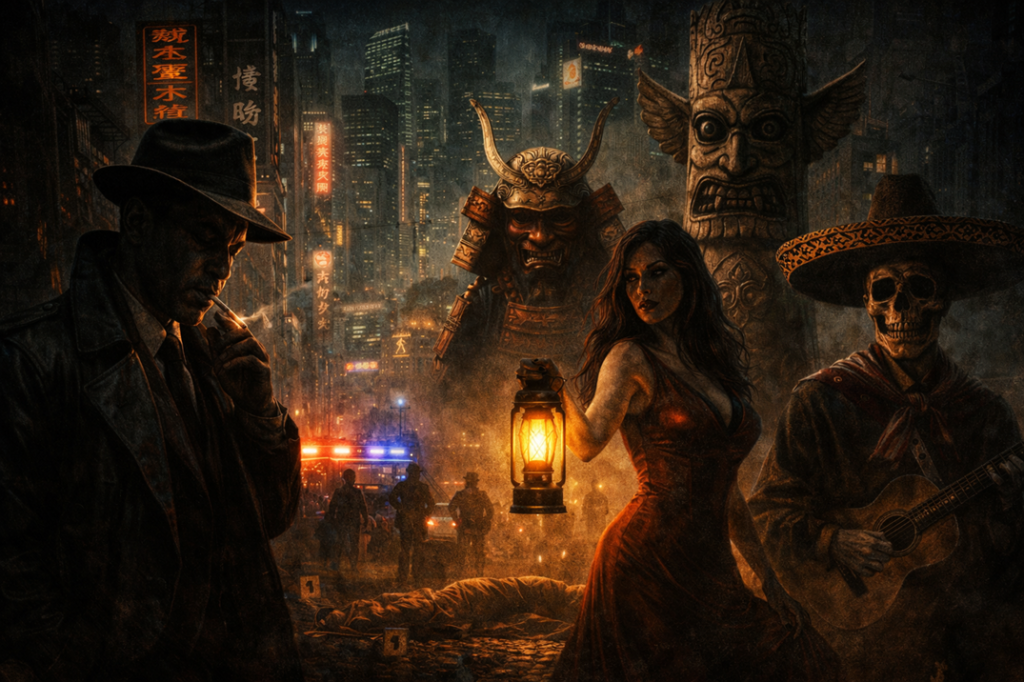
In Mergen, for instance, mythological elements are tied directly to Kyrgyz traditions, shaping both character behavior and narrative tone. These elements do not feel imposed; they emerge naturally from the setting.
This reflects a broader trend in global cinema, where noir is no longer a universal template but a localized storytelling framework.
Our exploration of Central Asian noir through Mergen highlights how regional perspectives are redefining the genre, transforming local myths into globally resonant narratives.
Folklore As Psychological Tension
What makes mythology particularly effective in noir is its ability to operate on both narrative and psychological levels.
Folklore often represents:
- Fear of the unknown
- Collective trauma
- Moral consequence
- Unseen forces shaping reality
In modern noir, these elements replace traditional antagonists. Instead of a villain, the conflict may come from belief itself — from what characters think is real.
This creates a deeper form of tension, one that lingers beyond the resolution of the plot.
Visual Language: Blending The Supernatural With The Real
The inclusion of mythology also transforms the visual identity of noir. Filmmakers are experimenting with ways to integrate supernatural elements without breaking realism.
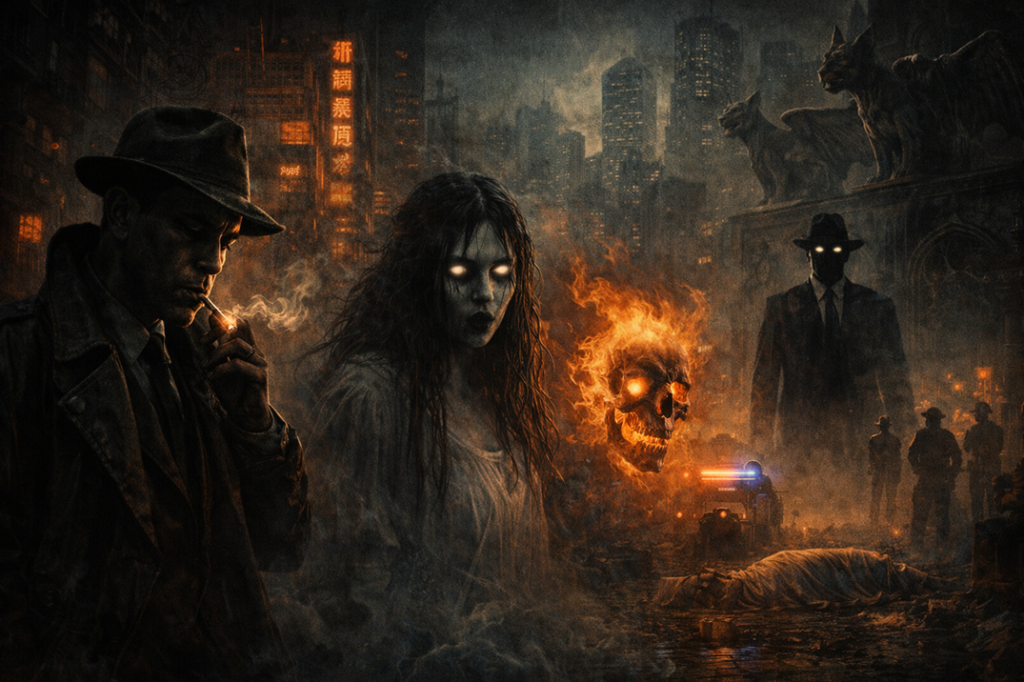
Rather than overt fantasy, mythological noir often uses:
- Subtle visual distortions
- Symbolic imagery embedded in landscapes
- Light and shadow to suggest unseen presence
| Visual Element | Traditional Noir | Mythological Noir |
|---|---|---|
| Lighting | High-contrast shadows | Natural light with symbolic emphasis |
| Setting | Urban environments | Rural or culturally significant locations |
| Imagery | Realistic and grounded | Symbolic and layered |
| Tone | Gritty realism | Atmospheric ambiguity |
This approach preserves noir’s grounded feel while expanding its emotional and symbolic depth.
Why Global Audiences Are Embracing Mythological Noir
The growing popularity of this hybrid genre is not accidental. Modern audiences are increasingly drawn to stories that offer cultural specificity combined with universal themes.
Mythological noir achieves this balance by:
- Rooting narratives in authentic traditions
- Exploring timeless human fears
- Allowing multiple interpretations
It invites viewers to engage with stories not just intellectually, but emotionally and symbolically.
According to the British Film Institute’s exploration of global cinema trends, audiences are showing increased interest in culturally grounded storytelling that expands beyond Western narrative conventions.
This shift aligns perfectly with the rise of myth-driven noir.
From Local Legends To Global Storytelling
What makes mythology so powerful in noir is its ability to travel. While the symbols may be culturally specific, the emotions they evoke are universal.
A story rooted in Kyrgyz folklore can resonate with audiences across continents because it speaks to shared human experiences: fear, guilt, memory, and fate.
This is why films like Mergen are gaining traction internationally. They do not dilute their cultural identity to appeal to global audiences — they embrace it fully.
A New Language Of Darkness
Mythology is not replacing noir. It is expanding it.
By integrating folklore into crime narratives, filmmakers are creating a new language of darkness — one that is less about solving mysteries and more about confronting the unknown.
This evolution ensures that noir remains dynamic, adaptable, and deeply relevant.
As global cinema continues to evolve, the shadows of noir will no longer belong to one culture or one tradition. They will belong to many.