
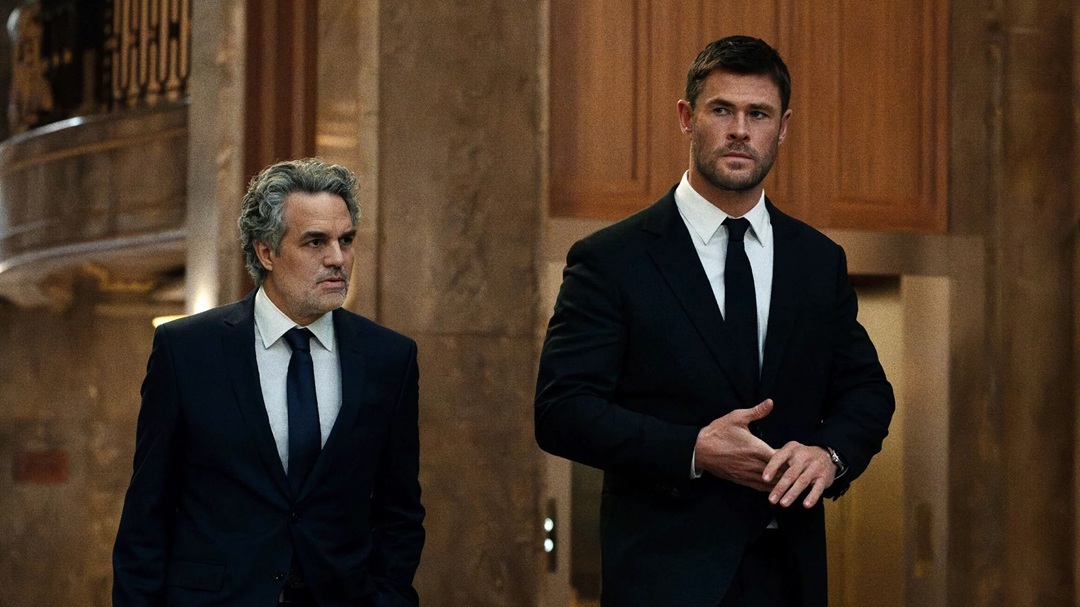
Heist cinema has always been about control.
The plan, the timing, the execution—every element designed to function with mechanical precision. In classic noir, that control was fragile, constantly threatened by human error and moral ambiguity.
Crime 101 (2026) brings that tension back into focus—but within a modern framework where control feels sharper, cleaner, and far more deceptive.
Directed by Bart Layton and released on February 13, 2026, starring Chris Hemsworth and Halle Berry, the film follows a string of meticulously executed jewel heists along the Pacific Coast, all connected by a strict set of rules known as “Crime 101.”
But beneath its precision lies a familiar truth:
The more perfect the system appears, the more catastrophic its failure becomes.
The Return Of The Professional Criminal
One of the defining features of Crime 101 is its revival of the professional criminal archetype.
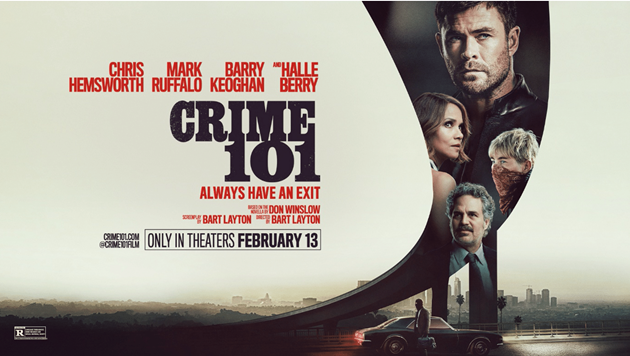
Unlike chaotic offenders, this central figure operates with discipline—minimal exposure, clean execution, and strict adherence to rules. This recalls the legacy of films like Heat, where crime is not impulsive but calculated, almost philosophical.
But Crime 101 modernizes this idea.
| Element | Classic Heist Noir | Neo-Noir |
|---|---|---|
| Criminal Profile | Skilled, disciplined | Highly optimized, strategic |
| Motivation | Profit, survival | Control, identity, precision |
| Method | Physical execution | Hybrid strategy and execution |
| Weakness | Human error | Psychological fixation |
The criminal is no longer just performing a job.
They are maintaining a system.
The Investigator As A Mirror
Opposing this system is an investigator who reflects it.
Halle Berry’s character does not function as a traditional moral anchor. Instead, she becomes increasingly aligned with the logic of the crime itself. The deeper she goes, the more she begins to mirror the precision and mindset of her target.
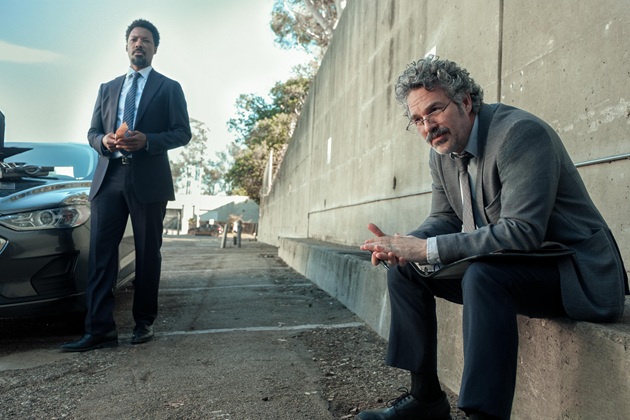
This creates a dual structure:
- Both characters rely on strategy
- Both anticipate each other’s moves
- Both depend on control as their defining trait
The conflict is not defined by justice.
It is defined by who can maintain control under pressure.
Coastal Settings And The Expansion Of Neo-Noir
Crime 101 relocates noir away from dense urban environments and into the Pacific coastal landscape.
This shift transforms the tone.
| Element | Urban Noir | Neo-Noir |
|---|---|---|
| Environment | Dense, enclosed | Open, expansive |
| Movement | Concealed | Exposed |
| Risk | Hidden | Amplified by visibility |
| Tone | Claustrophobic | Controlled tension |
This transition reflects the same evolution explored in our coastal noir analysis, where visibility replaces concealment and isolation replaces anonymity.
The System As Both Weapon And Weakness
At the heart of Crime 101 lies a structured methodology—a repeatable system governing every heist.
These rules create efficiency:
- Predictable timing
- Controlled execution
- Reduced exposure
But they also introduce risk.
A system that repeats itself becomes traceable. Patterns emerge. Predictability invites disruption.
This duality defines modern heist noir:
- Systems create control
- Systems create vulnerability
The more refined the structure, the more fragile it becomes.
High-Stakes Cinema In A Modern Context
Unlike smaller-scale thrillers, Crime 101 operates on a high-stakes cinematic level.
The targets are valuable. The operations are complex. The consequences extend beyond individuals.
Yet the narrative remains grounded in noir tradition.
The tension is not just about the heist—it is about the relationship between two individuals locked in a strategic and psychological contest.
The Aesthetic Of Clean Violence
Visually, Crime 101 departs from gritty noir and embraces a more refined aesthetic.

- Clean architecture
- Controlled lighting
- Minimalist compositions
Violence is quick, precise, and functional.
This creates emotional distance. The film does not linger on brutality—it integrates it into the system itself.
The result is a tone that feels calculated and unsettling.
Obsession Beneath The Discipline
Beneath the structure lies instability.
Maintaining control requires constant focus. Every detail must align. Every variable must be managed.
This creates a psychological strain:
- The need for perfection
- The fear of deviation
- The inability to disengage
What appears as discipline is, in reality, obsession.
This connects directly to the thematic direction explored in our obsession-driven noir breakdown, where characters are no longer guided by justice, but by fixation.
Streaming Influence On Modern Heist Noir
Although Crime 101 is a theatrical release, it reflects storytelling patterns shaped by the streaming era.
Modern audiences increasingly expect:
- Deeper character exploration
- Strategic complexity
- Gradual narrative tension
Industry coverage of the film’s development highlights its balance between large-scale production and character-driven storytelling, reinforcing its place within the evolving landscape of neo-noir cinema.
For broader context on how streaming platforms are influencing crime storytelling, see this analysis of modern thriller trends from a high-authority entertainment source.
When The System Breaks
The most compelling tension in Crime 101 emerges when the system begins to fail.
Small disruptions accumulate:
- A miscalculation
- A delay
- A moment of hesitation
These fractures reveal the limits of control.
| Outcome | Classic Heist Film | Crime 101 |
|---|---|---|
| Success | Clear and final | Temporary and unstable |
| Failure | Conclusive | Transformative |
| Ending | Resolution | Lingering tension |
The story does not end with execution.
It continues through consequence.
A Return To Form—And A Shift Forward
Crime 101 represents both a return and an evolution.
It returns to:
- Structured heist storytelling
- Professional criminal archetypes
- High-stakes execution
But it evolves through:
- Psychological depth
- Identity-driven motivations
- Blurred moral boundaries
This duality allows the film to feel both classic and modern.
The Precision That Cannot Last
In the end, Crime 101 reinforces a central principle of noir:
Control is temporary.
No system remains perfect. No plan remains intact. No individual can sustain precision indefinitely.
The characters operate within a framework of control, but they are ultimately shaped by forces beyond it.
And when that control collapses, it does not simply disrupt the narrative.
It reveals the instability that was always there