

Heist stories once followed a familiar rhythm.
A crime is planned. A system is broken. A line—however thin—separates those enforcing the law from those defying it. Even in noir, where morality is blurred, there was still a sense of direction. Justice might fail, but it existed as a reference point.
Nemesis, Netflix’s 2026 crime thriller created by Courtney A. Kemp, dismantles that structure.
The series, released on May 14, 2026, centers on a high-level cat-and-mouse dynamic between a brilliant criminal strategist and the investigator pursuing them. But what quickly becomes clear is that neither side is truly anchored in justice.
They are driven by something far more volatile: obsession.
The Dual Protagonist And The Collapse Of Perspective
Classic noir often presents a singular perspective—a detective, an antihero, or a narrator guiding the audience through uncertainty.

Nemesis fractures that perspective.
Both the criminal and the investigator occupy the narrative center. Their roles are not clearly opposed, but intertwined. Each action taken by one is mirrored, anticipated, or countered by the other.
This duality creates a structural tension where:
- The pursuit becomes reciprocal
- The roles become interchangeable
- The boundary between hunter and hunted dissolves
| Element | Classic Noir | Heist Noir (Nemesis) |
|---|---|---|
| Narrative Perspective | Single protagonist | Dual protagonists |
| Moral Alignment | Ambiguous but directional | Fully destabilized |
| Conflict | Crime vs justice | Obsession vs obsession |
| Resolution Goal | Capture or escape | Psychological dominance |
The story is no longer about stopping the crime.
It is about sustaining the pursuit.
Obsession As The New Narrative Engine
In Nemesis, the characters are not motivated by ideology or necessity. Their actions are driven by fixation.
The investigator does not simply want to solve the case—they need to outthink the criminal. The criminal does not act solely for profit—they are compelled to maintain control, to stay ahead, to remain unseen.
This creates a feedback loop:
- Each success intensifies the pursuit
- Each failure deepens the obsession
- Each encounter reinforces the connection
The narrative feeds on this dynamic.
Justice becomes irrelevant because neither character is pursuing it.
They are pursuing each other.
The Return Of Heist Noir In A Controlled World
Heist noir has always existed within systems—banks, corporations, institutions where structure can be exploited.
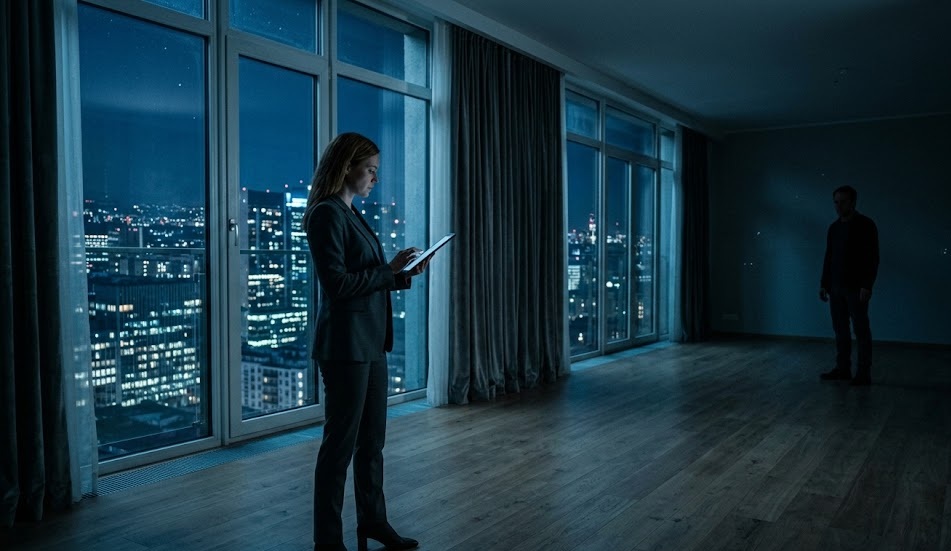
Nemesis revives this tradition but updates its context.
The environments are modern, controlled, and technologically advanced. Security is digital. Surveillance is constant. Information flows faster than action.
And yet, the system remains vulnerable.
| System Element | Traditional Heist Noir | Modern Heist Noir |
|---|---|---|
| Security | Physical barriers | Digital infrastructure |
| Vulnerability | Human error | System complexity |
| Control | Centralized | Distributed |
| Threat | External intrusion | Internal manipulation |
The heist is no longer about breaking in.
It is about navigating complexity.
When Intelligence Becomes A Weapon
In Nemesis, physical force is secondary. The real conflict unfolds through strategy, anticipation, and psychological maneuvering.
The characters operate at a level where:
- Decisions are calculated several steps ahead
- Information is leveraged rather than discovered
- Weakness is exploited through understanding rather than force
This shifts the tone of the narrative.
Violence is not eliminated, but it is deprioritized. The tension comes from the possibility of being outmaneuvered, of losing control in a game defined by intellect.
This reflects a broader trend in modern noir, where the battlefield has moved from the physical to the psychological.
The Emotional Cost Of Control
What distinguishes Nemesis from earlier heist narratives is its attention to the emotional consequences of obsession.
Control comes at a cost.
The characters sacrifice:
- Personal relationships
- Stability
- Any sense of normalcy
Their lives narrow until only the pursuit remains. The world outside the conflict begins to fade, replaced by a singular focus that becomes impossible to escape.
This aligns with the thematic direction explored in Why 2026’s Netflix Thriller Boom Confirms Noir Is Becoming Psychological First, where modern noir increasingly prioritizes internal collapse over external resolution, revealing how obsession reshapes identity.
The Aesthetic Of Precision And Distance
Visually, Nemesis reflects its thematic focus.
The environments are clean, controlled, and meticulously designed. Glass, steel, and digital interfaces dominate the frame. Lighting is sharp but restrained, emphasizing clarity rather than concealment.

But this clarity is deceptive.
The more precise the environment, the more unstable the narrative feels. Every detail suggests control, yet the characters are constantly on the verge of losing it.
Distance becomes a visual motif:
- Characters rarely occupy the same space
- Interactions are mediated through screens, calls, and surveillance
- Physical separation mirrors emotional isolation
Streaming And The Expansion Of Strategic Noir
The structure of streaming television allows Nemesis to develop its central dynamic with greater depth.
Multiple episodes provide space for:
- Strategic escalation
- Character development
- Psychological tension to build gradually
According to early coverage on Courtney A. Kemp’s return to crime storytelling, the series emphasizes layered character dynamics and long-form narrative tension, positioning obsession as the driving force behind its central conflict.
This format supports a version of noir that is less about immediate impact and more about sustained pressure.
When Winning Becomes Meaningless
One of the most striking aspects of Nemesis is its treatment of victory.
In traditional heist stories, success is measurable:
- The heist succeeds or fails
- The criminal escapes or is captured
In Nemesis, those outcomes feel secondary.
Even when one character gains an advantage, it does not resolve the conflict. Instead, it resets it—creating a new phase in the ongoing pursuit.
| Outcome | Traditional Heist Noir | Nemesis |
|---|---|---|
| Victory | Defined and final | Temporary and unstable |
| Loss | Conclusive | Motivational |
| End State | Resolution | Continuation |
The story does not move toward an ending.
It sustains itself through repetition.
A Genre Redefined By Fixation
What Nemesis ultimately reveals is a shift in how noir conceptualizes conflict.
The genre is no longer driven by:
- Crime alone
- Justice as a goal
- Resolution as an endpoint
Instead, it is shaped by:
- Obsession as motivation
- Strategy as action
- Psychological dominance as outcome
This redefinition aligns noir with contemporary anxieties, where control is fragile and identity is shaped by what we pursue.
The Pursuit That Never Ends
In the end, Nemesis offers a version of noir that feels both familiar and fundamentally altered.
The crime is still there. The tension remains. The stakes are high.
But the purpose has changed.
The characters are not seeking justice.
They are seeking each other.
And in that endless pursuit, the genre finds a new form—one where the story does not conclude with resolution, but continues through fixation.
Because in modern heist noir, the greatest danger is not the crime itself.
Leave a Reply