We love the trench coats and the cigarette smoke. We mythologize the lone detective and the dangerous dame. But what about the man behind the camera, using those very shadows to put America on trial?
Meet Robert Rossen. Think of him as film noir’s most committed—and controversial—political operative.
The son of Russian-Jewish immigrants, Rossen brought a street-smart grit to Hollywood. By 1936, he was writing for Warner Bros., churning out social problem films like They Won’t Forget. These weren’t just potboilers. They were jabs at the corrupt heart of the American dream.
His lens was always political. He didn’t just join the Communist Party during the Popular Front era; he chaired the Hollywood Writers Mobilization. For Rossen, the screenplay was a weapon.
That weapon found its ultimate target in All the King’s Men. His Oscar-winning adaptation wasn’t merely a great movie. It was a forensic autopsy of populism, mirroring the rise and fall of Louisiana’s demagogue, Huey Long.
Sound familiar today? In our era of strongmen and swamp-draining rhetoric, Rossen’s work feels less like a history lesson and more like a warning shot. He was the sage with a camera, using noir’s darkness to ask the questions polite society shies away from.
Early Work and Break into Noir
Robert Rossen’s journey into noir was a careful step-by-step process. He started in Hollywood, using his left-wing views to guide him. At Warner Bros., he learned to use his craft to speak out against injustice.
His early work was all about social commentary, wrapped in genre fiction:
- They Won’t Forget (1937): A gripping story about the Leo Frank case, showing the dark side of Southern justice.
- Marked Woman (1937): Bette Davis stars in a film that highlights the harsh realities of exploitation.
- The Sea Wolf (1941): A powerful allegory of tyranny set on the high seas.
- The Strange Love of Martha Ivers (1946): A noir-tinged drama where secrets and guilt simmer in a small town.
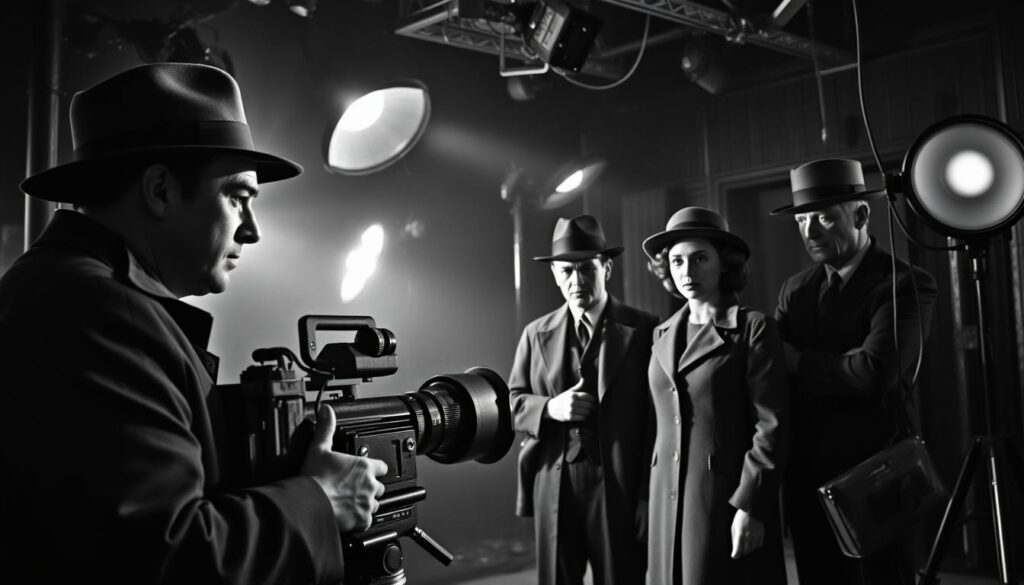
Rossen grew tired of Hollywood’s sugarcoated stories. He wanted to show the world’s harsh realities. So, he started directing.
His first film, Johnny O’Clock (1947), was a crime story for Columbia. It showed he could handle the dark side of the genre. But he was just getting started.
His big break came from Enterprise Studios. This studio was a haven for progressive filmmakers. They wanted a film that was both a sports drama and a critique of capitalist exploitation.
Why Rossen? His politics. They needed someone who saw the ring as a symbol of American society. Rossen was that person. He moved from writing to directing, using noir to speak out against the system.
His entry into the world of noir directors was driven by his beliefs. His films were a reflection of the harsh realities he saw in the world.
Signature Films (Body and Soul, The Hustler)
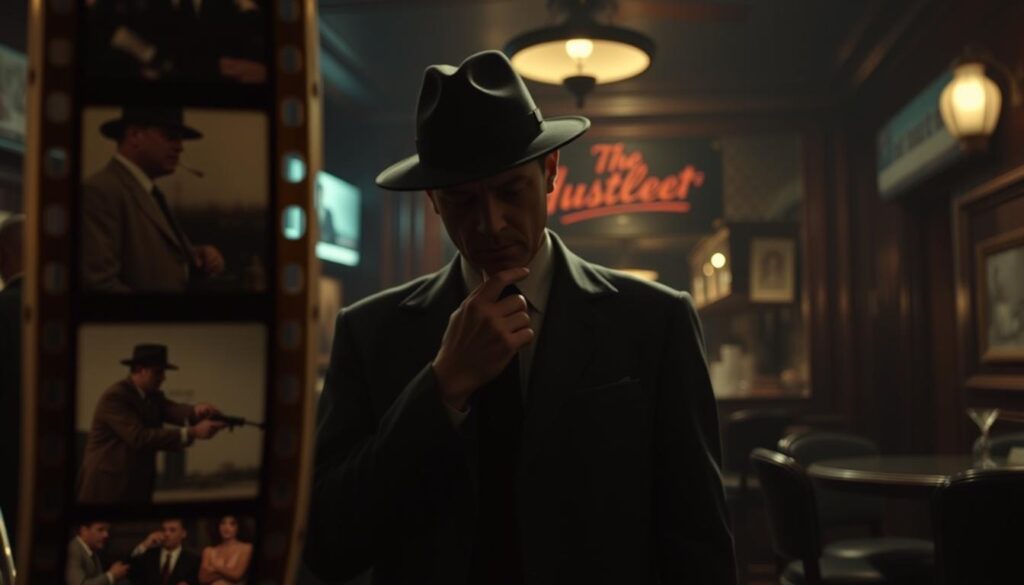
Robert Rossen’s cinema beats with a heart found in a boxing ring in 1947 and a pool hall in 1961. These aren’t just settings; they’re economic coliseums. In Body and Soul and The Hustler, talent faces a rigged game. The system always takes its cut.
Body and Soul is a story of class warfare, a true noir. John Garfield’s Charley Davis fights more than another boxer. He battles managers, gangsters, and his own ambition. Abraham Polonsky’s script shows the sport as a capitalist arena.
Rossen’s direction is intense. He captures the ring with a documentary’s eye, making every detail feel like a financial deal. His bold move was casting Canada Lee as Charley’s trainer. This was a statement in 1947. The film was a hit, boosting Rossen’s career and securing a big contract at Columbia.
In 1961, the arena changes, but the fight remains the same. The Hustler shows Paul Newman’s Fast Eddie Felson, a pool player with talent. But the world around him, led by George C. Scott’s manager, seeks to profit from that talent. The pool hall is as dark as the boxing ring, with moral compromise hanging in the air.
These masterpieces, which critique corrupt systems, were made by teams later devoured by politics. Abraham Polonsky was blacklisted, silencing him for years. John Garfield faced HUAC, leading to his early death. Rossen made a compromise we’ll look at soon.
These films are more than just movies. They offer the thrill of competition but leave a bitter taste. They show the cost of being an artist in a world that sees honesty as a weakness. For those studying blacklisted directors, these films are essential and heartbreaking.
Style, Themes, and Censorship Battles
If style is a political statement, then Robert Rossen’s filmmaking was a manifesto. He saw Hollywood’s dream factory as a lie. His films were a mix of harsh truth and moral gray areas.
He used a guerrilla filmmaking style before it was trendy. For All the King’s Men, he filmed in real places, not studios. He cast locals and stars together, showing the raw truth of politics.
His editing was bold. He used montage to show how power works. It was like a visual bomb, revealing the truth behind the scenes.
Robert Rossen explored the Faustian bargain in his films. His characters traded their souls for power. He showed how idealism can turn to cynicism.
This made him clash with Hollywood’s censors. Joseph Breen wanted to cut scenes he deemed too risqué. But Rossen stood his ground, keeping the film true to its story.
This fight for artistic freedom is relevant today. Rossen’s style was a battle between realism and fantasy. His work continues to inspire creators to push boundaries.
| Stylistic Element | Rossen’s Approach | Traditional Hollywood (1940s-50s) | Thematic Impact |
|---|---|---|---|
| Location Shooting | On-location in real towns; gritty, authentic backdrops. | Controlled studio backlots; artificial, polished sets. | Grounds political drama in tangible reality, enhances critique. |
| Casting | Mixed professionals with non-actors and locals. | Exclusive use of contracted star actors. | Creates a believable social tapestry, emphasizes populism. |
| Editing & Montage | Fast-paced, associative cuts; propagandistic sequences. | Invisible, continuity-focused editing for seamless narrative. | Visualizes the mechanics of power and media manipulation. |
| Response to Censorship | Direct confrontation; defended adult themes and moral ambiguity. | General compliance with the Production Code; self-censorship. | Fought for films as a medium for complex social criticism. |
In the end, Robert Rossen wasn’t just making movies. He was sharing uncomfortable truths. His style showed the world as it is, not as the studios wanted. He was a prophet of reality in a world built on lies.
The Hollywood Blacklist’s Impact
Imagine being trapped in a world where you must choose between your values and survival. This was the reality for noir directors like Robert Rossen in 1950s Hollywood. The blacklist was a major plot twist for him.
Rossen faced the House Un-American Activities Committee (HUAC) twice. First, in 1947, he was among 19 witnesses but wasn’t called. Then, in 1951, he was summoned again. He refused to cooperate, leading to a two-year blacklist.
In 1953, Rossen made a choice. He testified and named 57 people. This choice was a dark reflection of his own films, where characters face tough moral choices. He chose survival over integrity, a theme he often explored in his work.
He wasn’t alone in his struggle. Many noir directors faced similar challenges. Their responses to HUAC’s questions were as dark as their films.
| Director | Key Noir Film | Blacklist Response | Outcome |
|---|---|---|---|
| Robert Rossen | Body and Soul | Defied, then named 57 names (1953) | Returned to work; legacy forever stained |
| Jules Dassin | The Naked City | Refused to testify; fled to Europe | Continued career abroad; won Best Director at Cannes |
| Edward Dmytryk | Crossfire | Jailed for contempt, then named names (including Dassin) | Rehabilitated in Hollywood; directed big-budget films |
| Joseph Losey | The Prowler | Fled to the United Kingdom | Forged a celebrated, if exiled, career in British cinema |
| Abraham Polonsky | Force of Evil | Blacklisted; refused to cooperate | Silenced for nearly 20 years; wrote under pseudonyms |
This was a two-phase purge. The first wave targeted the Hollywood Ten. By the early ’50s, support had vanished. The options were clear: name names, go to jail, or leave town. Many blacklisted talent found refuge in London and Paris.
What’s the takeaway? These noir directors were uniquely qualified to film the era’s dread because they were breathing it. Dassin’s Brute Force is a prison allegory for the blacklist. Losey’s The Prowler dissects corrupt authority. Their cameras didn’t just capture shadows on city streets; they captured the shadow falling over their own industry.
Rossen’s decision to talk is the genre’s bleakest twist. It proves that the most corrosive system can break even its sharpest critics. The blacklist, in the end, was Hollywood’s own masterpiece of existential horror—and these directors were its reluctant, tragic stars.
Legacy as a Social Critic and Influence on Noir Filmmaking
Robert Rossen left a lasting mark. He used noir to critique society, not just for style. His films cut deep into the American soul.
His unique style, a mix of realism and grit, paved the way for future films. Movies like The French Connection and The Wire owe a debt to Rossen. He showed that the best politics come from the streets.
Rossen’s own life was a dark tale. He became a symbol of the blacklist’s harm. His films showed heroes standing alone, but his own story is complex.
The struggles of blacklisted directors added a layer of authenticity to noir. Their work felt urgent, like a secret shared in whispers. When noir faded in the 1950s, it lost its political edge.
So, what’s the takeaway from Rossen’s work? Noir is about facing consequences, not just committing crimes. His films teach us to see the truth, even in the darkest corners. Are we listening to his message?