There is something uniquely unsettling about crime when it comes from youth.
In Adolescence, the premise is deceptively simple: a teenager stands accused of murder. But unlike traditional noir, where crime exists at a distance—filtered through detectives, institutions, or hardened criminals—this story collapses that distance entirely.
There are no seasoned antiheroes here. No cynical investigators guiding us through moral ambiguity. Instead, the narrative forces us into proximity with someone still forming their identity.
The crime doesn’t emerge from corruption. It emerges from confusion.
And that distinction changes everything.
When Innocence Becomes Unreliable
Classic noir often plays with moral ambiguity, but it rarely questions the foundation of identity itself. In Adolescence, identity is unstable from the start.

Teenage characters exist in a transitional space—caught between who they are expected to be and who they are becoming. This instability creates a different kind of tension, one rooted not in deception alone, but in uncertainty of self.
The accused is not simply hiding something. They may not fully understand themselves.
This transforms the narrative into something deeper than a crime story:
- Motive becomes fragmented
- Memory becomes unreliable
- Truth becomes interpretive
The result is a form of psychological noir where the central mystery is not just what happened—but whether the protagonist even understands their own actions.
The Environment As A Silent Accomplice
Unlike the shadow-drenched cities of classic noir, Adolescence unfolds in environments that feel almost ordinary—schools, homes, familiar streets.
But this familiarity is precisely what makes it unsettling.
The spaces are not visually oppressive, yet they carry a quiet weight. Hallways feel longer. Rooms feel more confined. Silence lingers longer than it should.
This shift reflects a broader evolution in noir aesthetics:
- Darkness is no longer dependent on lighting
- Atmosphere is built through emotional tension
- The ordinary becomes threatening
The environment doesn’t need to hide the crime. It absorbs it.
Psychological Noir Through A Teenage Lens
What distinguishes Adolescence is how it reframes crime as a psychological event rather than a procedural one.
The narrative avoids the traditional structure of investigation and instead focuses on the internal experience of those involved. The audience is not guided toward resolution but toward interpretation.
| Narrative Element | Classic Noir | Adolescence |
|---|---|---|
| Protagonist | Detective / anti-hero | Teenager in identity crisis |
| Central Conflict | External crime | Internal psychological fracture |
| Truth | Hidden but discoverable | Unstable and subjective |
| Resolution | Partial clarity | Lingering ambiguity |
This approach aligns the series with modern psychological noir, where the emphasis shifts from solving events to understanding emotional consequences.
The Influence Of Social Pressure And Identity
One of the most compelling aspects of Adolescence is how it integrates contemporary pressures into its noir framework.
Teenage life today exists under constant observation—social media, peer dynamics, and expectations that blur the line between public and private identity. These pressures don’t just shape behavior; they reshape perception.
In this context, crime becomes less about intent and more about accumulation:
- Accumulated stress
- Accumulated misunderstanding
- Accumulated emotional instability
The series captures how these forces can converge into a moment that feels both sudden and inevitable.
When The Investigation Loses Control
Traditional noir depends on structure. There is an investigator, a process, a gradual unveiling of truth.
Adolescence resists that structure.
The investigation exists, but it feels secondary—almost inadequate. Authority figures attempt to impose order, but they are navigating a landscape defined by emotional complexity rather than clear evidence.
This creates a subtle but powerful shift:
- The system cannot fully explain the crime
- The narrative cannot fully resolve it
- The audience cannot fully process it
As explored in That Night analysis and breakdown, modern noir increasingly abandons procedural certainty in favor of psychological ambiguity, where relationships and perception carry more weight than evidence.
Light, Visibility, And Emotional Exposure
Visually, Adolescence avoids the heavy shadows associated with traditional noir. Instead, it leans into natural lighting, open spaces, and environments that feel exposed rather than concealed.
But this exposure creates its own form of tension.
Nothing is hidden—yet nothing feels fully understood.
Faces are visible, but emotions remain obscured. Conversations are clear, but intentions are not. The absence of visual darkness shifts the focus inward, where the true complexity resides.
This is a defining trait of modern noir:
- Light does not eliminate mystery
- Visibility does not guarantee truth
The Fragility Of Narrative Certainty
As the story unfolds, Adolescence continuously destabilizes the audience’s understanding. Each new detail reframes previous assumptions, creating a narrative that feels fluid rather than fixed.
This instability mirrors the psychological state of its characters.
There is no single version of events that feels definitive. Instead, the narrative exists in layers—each one incomplete, each one influenced by perspective.
This approach reflects a growing trend in contemporary storytelling. According to The Guardian’s coverage of the series’ critical reception, Adolescence has been recognized for its layered portrayal of youth and crime, earning significant attention during the 2026 awards season for its psychological depth and narrative complexity.
Crime As A Moment, Not A Story
Perhaps the most significant departure from traditional noir is how Adolescence treats the crime itself.
It is not the story. It is the rupture.
Everything that matters happens around it:
- The buildup of emotional tension
- The aftermath of uncertainty
- The ongoing attempt to understand what cannot be fully explained
This reframing shifts the focus from action to consequence, from event to impact.
The New Shape Of Noir
What Adolescence ultimately reveals is how noir continues to evolve alongside culture.
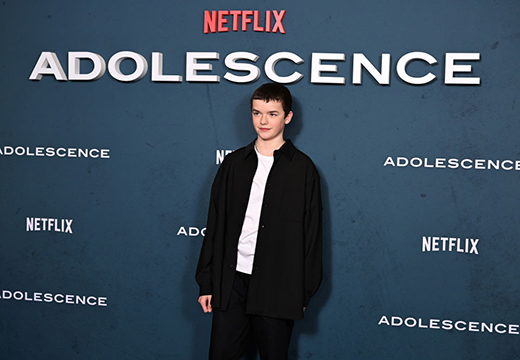
The genre no longer depends on hardened criminals or shadowy cities. It finds its footing in spaces that feel closer, more immediate, and more personal.
- The protagonist is no longer experienced—it is uncertain
- The conflict is no longer external—it is internal
- The resolution is no longer expected—it is questioned
This is noir that doesn’t just explore darkness.
It questions where that darkness begins.
The Uneasy Truth At The Center
In the end, Adolescence offers no easy answers.
It doesn’t resolve the crime in a way that restores balance. It doesn’t provide clarity that simplifies its characters. Instead, it leaves the audience with something far more unsettling:
The realization that understanding is not always possible.
And in that absence of certainty, the genre finds a new kind of depth—one where the mystery is not just what happened, but how someone becomes capable of it.