There is a particular kind of silence that defines Nordic noir.
It’s not empty. It’s heavy—filled with snow, distance, and the quiet weight of things left unsaid. Detective Hole, Netflix’s latest entry into the genre, doesn’t reinvent that silence. It embraces it.
From its opening moments, the series establishes a familiar structure: a troubled detective, a brutal crime, and a landscape that feels as complicit as any suspect. But unlike the psychological thrillers dominating streaming, Detective Hole does something unexpected.
It returns to the roots of noir—without abandoning its modern edge.
The Revival Of The Broken Detective
At the center of Detective Hole is a figure that feels both timeless and newly relevant: the damaged investigator.
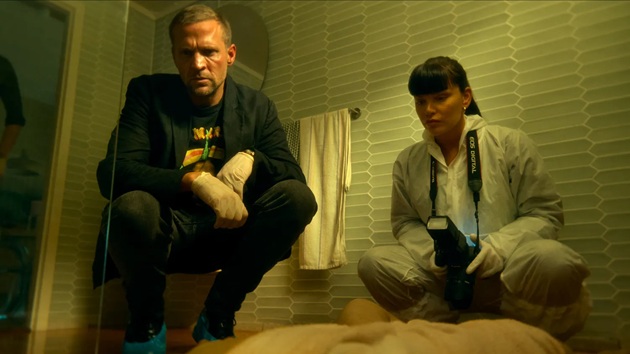
This is not the clean, methodical detective of procedural dramas. Nor is it the purely internalized protagonist of psychological noir. Instead, Detective Hole exists in a liminal space—caught between external investigation and internal collapse.
His flaws are not subtext. They are structure.
Addiction, isolation, and emotional detachment are not obstacles to the investigation—they shape it. Every clue is filtered through instability. Every decision carries personal consequence.
This return to the flawed detective archetype signals a shift back toward classic noir foundations, where the investigator is never separate from the darkness they pursue.
Nordic Landscapes As Emotional Terrain
One of the defining characteristics of Nordic noir has always been its environment. In Detective Hole, the setting is not simply atmospheric—it is narrative.
Snow-covered streets, dim winter light, and vast, empty spaces create a sense of isolation that mirrors the characters’ internal states. The world feels distant, almost indifferent, reinforcing the idea that justice is not guaranteed.
| Element | Classic Noir | Nordic Noir |
|---|---|---|
| Setting | Urban, shadow-heavy | Cold, expansive, desolate |
| Lighting | High contrast shadows | Muted, natural darkness |
| Emotional Tone | Claustrophobic tension | Existential isolation |
| Environment Role | Backdrop | Active psychological force |
The landscape does not hide the crime. It absorbs it.
When Crime Feels Tangible Again
In recent years, noir has drifted toward abstraction—psychological collapse, identity fragmentation, and emotional ambiguity replacing traditional crime structures.
Detective Hole reverses that trend.
The crime is real. It is physical, brutal, and immediate. The investigation follows a recognizable path—evidence, suspects, reconstruction. There is a sense of progression, of movement toward something that resembles truth.
But that doesn’t mean clarity is guaranteed.
Instead, the series creates tension by balancing two forces:
- The need to solve the crime
- The inability to fully understand it
This duality restores a core noir principle:
Even when the crime is visible, its meaning remains obscured.
The Intersection Of Old And New Noir
What makes Detective Hole particularly compelling is how it merges classic and modern noir sensibilities.
On one hand, it returns to:
- Structured investigations
- Tangible crimes
- The detective as central figure
On the other, it incorporates:
- Psychological depth
- Emotional instability
- Ambiguity in resolution
| Narrative Layer | Classic Noir Influence | Modern Noir Influence |
|---|---|---|
| Investigation | Linear and evidence-driven | Fragmented and uncertain |
| Character | Antihero detective | Psychologically unstable individual |
| Resolution | Partial closure | Lingering ambiguity |
| Theme | Corruption and justice | Identity and internal conflict |
This synthesis allows the series to feel both familiar and contemporary—grounded in tradition, but aware of its evolution.
Isolation As The True Antagonist
While the crime drives the plot, isolation drives the emotion.
Detective Hole operates in a world where connections are fragile, communication is limited, and trust is difficult to sustain. The cold environment reinforces this separation, creating a narrative where characters are physically and emotionally distant from one another.
This isolation is not incidental. It is central.
It shapes how characters perceive events, how they interact, and how they interpret truth. The investigation becomes not just a search for answers, but a struggle against disconnection.
As explored in The Art Of Sarah Analysis, modern noir increasingly focuses on the instability of identity and perception. Detective Hole extends this idea outward, placing that instability within an environment that amplifies it.
The Return Of Moral Weight
Another defining feature of Detective Hole is its restoration of moral gravity.
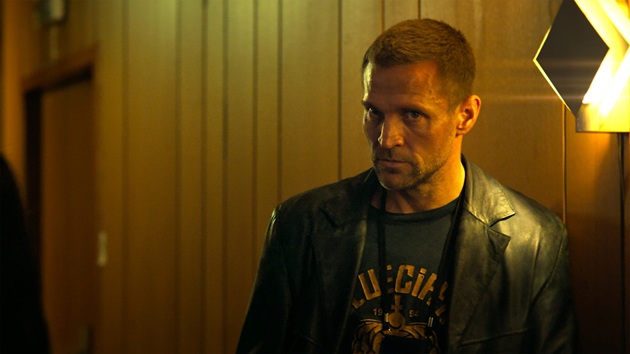
In many contemporary thrillers, morality feels fluid—shifting with perspective, dissolving into ambiguity. Here, actions carry weight. Decisions have consequences that cannot be easily reframed or dismissed.
This does not mean the series offers clear answers. Instead, it presents a world where right and wrong exist, but are difficult to navigate.
The detective is not searching for a perfect resolution. He is searching for something closer to accountability.
Streaming And The Space For Slow-Burn Noir
The success of Detective Hole also reflects the advantages of the streaming format.
Unlike traditional television, streaming allows for:
- Extended pacing
- Deeper character exploration
- Gradual tension building
The series takes full advantage of this structure, allowing scenes to linger, conversations to unfold slowly, and silence to carry meaning.
According to a recent feature on Netflix’s expanding crime catalog, the platform continues to invest in international noir series that prioritize atmosphere and character depth over rapid plot progression—an approach that aligns perfectly with Nordic storytelling traditions.
A Genre Returning To Its Origins
What Detective Hole ultimately represents is not a reinvention of noir, but a recalibration.
After years of psychological experimentation and narrative abstraction, the genre is circling back to its foundations:
- Crime as a central force
- Investigation as a guiding structure
- The detective as both observer and participant
But it does so with a modern awareness of complexity.
The answers are no longer simple. The characters are no longer stable. The resolution is never complete.
The Silence That Lingers
In the end, Detective Hole leaves behind something that feels distinctly noir—not closure, not clarity, but presence.
The case may be solved, or at least contained. The narrative may reach its conclusion. But the silence remains.
It lingers in the landscape. In the characters. In the unanswered questions that refuse to disappear.
Because in Nordic noir, the darkness is not something to escape.
It is something that stays.