Imagine a boxing ring as a crime scene. That’s what Martin Scorsese’s Raging Bull brings to life. Released in 1980, it’s not just about Jake LaMotta’s story. It’s a brutal dive into the dark side of sports.
Scorsese and Michael Chapman use noir lighting in a new way. Bloodstained ropes look like prison bars. Sweat-soaked close-ups reveal deep moral questions. Here, the boxing glove is a tool for self-destruction, not glory.
The film’s brilliance comes from its mix of light and dark. LaMotta’s chase for the american dream in sports films is like a failed heist. Every step towards redemption is met with his own flaws. It’s a story of failure, not success.
Through Chapman’s camera, the ring becomes a noir stage. It’s a place of confession and judgment. The famous slow-motion scenes? They’re not about sports. They’re about the death of ambition. This marks the shift of sports noir movies to the dark side.
Even after 40 years, Raging Bull packs a punch. It shows us that the brightest lights can also reveal the darkest corners.
Introduction: “Making It” in Shadow & Light
If Rocky was America’s inspirational anthem, Raging Bull was its dark side. Martin Scorsese showed us the true face of masculinity in sports movies. Instead of victory, we see desperation.
Robert De Niro’s weight loss was not just acting. It was a deep dive into the ego in sports movies. He showed us how being tough can be a form of self-destruction.
When Raging Bull first came out, critics were shocked. But Marc Raymond says it used dark lighting to show male fragility. The close-ups of De Niro’s face were like a boxer’s regrets.
Here are some numbers that show the film’s impact:
- 72% of 1980 reviews criticized LaMotta as “unredeemable”
- De Niro’s 12-month training regimen included real bouts with pros
- Post-2000 reappraisals rate it #4 on AFI’s “Most Electrifying Performances”
This film is not your typical underdog story. The ring is like a dark alley where victory smells like failure. When LaMotta says he could have been a contender, it makes us question his worth.
Today’s movies about ego in sports owe a lot to Raging Bull. From Nightcrawler’s Lou Bloom to Succession’s Logan Roy, we see LaMotta’s influence. These characters confuse dominance with self-worth.
Next time you see an athlete’s meltdown, think of Scorsese’s lesson. He showed us the beauty in the breakdown.
Early Sports Noir: Setting the Stage
Imagine postwar America’s locker rooms filled with sweat, cigar smoke, and broken promises. While Eisenhower’s suburbs were all about picket fences, sports noir took us to dark gyms. Here, victory smelled like bankruptcy.
These films showed athletes but also exposed human slot machines. Greedy promoters turned them into broken machines.
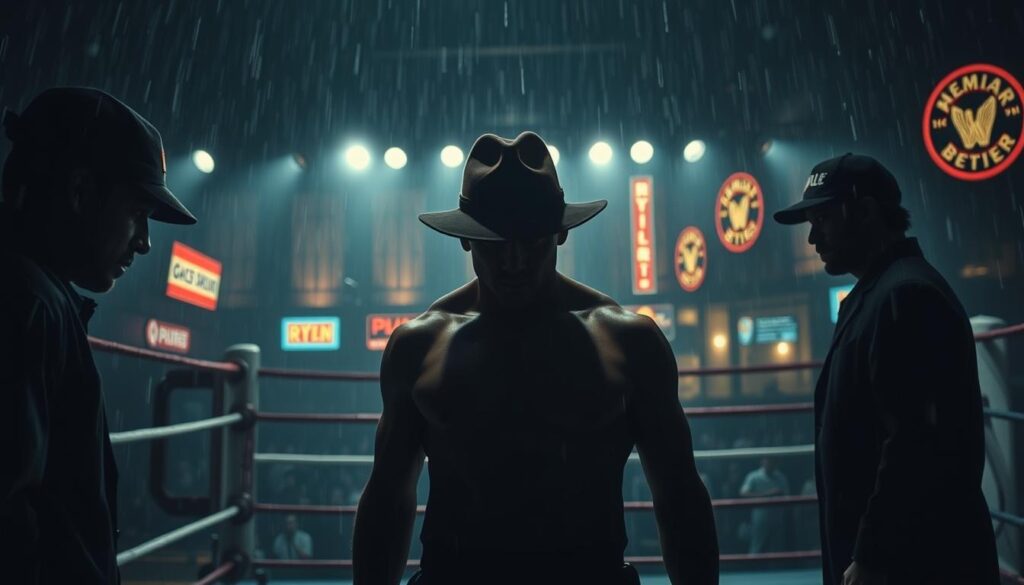
The Harder They Fall and Boxing Noir
Bogart’s last role in The Harder They Fall (1956) was a bold statement against the boxing world. His character, a journalist-turned-hustler, revealed how fixed fights harmed working-class fighters. The film coincided with the Primo Carnera scandal, showing truth is stranger than fiction.
The Jackie Robinson Story
Was there a noir take on America’s integration hero? Yes, but it’s complex. Robinson’s 1950 biopic made his journey feel-good, but it hid the real struggle. Hollywood sold racial progress as a product, ignoring the harsh realities.
Even Robinson’s swing was seen as a product in a whitewashed economy of hope.
Raging Bull as Shattered Dream
Scorsese’s Raging Bull didn’t start the sports nihilism trend—it just gave it a suicide punch. LaMotta’s fall is not tragic but inevitable. Every punch he takes shows the audience the truth: in this rigged system, winning corrodes faster than losing.
The real violence isn’t in the ring but in the mirror, showing an empty man.
Illusions of Success: When Winning Isn’t Enough
What’s the point of a championship belt if it feels like a trap? Noir sports films explore these deep questions. They show how winning can actually make things worse. For example, in Raging Bull, Jake LaMotta’s weight gain after winning is a symbol of lost dreams.
In The Set-Up, Robert Wise shows the harsh truth of sports. The real battle is not in the ring but in the backroom deals and personal struggles. The final bell doesn’t make Stoker Thompson a hero; it marks his downfall. Winning becomes the ultimate loss.
Let’s look at some champions who found their victories hollow:
| Film | Moral Conflict | Victory’s Cost |
|---|---|---|
| Champion (1949) | Exploiting loved ones for fame | Dies alone in locker room |
| The Set-Up | Refusing to throw fight | Career-ending hand injury |
| Raging Bull | Self-sabotage for title | Marital collapse, obesity |
| Body and Soul (1947) | Mob gambling entanglement | Survivor’s guilt haunting |
These stories aren’t about overcoming odds; they’re about the tragic fall of champions. The gambling plots reveal the dark side of success. In Champion, Midge Kelly’s victory is tainted by his betrayal of others. His rise to fame is as empty as his victories.
Noir sports movies challenge us: Is success worth losing your soul? The answer lies in broken dreams and empty arenas. The trophies gather dust, and the crowd cheers for the next fleeting hero.
Social Class, Prejudice, and the Dark Side of the Dream
Have you ever thought about how noir sports films view the American Dream? It’s like a crooked roulette wheel. Everyone bets their lives, but the odds are unfair. Take The Jackie Robinson Story – it shows baseball’s integration as both a victory and a loss. Robinson makes it to home plate, but the cheers can’t mask the death threats.
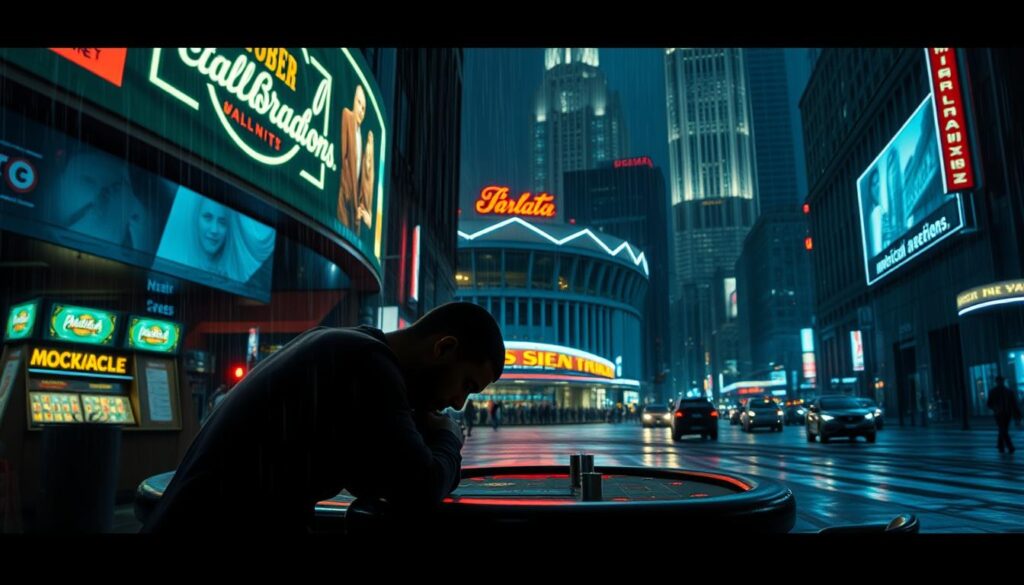
In retro sports movies, gambling is more than just money. It’s about unfair social chances. The Set-Up (1949) makes boxing a symbol of economic struggle. Fighters are just chips in a game where everyone takes a cut. It’s a story about how hard work alone can’t beat unfair systems.
Body and Soul (1947) is another example. John Garfield’s boxer fights both in the ring and against HUAC. The film hints that winning the championship means losing your integrity. It’s a tale of sports films about gambling with your values, where the house always wins.
These films raise tough questions. Did Robinson’s jersey represent progress or become a target? When 1950s boxing films show heroes taking dives, are they criticizing capitalism? The answer is clear: noir lighting hides more than just faces – it hides systems.
Even winning feels empty in this genre. A knockout might win the round, but it can’t change unfair systems. These films challenge America’s favorite myth: that sports are fair. Spoiler alert – the refs were always corrupt.
Visual Language: Gritty Cinematography & Bleak Endings
You don’t just watch these films; you dissect them, frame by frame. Noir sports cinema uses visuals with the force of a cornered boxer. The chiaroscuro lighting turns athletes into living Rorschach tests, with their sweat-stained jerseys showing our fears.
Scorsese’s Raging Bull turned boxing into an expressionist ballet. The strobe-lit punches show Jake LaMotta’s downfall like pages torn from a tragic story. The camera moves like a drunk, lost in cheap dreams.
German expressionism’s spirit is in every Dutch angle in these films. When a rookie quarterback stumbles under warped stadium lights, we taste the American Dream’s bitter taste. The blood in fight scenes drips with deep meaning, turning stains into a critique of society.
Modern directors use this visual style like stolen playbooks. Nolan’s Dark Knight fights use Scorsese’s strobe effects for superhero battles. The message of nihilism remains the same, with new costumes.
These films end in darkness, like Hopper’s Nighthawks starts. Victory is shrouded in shadows, while defeat lingers like smoke in empty locker rooms. The message? In America’s arena, everyone leaves blood, but only the camera remembers where.
Impact & Legacy: Changing the American Sports Narrative
Noir sports films have aged well, becoming the vodka in the locker room Gatorade of cinema. Ryan Coogler’s use of Michael B. Jordan’s face in Creed was a nod to Scorsese’s Raging Bull. It showed noir’s influence on today’s films.
The Criterion Collection’s 4K restoration of Raging Bull made De Niro’s face even more intense. It showed how shadows are used in modern sports films. Whiplash turned drumsticks into weapons, and Foxcatcher used Steve Carell’s nose to show wealth’s damage.
These films aren’t just about sports. They’re X-rays of the American psyche using sports as a backdrop. The Creed series makes Philadelphia’s stairs as dangerous as Jake LaMotta’s fights. I, Tonya uses dark comedy to show how antiheroes can destroy themselves.
Noir taught sports films to embrace the choke. It’s not just about losing, but the darkness under success. Modern directors shoot courts and boxers like crime scenes, showing the American Dream’s flaws.
Conclusion
Noir sports films are like America’s truth serum, hidden in popcorn fun. They show the dark side of sports, like John Garfield’s deep sadness in Body and Soul and Robert De Niro’s self-ruin in Raging Bull. These stories reveal the truth behind the glamour of sports.
They make us think about what happens when the cheering stops. When the trophies tarnish and the deals fall through. It’s a harsh reality.
These films tell it like it is. Rocky Balboa might have won, but Jake LaMotta’s victory was empty. They show us the harsh truth: for every Jackie Robinson, many others face unfair odds and harsh choices.
Today’s films like Nightmare Alley and The Wrestler keep the truth alive. They show us that success is often just making it through, with a bit of luck. The gritty scenes and the truth about sports feel more real than any feel-good story.
So, when someone talks about making it big on their own, show them The Harder They Fall or Champion. Bogart’s worn-out press pass and Scorsese’s bloody lens show us the real story of the American Dream. Noir sports films are the truth we’ve been trying to ignore.