Sports movies often have big, epic music. But what about the quiet moments? The early morning runs where doubt is all you have?
This isn’t about getting rid of the big anthems. It’s about showing the strength in being quiet. Using minor keys shows we understand the struggle.
Science shows music changes how we feel and react. It can change our heart rate and mood. But its real power is in how it makes us feel, not in forcing us to feel something.
The most memorable sports moments are often scored quietly. We’ll look at how instrumentation like brushed snares and muted brass creates a gritty feel. It’s the difference between a loud pep talk and a quiet moment of clarity.
Forget the usual big music. The real game is in the minor key.
Leitmotif 101 for athletes and rivals
Forget the Valkyries—today’s most compelling musical signatures pulse through sports documentaries and biopics. The leitmotif has traded opera houses for locker rooms. It’s the sonic tattoo on a character’s soul, reappearing at key moments to whisper (or scream) who they are.
Think of Dimitri Tiomkin’s “Do Not Forsake Me, Oh My Darlin'” in High Noon. That haunting ballad isn’t just background music. It’s the sheriff’s conscience, his loneliness, his moral compass. Every time we hear it, we’re inside his head. The same principle applies when scoring an underdog’s climb or a rival’s smirk.
An athlete’s theme is often built on vulnerability. A solitary piano figure. A hesitant string melody. It feels unfinished, yearning. The rival’s motif? That’s where the fun begins. Distorted bass. Syncopated rhythms that feel like taunts. Maybe a cold, synthetic pulse.
This is where leitmotif analysis becomes fascinating. It’s not about spotting the melody. It’s about tracking its mutations. How does the composer manipulate our emotional GPS?
| Character Archetype | Musical DNA | Narrative Function |
|---|---|---|
| The Underdog Athlete | Simple piano motif, sparse strings, open intervals | Establishes vulnerability and latent potentia |
| The Arrogant Rival | Distorted electric bass, syncopated rhythms, minor keys | Creates immediate tension and psychological threat |
| The Veteran Coach | Warm brass, steady rhythmic pulse, blues influence | Provides stability and wisdom amid chaos |
| The Personal Demon (Injury/Doubt) | Dissonant clusters, descending melodies, ambient noise | Internalizes conflict and creates psychological depth |
The genius lies in variation. That same underdog piano figure? During their lowest moment, it might shrink to a single, repeating note. Barely there. A ghost of itself. Then, in the final showdown, it returns—but now with a full orchestra behind it. The melody hasn’t changed. Its context has. We hear its journey.
A proper leitmotif analysis tracks this evolution. It asks: How was the seed planted? When did it first mutate? What instruments joined the conversation? The payoff feels earned because the music has been on the same emotional arc as the character.
Modern composers are masters of this subtle manipulation. They understand that a leitmotif shouldn’t announce itself like a superhero theme. It should weave through the narrative like a memory. Sometimes clear, sometimes obscured by the noise of the game.
Conducting your own leitmotif analysis of a sports film is revelatory. Mute the picture and just listen. You’ll hear the story structure in the music alone. The lonely piano during solo training. The aggressive synth when the rival appears. The hesitant blend of themes when they first face each other. The triumphant fusion during the climax.
The leitmotif is the score’s nervous system. It’s how music remembers what the characters sometimes forget. And in the arena of sports storytelling, that memory is everything.
Instrument Choices: Brushes, upright bass, muted brass, synth beds
Orchestras are like wide-angle lenses, showing grand scenes. But these instruments are like macro shots, focusing on the athlete’s inner world. Your instrumentation choice is like choosing a filter for a movie. It shows us sweat or soul, effort or fear.
Brushes on a snare drum are not about victory. They whisper of early morning, of training alone when it’s dark. This sound is steady, calm, and lonely. In a minimalist score, it’s the rhythm of getting ready.
The upright bass walks alone, carrying the weight of expectations. It doesn’t rise high; it keeps things grounded. It’s the steady presence in turmoil, reminding us of gravity. When we need to think deeply, the bass tells our story.
Muted brass is inspired by Miles Davis, the master of subtle tension. He used mutes to create a close, intimate sound. This instrumentation choice is like a dark, quiet corner where worries are shared.
On the other hand, composers like Dimitri Tiomkin used big sounds to fill stadiums. Their work is grand but not intimate.
The synth bed is a modern choice, often seen as cold. But it’s the digital pulse of today’s athletes. It creates a quiet space where distractions fade away. This is the sound of cybernetic focus.
So, why does this simple approach work? A minimalist score feels raw and honest. It lets us feel the athlete’s inner struggle. Without big strings, we get closer to their feelings.
Each choice is a careful removal. Brushes take away loudness. Mutes dim brightness. Synths cool down warmth. This simplicity is what makes it powerful. It’s not about the notes but the space they create for doubt and determination.
Minimalism and Repetition for Training Sequences
Forget the inspirational power ballad; the real secret to an effective training sequence lies in musical minimalism. The montage is cinema’s greatest cheat code, allowing characters to achieve months of progress in ninety seconds. Yet the soundtrack often betrays the psychology of the grind.
A generic rock track layered over punishing regimens misses the point entirely. The magic happens when the score becomes the engine, not just the accompaniment. A driving, repetitive minimalist score—a pulsing electronic beat, a hypnotic piano ostinato—doesn’t soundtrack the work. It enables it.

Here’s the sports science of it. Music reduces the perception of exertion through dissociation. It diverts the mind from muscular discomfort and fatigue. When movement synchronizes to a rhythmic pulse, running economy and efficiency actually improve.
That fast, repetitive tempo? It’s not just for energy. It delays mental fatigue, keeping the athlete in the zone longer. This is where the minimalist score excels. It creates a dissociative bubble around the effort.
The repetition in the music mirrors the repetition of the activity. Laps on the track. Punches on the heavy bag. Miles on the road. This mirroring builds a trance-like state. The athlete—and the viewer—settles into the rhythm of the grind.
Think of it as auditory entrainment. The brain locks onto the consistent pulse. It’s not about feeling inspired. It’s about entering a flow state where the action becomes automatic. The music provides the metronome for the body’s machine.
This approach flips the script on sports movie tropes. We’re conditioned to expect swelling strings as our hero breaks through pain. The minimalist score suggests a different truth: breakthrough happens in the monotony. Victory is built in the hypnotic repetition of fundamentals.
The best training cues use limited musical material for maximum psychological momentum. A simple four-note bass line. A two-chord synth pattern. These elements loop and build subtly. They add texture without changing the core groove. The stability is the point.
This musical philosophy has practical roots. Actual athletes use repetitive, beat-driven music to train. It helps them dissociate from pain and maintain pace. The cinematic minimalist score simply aestheticizes this real-world tactic.
So next time you see a training montage, listen closely. Is the music trying to inspire you, or is it trying to hypnotize the character into their work? The latter is usually the more interesting—and psychologically accurate—choice. The grind has its own sound. It’s often just one note, played over and over, until it becomes everything.
The Crescendo Rulebook (and when to break it)
Audio engineering textbooks often talk about the crescendo. But the most memorable sports moments come from breaking these rules. Every film composer knows the basic rule: start small, build slowly, then explode at the triumph.
This rule works well when done right. It’s a way to emotionally move people.
But there’s a secret they don’t teach in music school. The real art is in knowing when to break the rules. This is where leitmotif analysis gets interesting. We’re not just tracking musical themes; we’re mapping psychological expectations and their violation.
The science behind this is simple. Athletic performance follows an “inverted U” curve of arousal. Too little, and you’re flat. Too much, and you choke. The sweet spot is in the middle.
Musical tempo and volume help dial that arousal up or down. So, the crescendo makes sense. It takes the audience from low arousal to peak intensity at the critical moment.
But what if the crescendo leads to defeat? Imagine the music swelling with hope for the final shot… only to fade into silence. That emotional shock lasts longer than any victory song.
This is a deeper leitmotif analysis than just tracking heroic themes. We’re analyzing the composer’s commentary on human aspiration’s fragility. The music tells us what should have happened, making reality hit harder.
Then there’s the “false crescendo.” It builds tension for a confrontation that never happens. The music climbs, your pulse quickens, and then… nothing. This creates “emotional debt.”
This debt colors every scene that follows. A deeper leitmotif analysis reveals how these unresolved musical threads weave through a narrative.
Breaking the crescendo rulebook requires understanding the audience’s emotional GPS. We all have internal maps of how stories “should” go. The composer’s job is to make us follow that map, then take a wrong turn. This disorientation creates a more authentic experience.
Consider the philosophy of living life in crescendo. It’s about building toward growth and climax. But real seasons have losses and setbacks.
The smart composer scores the plateau, not just the peak. They find beauty in the struggle, not just the victory. Sometimes, the most powerful statement is refusing to swell the music when expected.
So next time you watch a game with a brilliant score, listen for the heresies. The moments where the music defies the action. The silences that speak louder than any orchestra. That’s where you’ll find the real emotional truth of the story.
Anatomy of a Cue: From solitude to stadium roar
Think of the sports soundtrack as a three-act play. The first scene is a minimalist score for clearing the mind. It’s not just background music; it’s setting the stage for the athlete’s journey.
Act One: Solitude. Imagine a single piano note echoing in your mind. A muted trumpet melody joins in, hinting at loneliness. This isn’t about getting pumped up; it’s about finding calm.
The music is simple. It’s designed to hold space for anxiety, not hide it. This minimalist sound is like the calm before the storm. You’ll hear sounds like a zipper closing and sneakers squeaking.
Act Two: The Transition. The athlete steps out of their private space. The bass line grows stronger, and the cello plays with confidence. Footsteps start to beat out a rhythm.
The crowd noise slowly becomes part of the music. At first, it’s just background, but soon it becomes a driving force. The composer turns quiet anxiety into powerful music.
Act Three: The Break and The Roar. Everything fades except for a steady heartbeat. This is the moment before the athlete dives into action. Then, the music explodes.
The quiet moments build up to a grand finale. The lonely trumpet becomes a triumphant fanfare. The crowd’s roar adds to the excitement. This journey shows how music can prepare an athlete for their best performance.
This emotional journey is key to peak performance. The minimalist score at the start makes the final roar even more powerful. It’s not just noise; it’s a celebration of the athlete’s journey.
Interviews/Notes: Influences from jazz and noir traditions
The muted trumpet that scores an athlete’s private crisis didn’t emerge from a sports arena. It crawled out of a rain-slicked alley in a 1940s film noir.
This isn’t a tenuous connection—it’s a direct lineage. The sonic language of cool detachment, moral ambiguity, and urban anxiety was forged in jazz clubs and noir cinemas long before sports composers needed it. And they needed it desperately.
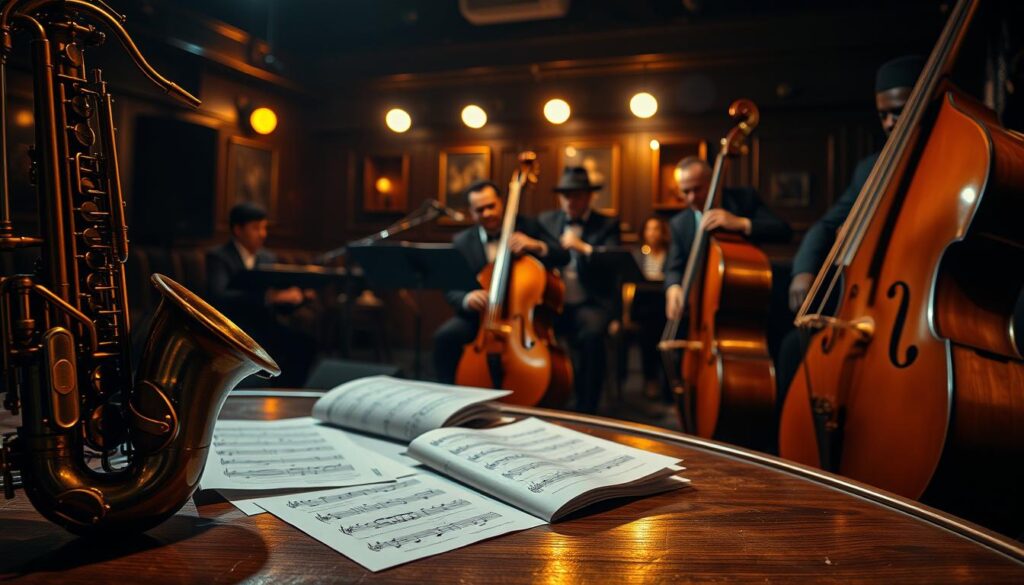
Consider Miles Davis’s Kind of Blue. His revolutionary approach wasn’t about flashy technique. It was about space, mood, and what he didn’t play. Modal jazz reduced complex chord changes to atmospheric scales. The Harmon mute created that iconic, introspective, distant sound—a trumpet whispering secrets through glass.
This aesthetic became the backbone of film noir. Cynical detectives, shadowy figures, and moral compromises needed a score that felt urban and detached. The instrumentation of cool jazz provided the perfect toolkit.
So how does this translate to a runner doubting their ability or a boxer facing their conscience? The vocabulary is remarkably transferable.
That walking bass line? It’s not just keeping time. It’s the relentless forward motion of training against impossible odds. The dry, breathy saxophone? That’s the sound of lonely contemplation at 4 AM. The vibraphone’s shimmer? The fragile hope that might shatter at any moment.
Film noir gave sports cinema permission to be dark. Jazz gave it the tools to be complex. Before this cross-pollination, athletic scores risked two boring extremes: triumphant marches or sad violins.
Now composers could paint in shades of gray. They could use:
- Muted brass for internal conflict
- Spare piano figures for isolation
- Drum brushes for tension without aggression
- Upright bass pizzicato for hesitant steps forward
This instrumentation doesn’t tell the audience what to feel. It creates an environment where doubt, determination, and ambiguity can coexist. It’s the difference between a slogan and a soliloquy.
The next time you hear a sports score that gets under your skin, listen closely. You might just hear the ghost of a jazz standard playing in a smoke-filled room. The athlete’s journey and the noir protagonist’s walk down a dark street share the same soundtrack.
They’re both navigating uncertainty. They’re both alone with their choices. And now, thanks to this borrowed sonic vocabulary, they can sound equally human.
Case Studies of Signature Themes
The autopsy table is ready for two cinematic scores that redefine what competition sounds like. We’re not talking about Rocky’s stairs or Chariots of Fire’s beach. No, we’re examining darker, more complex blueprints. These are scores where the game is life or death, and the instrumentation is a character’s heartbeat.
What can a composer’s choices teach us about scoring any contest? Let’s find out through some serious leitmotif analysis.
First, Dimitri Tiomkin’s High Noon. On paper, it’s a western. In practice, it’s a sports film about a clock. The town marshal, Will Kane, has until noon to face his enemies. The entire film is a pre-game locker room, stretched to feature length.
Tiomkin’s genius was using a folk song, “Do Not Forsake Me,” as the entire emotional framework. This simple, vocal-led leitmotif is the score’s spine. Its instrumentation is deliberately sparse: a lone voice, acoustic guitar, maybe a harmonica. It feels intimate, vulnerable.
Then, when the showdown nears, Tiomkin weaponizes restraint. The orchestra surges in, but only briefly. The contrast between the humble folk motif and the sudden orchestral terror is the musical equivalent of a sucker punch. The leitmotif analysis here reveals a core truth: in high-stakes moments, simplicity magnifies fear.
Now, shift gears to Nino Rota’s The Godfather. The Corleone family business is America’s most brutal sport. Their arena is back rooms and wedding halls. Rota scored this world of violence with music of heartbreaking beauty.
His famous waltz is a masterpiece of tragic instrumentation. The accordion whispers of old Sicily. The strings swell with operatic romance. This isn’t music for gangsters; it’s music for a fallen dynasty. Rota gives the Corleones a theme fit for royalty, making their corruption feel Shakespearean.
The leitmotif analysis shows Rota’s trick. He never scores the violence directly. Instead, he scores the tradition, the family, the loss. The murder scenes are often silent, making the return of that lush, mournful theme even more devastating. The music tells us what the characters cannot: this “game” destroys everyone who plays.
So what’s the takeaway for scoring competition?
- Personalize the Stakes: Tiomkin and Rota didn’t score events; they scored people. The clock ticking for Kane. The legacy crumbling for Corleone. Your theme must belong to a character.
- Instrumentation is Psychology: A folk song breeds isolation. An accordion signals fading tradition. Every instrument choice tells the audience how to feel about the struggle.
- Break the Obvious Pattern: The big moment doesn’t need the big orchestra. Sometimes the most powerful cue is the one that goes quiet, or uses the “wrong” instruments for the scene.
These case studies prove a vital point. The greatest scores for any contest—sports, crime, survival—understand that the real battle is internal. The instrumentation and motif aren’t just decoration. They’re the X-ray showing the fractures in a competitor’s soul.
Next time you watch a showdown, listen closer. The music has already told you who will break, and why.
Build‑Your‑Own Mood Playlist
It’s time to create your own soundtrack. You’re not John Williams, but you can score your own moments. Whether it’s for a workout or a creative session, you can make the music.
Music preference plays a big role in how we feel. Choosing music that you like can boost your performance. It makes you feel like you’re working harder, but it doesn’t feel as hard.
To make a mood playlist that works, think like a film editor. You need a three-part structure: Isolation, Propulsion, and Anthem.
| Phase | Musical Characteristics | Psychological Purpose | Example Genres |
|---|---|---|---|
| 1. The Settling In | Ambient textures, sparse melodies, slow harmonic movement. The musical equivalent of a wide establishing shot. | Lowers cognitive load, eases transition into activity, creates mental space. A minimalist score for focus. | Ambient, Drone, Modern Classical, Lo-fi Ambient |
| 2. The Rhythmic Engine | Steady, non-intrusive pulse. Clear beat without aggressive melody. Instrumental focus. | Provides subconscious metronome, maintains pace, offers rhythmic drive without emotional manipulation. | Instrumental Hip-Hop, Post-Rock, Downtempo Electronic, Krautrock |
| 3. The Personal Crescendo | Tracks with leitmotif-like personal resonance. Your undisputed anthems. | Triggers peak emotional and physical response. Harnesses personal memory and association for the final push. | This is your library: Classic Rock, Synthwave, Orchestral Rock, Your Genre of Victory |
Phase 1 is non-negotiable. Start with ambient or minimalist music. Think Brian Eno’s “Music for Airports” or Nils Frahm’s piano works. It’s not background music but a way to focus.
Phase 2 is your workhorse. This part should be instrumental and steady. Think Bonobo’s early work or Explosions in the Sky’s milder tracks. It keeps you moving without needing your full attention.
Phase 3 is purely personal. Choose tracks that make you feel strong. These are your personal anthems. They should make you feel something deep.
The key is in how you sequence the music. It’s not just about mixing tracks. It’s about creating a story with sound. Experiment and find what works best for you.
Tips for Indie Directors Commissioning Scores
You’re making a film about an underdog boxer or a fading gymnast. Don’t just hire a composer. Hire a collaborator in psychological warfare.
First, brief them with emotions, not temp tracks. Say “I want the sound of resilience that’s about to crack.” This gives your composer a clear goal, not just a musical note.
Second, demand a proper leitmotif analysis for your main character. A simple melody that can be deconstructed, stretched thin, or played backwards as their journey fractures. This thematic DNA is your score’s backbone.
Third, discuss instrumentation like a painter choosing a palette. “Let’s avoid violins for the hero. What about a solo clarinet and prepared piano?” This choice tells the audience who your character is before they speak.
Fourth, reference the real masters of mood. Not just John Williams, but Miles Davis for tense isolation. Nino Rota for bittersweet carnival energy. Dimitri Tiomkin for sprawling, dusty ambition.
Lastly, have the courage to cut the music entirely. The most powerful score sometimes knows when to shut up. Let the audience hear the protagonist breathe. That silence is your real victory.
A smart leitmotif analysis and intentional silence can out-punch any orchestral blast. Your film’s heart deserves that kind of strategic scoring.