The sports noir genre looks at dark stories in competitive worlds. These tales are about ambition, corruption, and moral choices. They happen in sports and the worlds around them.
Modern remakes are more about revision, not repetition. They see the original through a new director’s eyes. This approach deals with today’s culture and artistic views.
Auteur theory helps us understand this. It shows the clash between making movies for money and the director’s vision. This theory explains how remakes change their source material.
Looking at these films, we see changes in how movies are made and what they talk about. It shows how directors grow over time. We’ll look at remakes and films that share the same spirit within the genre.
What counts as a remake vs spiritual successor vs sequel
The film world often brings back stories in different ways. Remakes, spiritual successors, and sequels each have their own creative take. Knowing the difference helps us see how genres evolve and the balance between creative vision and commercial goals.
A remake is a new version of an old film. It keeps the main story and plot. Today’s remakes update settings, casts, and tech like special effects. This shows how genres stay the same but details change.
A spiritual successor shares themes and tone with an old film but tells a new story. It’s like a nod to the past, exploring similar ideas in a fresh way. This shows a director’s ongoing interests.
A sequel picks up where a previous film left off. It has the same characters and is part of the same story world. Sequels add new chapters to a saga, exploring what happens next.
| Category | Narrative Relationship | Core Elements Retained | Primary Creative Driver |
|---|---|---|---|
| Remake | Same story, new version | Plot structure, central conflict | Modernization, cultural translation |
| Spiritual Successor | New story, similar concepts | Themes, mood, genre tropes | Thematic exploration, directorial voice |
| Sequel | Continuation of existing story | Characters, established world | Narrative expansion, franchise building |
These definitions help critics and viewers understand films better. The movie Body and Soul (1981) is a remake of the 1947 classic. This makes it easy to see how the two differ in tone, politics, and how they were received.
Knowing the difference between these types is important. It helps us understand a film’s connection to its source. It also sheds light on the artistic and business goals behind new films, especially within the tradition of film noir.
Body and Soul (1947) → Body and Soul (1981): what changed (tone, politics, reception)
The 1947 and 1981 versions of Body and Soul show big changes in sports, style, and social views. The first is a classic boxing movie. The second moves the story to auto racing.
This change in sports affects the movie’s look and feel. The 1947 film is dark and focuses on the fighter’s body and soul. The 1981 version is fast-paced, with open tracks and racing.
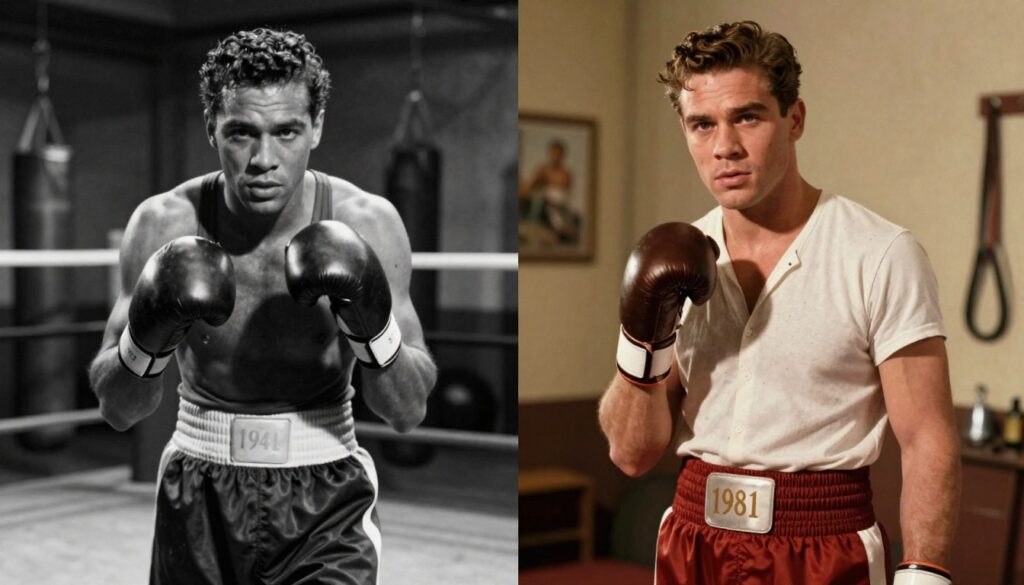
Each film is rooted in its setting and realism. The 1947 film shows the tough times after World War II. The 1981 film reflects the 1980s’ focus on wealth and success.
The political messages also change. The 1947 Body and Soul talks about corruption in a specific field. It reflects the post-war feeling of disappointment. The 1981 film tackles corporate greed and media influence.
How critics saw the films was different. The 1947 version is a classic in sports movies. It won an Oscar for its script. The 1981 remake was judged against the original’s success.
Many thought the racing story was less intense than boxing. But, it did well with its action and famous actors.
The Body and Soul 1947 1981 comparison shows how remakes update stories for new times. The original was about personal cost. The remake is about ambition in a big, commercial sports world.
Night and the City (1950) → Night and the City (1992): Wrestling to Boxing, Character Morality, New York Neon
Irwin Winkler’s 1992 remake of “Night and the City” changes the sport from wrestling to boxing. This shift changes the film’s violence, culture, and moral tone. The remake gives the 1950 classic a new story for today’s audience.
The main change from wrestling to boxing changes the story’s conflict. In the 1950 film, wrestling is a dirty, staged fight of desperation. The 1992 version’s boxing is a real, yet brutal, sport. This change makes the violence more intense and real.
Character morality also changes a lot. In 1950, Harry Fabian is a desperate conman trapped by a harsh world. The 1992 Harry Fabian, played by Robert De Niro, has bigger ambitions. He tries to cheat a more corporate system, but it’s just as cruel.
The setting changes too. Post-war London was hopeless, making Fabian’s failure seem certain. But 1992’s New York is full of hope, making the protagonist’s choices and fate more complex. It’s a commentary on the American dream.
The visual change is key. The 1992 film uses bright colors and neon lights. It shows a city that’s full of life but empty of true success. This reflects the allure of success that drives the protagonist.
The 1950 and 1992 versions of “Night and the City” show three main updates:
- Sporting World: From wrestling’s desperation to boxing’s corporate brutality.
- Protagonist’s Drive: From survival in a broken system to ambition in a morally gray one.
- Urban Environment: From post-war bleakness to a bright, detailed neo-noir city.
These changes show how a classic sports noir was updated. The 1992 “Night and the City” keeps the core of a hustler’s downfall. But it places it in the context of late-20th-century America’s aesthetics and moral questions.
The Hustler (1961) → The Color of Money (1986): sequel as generational noir; mentorship and capitalism
Martin Scorsese’s The Color of Money is not a copy of The Hustler. It’s a new chapter in the story, set 25 years later. This sequel brings the sports noir genre into a new era of American culture.
The story has changed a lot. The 1961 film by Robert Rossen showed how talent can be corrupted. The 1986 film by Scorsese looks at how mentorship works in a world of big money.
Paul Newman’s character, Eddie Felson, has changed a lot. He’s no longer just a young pool player. Now, he’s a cynical salesman and gambler. He sees Vincent Lauria as a chance to make money, not just to teach him.
This change shows how different directors can see things. Scorsese’s style is very different from Rossen’s. He brings his own vision to the story.
Scorsese’s film is full of energy. His camera moves fast, and the music is exciting. The film shows how chasing money is like playing a game. It’s all about making deals and facing gray areas.
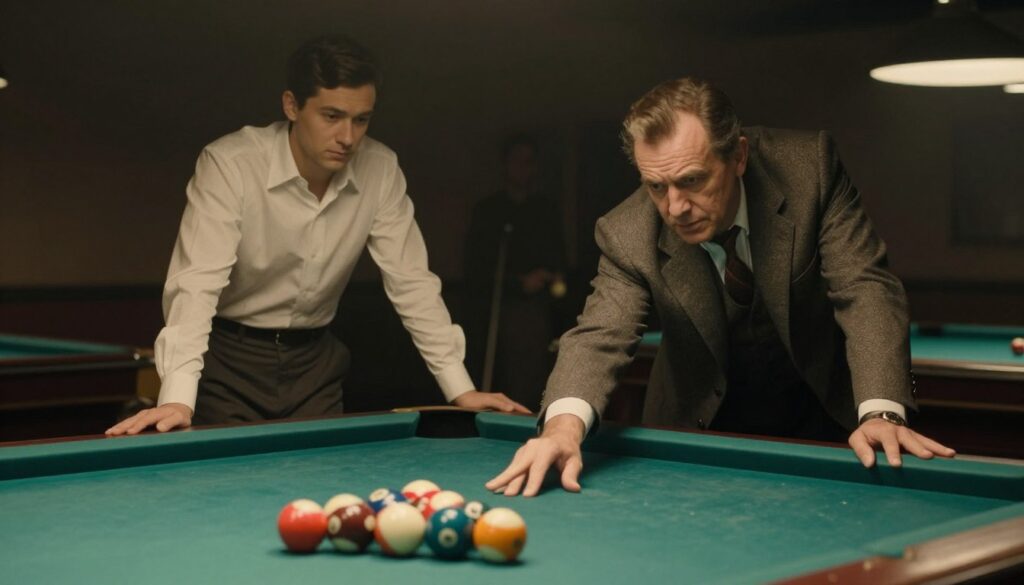
The Color of Money asks a big question. What happens to a hero after they fall? The answer is about living in a world where looks and money matter most. Eddie learns that the game has changed forever.
This shows how films can keep their unique voice while exploring new ideas. The hustler influence is there, but Scorsese sees it through his own lens. The sequel is a commentary on the original, updated for today’s world.
Influence chains: The Set‑Up’s real‑time tension → modern single‑night anxiety films; Requiem for a Heavyweight →
Films like ‘The Set-Up’ and ‘Requiem for a Heavyweight’ have shaped today’s movies. They show how sports noir themes and styles have evolved. Just like “The Hunter” inspired “Point Blank,” sports noir’s ideas have lasted through the years.
Robert Wise’s The Set-Up (1949) is a prime example of a tight, real-time story. It tells the whole story in about 80 minutes, matching its length. This creates intense tension as boxer Stoker Thompson’s fate is decided in one night.
The film’s use of real-time anxiety has influenced today’s thrillers. Movies like Good Time (2017) and Victoria (2015) keep their characters in a night of trouble. The city becomes a tight space, just like The Set-Up’s boxing ring.
Rod Serling’s Requiem for a Heavyweight (1962) looks at a different kind of darkness. It shows what happens after a boxer’s career ends. This film’s look at the decline of a boxer and the corruption of the system has influenced many.
This legacy is seen in films like Darren Aronofsky’s The Wrestler (2008) and TV’s Kingdom (2014-2017). They explore the damage to athletes and the manipulation by managers. These stories are not just about boxing but about the cost of being a top athlete in any field.
The lasting impact of these themes shows that the hustler influence is more than just remakes. It’s a way to tell stories that continue to resonate with audiences.
| Classic Sports Noir Film | Core Technique / Theme | Modern Influence Examples |
|---|---|---|
| The Set-Up (1949) | Real-time, single-night narrative tension; urban anxiety. | Good Time (2017), Victoria (2015), Running Scared (2006). |
| Requiem for a Heavyweight (1962) | Post-career athletic decline; systemic exploitation. | The Wrestler (2008), TV series Kingdom, The Fighter (2010). |
| Body and Soul (1947) | Corruption of talent by external forces; moral compromise. | Narratives in sports dramas like Night and the City (1992) and Southpaw (2015). |
| The Hustler (1961) | Obsessive pursuit of mastery in a subculture; psychological duel. | The Color of Money (1986), Rounders (1998), Molly’s Game (2017). |
These chains show a bigger truth in movies. Classic stories have adapted to new sports and settings. For more on classic sports movies, check out our analysis of unsung sports movies of classic noir. The use of real-time and the story of a broken athlete are powerful ways to explore pressure and corruption. This shows the hustler influence is a lasting part of storytelling.
Classroom task: Pitch a contemporary remake logline with setting, tech, and villain updates
This part moves from looking back to doing something new. It’s a creative task based on the article’s ideas. You’re asked to come up with a new version of a classic sports noir movie.
The aim is strategic revision, not just copying the old. This is different from making movies based on what people like. It’s more about the creator’s vision, like we talked about before.
A logline is a short summary of a movie’s main idea. It tells who the hero is, what they’re up against, and what makes the story special. For this task, your logline should say where the original story came from.
Then, you need to add three modern twists. These changes make the old story fit today’s world.
- Modernized Setting: Move the story to a place that shows today’s problems. For example, a secret fight club in old buildings or a big pool game in Las Vegas.
- Technology Integration: Make today’s tech a key part of the story. Think about how social media, sports stats, or body data can change the game.
- Reimagined Villain: Make the bad guy’s reasons fit today’s corruption. They could be a group that steals data, a person who messes with social media, or a boss who cheats in sports.
Let’s say you’re remaking “The Set-Up.” It could become “The Stream.” A retired MMA fighter has one last fight, but it’s streamed online for betting. The bad guy is the system that changes the fight’s outcome for money.
This task uses the ideas from sports noir remakes. You need to mix setting, tech, and characters into a strong pitch. Your goal is to create a logline for a fresh, exciting sports noir movie.
Takeaways
Comparing films like Body and Soul and The Color of Money gives us clear insights. Sports noir remakes act as cultural mirrors. They show how society, technology, and filmmaking styles change over time.
Good sports noir remakes keep the genre’s core alive. They tackle themes like moral gray areas, the high cost of ambition, and corruption. Modern twists come in new settings, character reasons, and visual styles. The 1992 Night and the City is a great example of this mix.
Sports noir stays relevant by updating itself. Each remake or spiritual sequel shows the genre’s flexibility. It reflects today’s worries about competition, honesty, and success.
These remakes prove that old story structures are timeless. They help us understand ongoing human struggles in new contexts. The genre’s success depends on blending classic themes with fresh approaches.