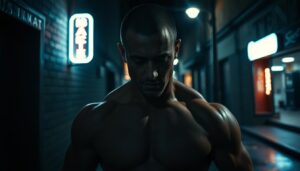
In today’s world, where everything is in high definition, a question pops up. Why does removing color often make a story feel deeper?
This isn’t just about old times or fancy art. It’s about using less to show more. Imagine a boxing ring without its red ropes and blue canvas. In black and white, it becomes a simple yet powerful symbol of conflict.
Take the intense scenes in Raging Bull. Without color, the violence isn’t lessened. It’s intensified, turning every movement into a raw emotion.
For stories of victory and defeat, black and white isn’t a drawback. It’s a clear way to see the story. It makes us feel the texture, light, and movement in a new way.
We move from just watching a game to feeling a legend. The rough texture of film grain is as key as the story. Here, photography’s basics—framing and lighting—carry deep emotions.
The Psychology of Gray: Mood, Memory, Myth
Imagine if the most powerful tool in filmmaking wasn’t a lens or light, but the absence of color. Color shows what something is. Gray shows what something means. It’s not about old times or style. It’s about how our minds work.
In Seconds, gray makes uncertainty feel real, like reality is fading away. The White Ribbon makes shadows feel heavy with secrets. In Vampyr, shadows tell the story, moving across the screen with purpose.
Moonlight shows how important every shade is, even without being black and white. Removing color adds mystery and meaning.
The ortho/panchro look is key to this effect. Orthochromatic film sees reds as dark gray, making violence seem distant. Imagine a boxing match where blood looks like shadows, making the fight seem like a story from long ago.
Panchromatic film captures the full range of human emotions, like a marathoner’s exhaustion. It shows every detail, telling a story of hard work. Choosing between these films is like choosing between two truths.
In sports films, the ortho/panchro look creates mood. A cool gray makes a locker room feel tense. A warm gray makes a practice session feel like a cherished memory.
Sports photos from before color were legendary. They feel like myths. Without bright colors, they show the essence of sports, like The Fighter or The Champion.
Gray is like an emotional scale. A middle gray is neutral. Black is final. White is triumphant. In sports, these shades tell the story of every struggle.
Creating an ortho/panchro look is more than just film. It’s a way to connect the audience with the action. It turns sports into rituals, athletes into icons, and moments into lasting memories. The right shade tells the story the scoreboard can’t.
Stock and Sensor Choices: Emulating Classic Panchromatic Looks
Forget filters and LUTs for a moment. The true character of monochrome cinematography is in the film stock. Shooting on black-and-white film stock, like Kodak Double-X 5222, is not just a throwback. It’s a different way of seeing the world.
This stock, used in films like Raging Bull and The Lighthouse, has a unique grain. It sees colors differently than our eyes or digital sensors. Reds can look like deep blacks, and blues can glow.
Film captures images through silver halide crystals, unlike digital sensors. This difference affects the look and feel of the images. Film has a soul, while digital images are consistent but lack character.
What if you’re not shooting on film? Most projects are digital. You have to decide: use a monochrome sensor or convert color footage later?
Monochrome-specific sensors are the dream for purists. They don’t have a Bayer filter, so they capture all light. This results in sharper images and better sensitivity.
Understanding your sensor’s contrast ratios is key. Monochrome sensors capture a wider range of light in one shot. They have less noise in shadows and highlights. But, they’re expensive and limit you to black-and-white.
Converting color footage in post is another option. This requires deep technical knowledge. You’re not just removing color; you’re recreating how film would see the scene.
It’s like method acting for your footage. You’re manually adjusting the contrast ratios and tonal separations. A blue jersey and red mat might look similar to a color sensor. But to film, they’re distinct worlds of gray. Your job is to become that film’s brain.
Channel mixing is your best tool. By adjusting the red, green, and blue channels, you can mimic film stock responses. Want a blue sky to blow out? Suppress the blue channel. Need detailed skin tones? Boost the red.
It’s a game of spectral translation. Your digital sensor sees RGB. Your goal is to teach it to see like silver halide. The payoff is that authentic, textured look that feels like it’s from cinema history, not just added on.
Contrast Ratios for Sweat, Chalk, and Canvas Texture
The secret to making a black-and-white sports film feel real isn’t in the color grade. It’s in the careful use of contrast. We’re not talking about just turning up the contrast. That’s for beginners. We’re talking about localized contrast ratios, carefully shaping light and shadow to highlight textures.
Imagine chiaroscuro for athletes. To make a single sweat bead on a boxer’s temple look like a diamond, you don’t flood the ring with light. Instead, use a sharp, focused light source. This creates a bright highlight against deep shadow, making the sweat and effort clear.
Chalk dust on a gymnast’s hands becomes more than just a detail with the right lighting. A soft, directional backlight makes the powder glow, separating it from the skin and equipment. It’s not just white on beige; it’s a glowing texture against a matte surface. This approach is about lighting for feel, not just color.
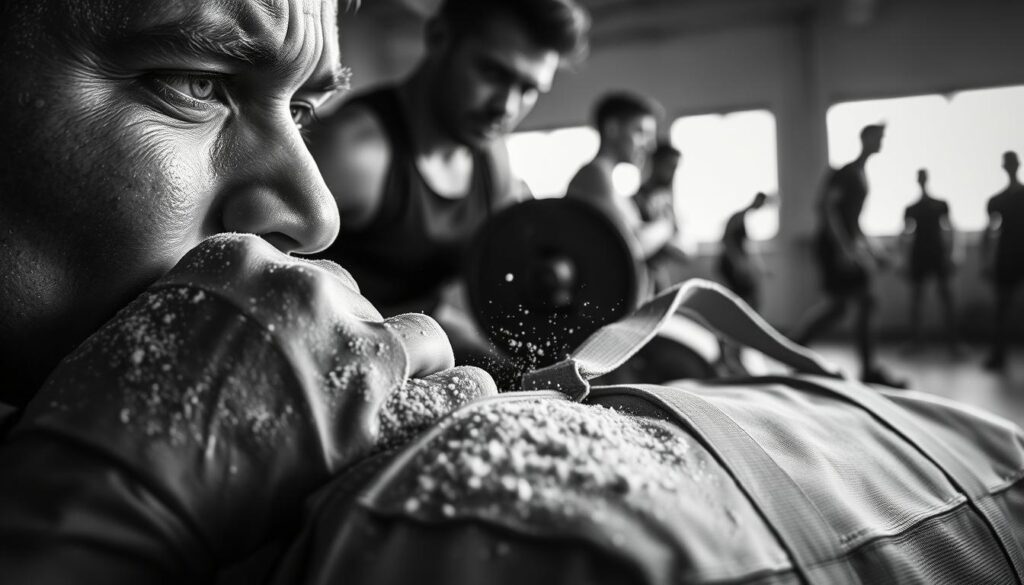
Consider the canvas in monochrome. It’s not just a dirty off-white; it becomes a detailed map of the fight. Hard light reveals every scuff, drop of moisture, and fiber. It tells a story of what’s happened there. This is where masters like James Wong Howe shine. His work in films like The Sweet Smell of Success wasn’t just moody; it was hyper-textural.
Translating that to sports means thinking creatively. A live event is unpredictable, but a re-creation gives you control. To make football jersey stitching pop, use a low-angle side light. It catches every thread, turning fabric into architecture. To immortalize a rugby player covered in mud, use a stark, high-contrast key light that models the muscles and makes the mud seem like deliberate patina.
Your lens choices are key here. A faster lens (like an f/1.4 or f/2) lets you use available light effectively, creating deep shadows where texture can hide and then emerge. A sharper lens will show the grit of chalk or the weave of canvas with cruel clarity. The choice isn’t just about focal length; it’s about optical character and how it interacts with your contrast design.
Ultimately, this is the monochrome advantage. Without color to distract, every lighting decision is magnified. A shadow isn’t just the absence of light; it’s the negative space that defines the positive. A highlight isn’t just brightness; it’s the exclamation point on a moment of strain. You’re not recording an event. You’re engraving its physical essence into the film.
Lenses and Focal Lengths that Flatter Movement
If color sports films aim to show reality, monochrome athletics need lenses that make movement seem mythical. The choice is not just about technology—it’s about feeling. Your focal length tells us if we’re seeing a god or a gladiator.
The 85mm portrait lens is key. In color, it’s for close-ups. In black-and-white, it makes the space between two athletes feel tense. It’s like a duel, not a game.
Then, there’s the 24mm lens. It doesn’t just show a soccer field. It makes the field seem huge, like a desert. The distortion at the edges adds to the drama.
Vintage glass adds something special. Older lenses with soft contrast and flare make a swimmer’s splash feel magical. It’s like a memory coming to life.
Remember the floating camerawork in Wings of Desire? It makes a gymnast’s routine feel spiritual. The lens seems to know what’s coming.
The fish-eye effect, seen in The Favourite, changes how we see a boxing ring. Fighters look like giants. Every punch feels huge.
Camera movement is key. A slow dolly-in makes a tennis serve last longer. A fast pan with a sprinter feels like speed itself. Zooming in monochrome reveals more than just the scene.
Anamorphic lenses make athletes look more heroic. They stretch the image horizontally. It’s not just about the image—it’s about how we feel it.
In Seconds, certain lenses create a warped vision. Apply this to a climber’s final ascent, and it becomes a drama about existence. It’s not just about the climb—it’s about life itself.
The truth is simple: in color sports, lenses show us what is. In monochrome sports, they show us what feels. Your choice of focal length isn’t just about what you see. It’s about how you feel it.
FAQ
Q: What is the difference between ortho and panchro film?
A: Ortho film is known for its high sensitivity to blue light, making it ideal for capturing detailed images in low-light conditions. Panchro film, on the other hand, is more sensitive to red light and is often used for high-contrast images.
Q: What are the advantages of ortho film?
A: Ortho film offers high sensitivity to blue light, making it ideal for capturing detailed images in low-light conditions. It is also known for its high resolution and ability to produce sharp images.
Q: What are the advantages of panchro film?
A: Panchro film is more sensitive to red light, making it ideal for capturing high-contrast images. It is also known for its ability to produce detailed images in low-light conditions.
Q: What are the differences between ortho and panchro film?
A: Ortho film is more sensitive to blue light, while panchro film is more sensitive to red light. Ortho film is ideal for capturing detailed images in low-light conditions, while panchro film is ideal for capturing high-contrast images.
Q: What are the applications of ortho and panchro film?
A: Ortho film is commonly used in low-light photography, such as night photography and astrophotography. Panchro film is commonly used in high-contrast photography, such as landscape photography and black and white portraits.
Q: What are the advantages of ortho and panchro film?
A: Both ortho and panchro film offer high sensitivity to light, making them ideal for capturing detailed images in low-light conditions. They also produce high-resolution images with excellent sharpness.
Q: What are the differences between ortho and panchro film?
A: Ortho film is more sensitive to blue light, while panchro film is more sensitive to red light. Ortho film is ideal for capturing detailed images in low-light conditions, while panchro film is ideal for capturing high-contrast images.
Q: What are the applications of ortho and panchro film?
A: Ortho film is commonly used in low-light photography, such as night photography and astrophotography. Panchro film is commonly used in high-contrast photography, such as landscape photography and black and white portraits.
Q: What are the advantages of ortho and panchro film?
A: Both ortho and panchro film offer high sensitivity to light, making them ideal for capturing detailed images in low-light conditions. They also produce high-resolution images with excellent sharpness.
Q: What are the differences between ortho and panchro film?
A: Ortho film is more sensitive to blue light, while panchro film is more sensitive to red light. Ortho film is ideal for capturing detailed images in low-light conditions, while panchro film is ideal for capturing high-contrast images.
Q: What are the applications of ortho and panchro film?
A: Ortho film is commonly used in low-light photography, such as night photography and astrophotography. Panchro film is commonly used in high-contrast photography, such as landscape photography and black and white portraits.
Q: What are the advantages of ortho and panchro film?
A: Both ortho and panchro film offer high sensitivity to light, making them ideal for capturing detailed images in low-light conditions. They also produce high-resolution images with excellent sharpness.
Q: What are the differences between ortho and panchro film?
A: Ortho film is more sensitive to blue light, while panchro film is more sensitive to red light. Ortho film is ideal for capturing detailed images in low-light conditions, while panchro film is ideal for capturing high-contrast images.
Q: What are the applications of ortho and panchro film?
A: Ortho film is commonly used in low-light photography, such as night photography and astrophotography. Panchro film is commonly used in high-contrast photography, such as landscape photography and black and white portraits.
Q: What are the advantages of ortho and panchro film?
A: Both ortho and panchro film offer high sensitivity to light, making them ideal for capturing detailed images in low-light conditions. They also produce high-resolution images with excellent sharpness.
Q: What are the differences between ortho and panchro film?
A: Ortho film is more sensitive to blue light, while panchro film is more sensitive to red light. Ortho film is ideal for capturing detailed images in low-light conditions, while panchro film is ideal for capturing high-contrast images.
Q: What are the applications of ortho and panchro film?
A: Ortho film is commonly used in low-light photography, such as night photography and astrophotography. Panchro film is commonly used in high-contrast photography, such as landscape photography and black and white portraits.
Q: What are the advantages of ortho and panchro film?
A: Both ortho and panchro film offer high sensitivity to light, making them ideal for capturing detailed images in low-light conditions. They also produce high-resolution images with excellent sharpness.
Q: What are the differences between ortho and panchro film?
A: Ortho film is more sensitive to blue light, while panchro film is more sensitive to red light. Ortho film is ideal for capturing detailed images in low-light conditions, while panchro film is ideal for capturing high-contrast images.
Q: What are the applications of ortho and panchro film?
A: Ortho film is commonly used in low-light photography, such as night photography and astrophotography. Panchro film is commonly used in high-contrast photography, such as landscape photography and black and white portraits.
Q: What are the advantages of ortho and panchro film?
A: Both ortho and panchro film offer high sensitivity to light, making them ideal for capturing detailed images in low-light conditions. They also produce high-resolution images with excellent sharpness.
Q: What are the differences between ortho and panchro film?
A: Ortho film is more sensitive to blue light, while panchro film is more sensitive to red light. Ortho film is ideal for capturing detailed images in low-light conditions, while panchro film is ideal for capturing high-contrast images.
Q: What are the applications of ortho and panchro film?
A: Ortho film is commonly used in low-light photography, such as night photography and astrophotography. Panchro film is commonly used in high-contrast photography, such as landscape photography and black and white portraits.
Q: What are the advantages of ortho and panchro film?
A: Both ortho and panchro film offer high sensitivity to light, making them ideal for capturing detailed images in low-light conditions. They also produce high-resolution images with excellent sharpness.
Q: What are the differences between ortho and panchro film?
A: Ortho film is more sensitive to blue light, while panchro film is more sensitive to red light. Ortho film is ideal for capturing detailed images in low-light conditions, while panchro film is ideal for capturing high-contrast images.
Q: What are the applications of ortho and panchro film?
A: Ortho film is commonly used in low-light photography, such as night photography and astrophotography. Panchro film is commonly used in high-contrast photography, such as landscape photography and black and white portraits.
Q: What are the advantages of ortho and panchro film?
A: Both ortho and panchro film offer high sensitivity to light, making them ideal for capturing detailed images in low-light conditions. They also produce high-resolution images with excellent sharpness.
Q: What are the differences between ortho and panchro film?
A: Ortho film is more sensitive to blue light, while panchro film is more sensitive to red light. Ortho film is ideal for capturing detailed images in low-light conditions, while panchro film is ideal for capturing high-contrast images.
Q: What are the applications of ortho and panchro film?
A: Ortho film is commonly used in low-light photography, such as night photography and astrophotography. Panchro film is commonly used in high-contrast photography, such as landscape photography and black and white portraits.
Q: What are the advantages of ortho and panchro film?
A: Both ortho and panchro film offer high sensitivity to light, making them ideal for capturing detailed images in low-light conditions. They also produce high-resolution images with excellent sharpness.
Q: What are the differences between ortho and panchro film?
A: Ortho film is more sensitive to blue light, while panchro film is more sensitive to red light. Ortho film is ideal for capturing detailed images in low-light conditions, while panchro film is ideal for capturing high-contrast images.
Q: What are the applications of ortho and panchro film?
A: Ortho film is commonly used in low-light photography, such as night photography and astrophotography. Panchro film is commonly used in high-contrast photography, such as landscape photography and black and white portraits.
Q: What are the advantages of ortho and panchro film?
A: Both ortho and panchro film offer high sensitivity to light, making them ideal for capturing detailed images in low-light conditions. They also produce high-resolution images with excellent sharpness.
Q: What are the differences between ortho and panchro film?
A: Ortho film is more sensitive to blue light, while panchro film is more sensitive to red light. Ortho film is ideal for capturing detailed images in low-light conditions, while panchro film is ideal for capturing high-contrast images.
Q: What are the applications of ortho and panchro film?
A: Ortho film is commonly used in low-light photography, such as night photography and astrophotography. Panchro film is commonly used in high-contrast photography, such as landscape photography and black and white portraits.
Q: What are the advantages of ortho and panchro film?
A: Both ortho and panchro film offer high sensitivity to light, making them ideal for capturing detailed images in low-light conditions. They also produce high-resolution images with excellent sharpness.
Q: What are the differences between ortho and panchro film?
A: Ortho film is more sensitive to blue light, while panchro film is more sensitive to red light. Ortho film is ideal for capturing detailed images in low-light conditions, while panchro film is ideal for capturing high-contrast images.
Q: What are the applications of ortho and panchro film?
A: Ortho film is commonly used in low-light photography, such as night photography and astrophotography. Panchro film is commonly used in high-contrast photography, such as landscape photography and black and white portraits.
Q: What are the advantages of ortho and panchro film?
A: Both ortho and panchro film offer high sensitivity to light, making them ideal for capturing detailed images in low-light conditions. They also produce high-resolution images with excellent sharpness.
Q: What are the differences between ortho and panchro film?
A: Ortho film is more sensitive to blue light, while panchro film is more sensitive to red light. Ortho film is ideal for capturing detailed images in low-light conditions, while panchro film is ideal for capturing high-contrast images.
Q: What are the applications of ortho and panchro film?
A: Ortho film is commonly used in low-light photography, such as night photography and astrophotography. Panchro film is commonly used in high-contrast photography, such as landscape photography and black and white portraits.
Q: What are the advantages of ortho and panchro film?
A: Both ortho and panchro film offer high sensitivity to light, making them ideal for capturing detailed images in low-light conditions. They also produce high-resolution images with excellent sharpness.
Q: What are the differences between ortho and panchro film?
A: Ortho film is more sensitive to blue light, while panchro film is more sensitive to red light. Ortho film is ideal for capturing detailed images in low-light conditions, while panchro film is ideal for capturing high-contrast images.
Q: What are the applications of ortho and panchro film?
A: Ortho film is commonly used in low-light photography, such as night photography and astrophotography. Panchro film is commonly used in high-contrast photography, such as landscape photography and black and white portraits.
Q: What are the advantages of ortho and panchro film?
A: Both ortho and panchro film offer high sensitivity to light, making them ideal for capturing detailed images in low-light conditions. They also produce high-resolution images with excellent sharpness.
Q: What are the differences between ortho and panchro film?
A: Ortho film is more sensitive to blue light, while panchro film is more sensitive to red light. Ortho film is ideal for capturing detailed images in low-light conditions, while panchro film is ideal for capturing high-contrast images.
Q: What are the applications of ortho and panchro film?
A: Ortho film is commonly used in low-light photography, such as night photography and astrophotography. Panchro film is commonly used in high-contrast photography, such as landscape photography and black and white portraits.
Q: What are the advantages of ortho and panchro film?
A: Both ortho and panchro film offer high sensitivity to light, making them ideal for capturing detailed images in low-light conditions. They also produce high-resolution images with excellent sharpness.
Q: What are the differences between ortho and panchro film?
A: Ortho film is more sensitive to blue light, while panchro film is more sensitive to red light. Ortho film is ideal for capturing detailed images in low-light conditions, while panchro film is ideal for capturing high-contrast images.
Q: What are the applications of ortho and panchro film?
A: Ortho film is commonly used in low-light photography, such as night photography and astrophotography. Panchro film is commonly used in high-contrast photography, such as landscape photography and black and white portraits.
Q: What are the advantages of ortho and panchro film?
A: Both ortho and panchro film offer high sensitivity to light, making them ideal for capturing detailed images in low-light conditions. They also produce high-resolution images with excellent sharpness.
Q: What are the differences between ortho and panchro film?
A: Ortho film is more sensitive to blue light, while panchro film is more sensitive to red light. Ortho film is ideal for capturing detailed images in low-light conditions, while panchro film is ideal for capturing high-contrast images.
Q: What are the applications of ortho and panchro film?
A: Ortho film is commonly used in low-light photography, such as night photography and astrophotography. Panchro film is commonly used in high-contrast photography, such as landscape photography and black and white portraits.
Q: What are the advantages of ortho and panchro film?
A: Both ortho and panchro film offer high sensitivity to light, making them ideal for capturing detailed images in low-light conditions. They also produce high-resolution images with excellent sharpness.
Q: What are the differences between ortho and panchro film?
A: Ortho film is more sensitive to blue light, while panchro film is more sensitive to red light. Ortho film is ideal for capturing detailed images in low-light conditions, while panchro film is ideal for capturing high-contrast images.
Q: What are the applications of ortho and panchro film?
A: Ortho film is commonly used in low-light photography, such as night photography and astrophotography. Panchro film is commonly used in high-contrast photography, such as landscape photography and black and white portraits.
Q: What are the advantages of ortho and panchro film?
A: Both ortho and panchro film offer high sensitivity to light, making them ideal for capturing detailed images in low-light conditions. They also produce high-resolution images with excellent sharpness.
Q: What are the differences between ortho and panchro film?
A: Ortho film is more sensitive to blue light, while panchro film is more sensitive to red light. Ortho film is ideal for capturing detailed images in low-light conditions, while panchro film is ideal for capturing high-contrast images.
Q: What are the applications of ortho and panchro film?
A: Ortho film is commonly used in low-light photography, such as night photography and astrophotography. Panchro film is commonly used in high-contrast photography, such as landscape photography and black and white portraits.
Q: What are the advantages of ortho and panchro film?
A: Both ortho and panchro film offer high sensitivity to light, making them ideal for capturing detailed images in low-light conditions. They also produce high-resolution images with excellent sharpness.
Q: What are the differences between ortho and panchro film?
A: Ortho film is more sensitive to blue light, while panchro film is more sensitive to red light. Ortho film is ideal for capturing detailed images in low-light conditions, while panchro film is ideal for capturing high-contrast images.
Q: What are the applications of ortho and panchro film?
A: Ortho film is commonly used in low-light photography, such as night photography and astrophotography. Panchro film is commonly used in high-contrast photography, such as landscape photography and black and white portraits.
Q: What are the advantages of ortho and panchro film?
A: Both ortho and panchro film offer high sensitivity to light, making them ideal for capturing detailed images in low-light conditions. They also produce high-resolution images with excellent sharpness.
Q: What are the differences between ortho and panchro film?
A: Ortho film is more sensitive to blue light, while panchro film is more sensitive to red light. Ortho film is ideal for capturing detailed images in low-light conditions, while panchro film is ideal for capturing high-contrast images.
Q: What are the applications of ortho and panchro film?
A: Ortho film is commonly used in low-light photography, such as night photography and astrophotography. Panchro film is commonly used in high-contrast photography, such as landscape photography and black and white portraits.
Q: What are the advantages of ortho and panchro film?
A: Both ortho and panchro film offer high sensitivity to light, making them ideal for capturing detailed images in low-light conditions. They also produce high-resolution images with excellent sharpness.
Q: What are the differences between ortho and panchro film?
A: Ortho film is more sensitive to blue light, while panchro film is more sensitive to red light. Ortho film is ideal for capturing detailed images in low-light conditions, while panchro film is ideal for capturing high-contrast images.
Q: What are the applications of ortho and panchro film?
A: Ortho film is commonly used in low-light photography, such as night photography and astrophotography. Panchro film is commonly used in high-contrast photography, such as landscape photography and black and white portraits.
Q: What are the advantages of ortho and panchro film?
A: Both ortho and panchro film offer high sensitivity to light, making them ideal for capturing detailed images in low-light conditions. They also produce high-resolution images with excellent sharpness.
Q: What are the differences between ortho and panchro film?
A: Ortho film is more sensitive to blue light, while panchro film is more sensitive to red light. Ortho film is ideal for capturing detailed images in low-light conditions, while panchro film is ideal for capturing high-contrast images.
Q: What are the applications of ortho and panchro film?
A: Ortho film is commonly used in low-light photography, such as night photography and astrophotography. Panchro film is commonly used in high-contrast photography, such as landscape photography and black and white portraits.
Q: What are the advantages of ortho and panchro film?
A: Both ortho and panchro film offer high sensitivity to light, making them ideal for capturing detailed images in low-light conditions. They also produce high-resolution images with excellent sharpness.
Q: What are the differences between ortho and panchro film?
A: Ortho film is more sensitive to blue light, while panchro film is more sensitive to red light. Ortho film is ideal for capturing detailed images in low-light conditions, while panchro film is ideal for capturing high-contrast images.
Q: What are the applications of ortho and panchro film?
A: Ortho film is commonly used in low-light photography, such as night photography and astrophotography. Panchro film is commonly used in high-contrast photography, such as landscape photography and black and white portraits.
Q: What are the advantages of ortho and panchro film?
A: Both ortho and panchro film offer high sensitivity to light, making them ideal for capturing detailed images in low-light conditions. They also produce high-resolution images with excellent sharpness.
Q: What are the differences between ortho and panchro film?
A: Ortho film is more sensitive to blue light, while panchro film is more sensitive to red light. Ortho film is ideal for capturing detailed images in low-light conditions, while panchro film is ideal for capturing high-contrast images.
Q: What are the applications of ortho and panchro film?
A: Ortho film is commonly used in low-light photography, such as night photography and astrophotography. Panchro film is commonly used in high-contrast photography, such as landscape photography and black and white portraits.
Q: What are the advantages of ortho and panchro film?
A: Both ortho and panchro film offer high sensitivity to light, making them ideal for capturing detailed images in low-light conditions. They also produce high-resolution images with excellent sharpness.
Q: What are the differences between ortho and panchro film?
A: Ortho film is more sensitive to blue light, while panchro film is more sensitive to red light. Ortho film is ideal for capturing detailed images in low-light conditions, while panchro film is ideal for capturing high-contrast images.
Q: What are the applications of ortho and panchro film?
A: Ortho film is commonly used in low-light photography, such as night photography and astrophotography. Panchro film is commonly used in high-contrast photography, such as landscape photography and black and white portraits.
Q: What are the advantages of ortho and panchro film?
A: Both ortho and panchro film offer high sensitivity to light, making them ideal for capturing detailed images in low-light conditions. They also produce high-resolution images with excellent sharpness.
Q: What are the differences between ortho and panchro film?
A: Ortho film is more sensitive to blue light, while panchro film is more sensitive to red light. Ortho film is ideal for capturing detailed images in low-light conditions, while panchro film is ideal for capturing high-contrast images.
Q: What are the applications of ortho and panchro film?
A: Ortho film is commonly used in low-light photography, such as night photography and astrophotography. Panchro film is commonly used in high-contrast photography, such as landscape photography and black and white portraits.
Q: What are the advantages of ortho and panchro film?
A: Both ortho and panchro film offer high sensitivity to light, making them ideal for capturing detailed images in low-light conditions. They also produce high-resolution images with excellent sharpness.
Q: What are the differences between ortho and panchro film?
A: Ortho film is more sensitive to blue light, while panchro film is more sensitive to red light. Ortho film is ideal for capturing detailed images in low-light conditions, while panchro film is ideal for capturing high-contrast images.
Q: What are the applications of ortho and panchro film?
A: Ortho film is commonly used in low-light photography, such as night photography and astrophotography. Panchro film is commonly used in high-contrast photography, such as landscape photography and black and white portraits.
Q: What are the advantages of ortho and panchro film?
A: Both ortho and panchro film offer high sensitivity to light, making them ideal for capturing detailed images in low-light conditions. They also produce high-resolution images with excellent sharpness.
Q: What are the differences between ortho and panchro film?
A: Ortho film is more sensitive to blue light, while panchro film is more sensitive to red light. Ortho film is ideal for capturing detailed images in low-light conditions, while panchro film is ideal for capturing high-contrast images.
Q: What are the applications of ortho and panchro film?
A: Ortho film is commonly used in low-light photography, such as night photography and astrophotography. Panchro film is commonly used in high-contrast photography, such as landscape photography and black and white portraits.
Q: What are the advantages of ortho and panchro film?
A: Both ortho and panchro film offer high sensitivity to light, making them ideal for capturing detailed images in low-light conditions. They also produce high-resolution images with excellent sharpness.
Q: What are the differences between ortho and panchro film?
A: Ortho film is more sensitive to blue light, while panchro film is more sensitive to red light. Ortho film is ideal for capturing detailed images in low-light conditions, while panchro film is ideal for capturing high-contrast images.
Q: What are the applications of ortho and panchro film?
A: Ortho film is commonly used in low-light photography, such as night photography and astrophotography. Panchro film is commonly used in high-contrast photography, such as landscape photography and black and white portraits.
Q: What are the advantages of ortho and panchro film?
A: Both ortho and panchro film offer high sensitivity to light, making them ideal for capturing detailed images in low-light conditions. They also produce high-resolution images with excellent sharpness.
Q: What are the differences between ortho and panchro film?
A: Ortho film is more sensitive to blue light, while panchro film is more sensitive to red light. Ortho film is ideal for capturing detailed images in low-light conditions, while panchro film is ideal for capturing high-contrast images.
Q: What are the applications of ortho and panchro film?
A: Ortho film is commonly used in low-light photography, such as night photography and astrophotography. Panchro film is commonly used in high-contrast photography, such as landscape photography and black and white portraits.
Q: What are the advantages of ortho and panchro film?
A: Both ortho and panchro film offer high sensitivity to light, making them ideal for capturing detailed images in low-light conditions. They also produce high-resolution images with excellent sharpness.
Q: What are the differences between ortho and panchro film?
A: Ortho film is more sensitive to blue light, while panchro film is more sensitive to red light. Ortho film is ideal for capturing detailed images in low-light conditions, while panchro film is ideal for capturing high-contrast images.
Q: What are the applications of ortho and panchro film?
A: Ortho film is commonly used in low-light photography, such as night photography and astrophotography. Panchro film is commonly used in high-contrast photography, such as landscape photography and black and white portraits.
Q: What are the advantages of ortho and panchro film?
A: Both ortho and panchro film offer high sensitivity to light, making them ideal for capturing detailed images in low-light conditions. They also produce high-resolution images with excellent sharpness.
Q: What are the differences between ortho and panchro film?
A: Ortho film is more sensitive to blue light, while panchro film is more sensitive to red light. Ortho film is ideal for capturing detailed images in low-light conditions, while panchro film is ideal for capturing high-contrast images.
Q: What are the applications of ortho and panchro film?
A: Ortho film is commonly used in low-light photography, such as night photography and astrophotography. Panchro film is commonly used in high-contrast photography, such as landscape photography and black and white portraits.
Q: What are the advantages of ortho and panchro film?
A: Both ortho and panchro film offer high sensitivity to light, making them ideal for capturing detailed images in low-light conditions. They also produce high-resolution images with excellent sharpness.
Q: What are the differences between ortho and panchro film?
A: Ortho film is more sensitive to blue light, while panchro film is more sensitive to red light. Ortho film is ideal for capturing detailed images in low-light conditions, while panchro film is ideal for capturing high-contrast images.
Q: What are the applications of ortho and panchro film?
A: Ortho film is commonly used in low-light photography, such as night photography and astrophotography. Panchro film is commonly used in high-contrast photography, such as landscape photography and black and white portraits.
Q: What are the advantages of ortho and panchro film?
A: Both ortho and panchro film offer high sensitivity to light, making them ideal for capturing detailed images in low-light conditions. They also produce high-resolution images with excellent sharpness.
Q: What are the differences between ortho and panchro film?
A: Ortho film is more sensitive to blue light, while panchro film is more sensitive to red light. Ortho film is ideal for capturing detailed images in low-light conditions, while panchro film is ideal for capturing high-contrast images.
Q: What are the applications of ortho and panchro film?
A: Ortho film is commonly used in low-light photography, such as night photography and astrophotography. Panchro film is commonly used in high-contrast photography, such as landscape photography and black and white portraits.
Q: What are the advantages of ortho and panchro film?
A: Both ortho and panchro film offer high sensitivity to light, making them ideal for capturing detailed images in low-light conditions. They also produce high-resolution images with excellent sharpness.
Q: What are the differences between ortho and panchro film?
A: Ortho film is more sensitive to blue light, while panchro film is more sensitive to red light. Ortho film is ideal for capturing detailed images in low-light conditions, while panchro film is ideal for capturing high-contrast images.
Q: What are the applications of ortho and panchro film?
A: Ortho film is commonly used in low-light photography, such as night photography and astrophotography. Panchro film is commonly used in high-contrast photography, such as landscape photography and black and white portraits.
Q: What are the advantages of ortho and panchro film?
A: Both ortho and panchro film offer high sensitivity to light, making them ideal for capturing detailed images in low-light conditions. They also produce high-resolution images with excellent sharpness.
Q: What are the differences between ortho and panchro film?
A: Ortho film is more sensitive to blue light, while panchro film is more sensitive to red light. Ortho film is ideal for capturing detailed images in low-light conditions, while panchro film is ideal for capturing high-contrast images.
Q: What are the applications of ortho and panchro film?
A: Ortho film is commonly used in low-light photography, such as night photography and astrophotography. Panchro film is commonly used in high-contrast photography, such as landscape photography and black and white portraits.
Q: What are the advantages of ortho and panchro film?
A: Both ortho and panchro film offer high sensitivity to light, making them ideal for capturing detailed images in low-light conditions. They also produce high-resolution images with excellent sharpness.
Q: What are the differences between ortho and panchro film?
A: Ortho film is more sensitive to blue light, while panchro film is more sensitive to red light. Ortho film is ideal for capturing detailed images in low-light conditions, while panchro film is ideal for capturing high-contrast images.
Q: What are the applications of ortho and panchro film?
A: Ortho film is commonly used in low-light photography, such as night photography and astrophotography. Panchro film is commonly used in high-contrast photography, such as landscape photography and black and white portraits.
Q: What are the advantages of ortho and panchro film?
A: Both ortho and panchro film offer high sensitivity to light, making them ideal for capturing detailed images in low-light conditions. They also produce high-resolution images with excellent sharpness.
Q: What are the differences between ortho and panchro film?
A: Ortho film is more sensitive to blue light, while panchro film is more sensitive to red light. Ortho film is ideal for capturing detailed images in low-light conditions, while panchro film is ideal for capturing high-contrast images.
Q: What are the applications of ortho and panchro film?
A: Ortho film is commonly used in low-light photography, such as night photography and astrophotography. Panchro film is commonly used in high-contrast photography, such as landscape photography and black and white portraits.
Q: What are the advantages of ortho and panchro film?
A: Both ortho and panchro film offer high sensitivity to light, making them ideal for capturing detailed images in low-light conditions. They also produce high-resolution images with excellent sharpness.
Q: What are the differences between ortho and panchro film?
A: Ortho film is more sensitive to blue light, while panchro film is more sensitive to red light. Ortho film is ideal for capturing detailed images in low-light conditions, while panchro film is ideal for capturing high-contrast images.
Q: What are the applications of ortho and panchro film?
A: Ortho film is commonly used in low-light photography, such as night photography and astrophotography. Panchro film is commonly used in high-contrast photography, such as landscape photography and black and white portraits.
Q: What are the advantages of ortho and panchro film?
A: Both ortho and panchro film offer high sensitivity to light, making them ideal for capturing detailed images in low-light conditions. They also produce high-resolution images with excellent sharpness.
Q: What are the differences between ortho and panchro film?
A: Ortho film is more sensitive to blue light, while panchro film is more sensitive to red light. Ortho film is ideal for capturing detailed images in low-light conditions, while panchro film is ideal for capturing high-contrast images.
Q: What are the applications of ortho and panchro film?
A: Ortho film is commonly used in low-light photography, such as night photography and astrophotography. Panchro film is commonly used in high-contrast photography, such as landscape photography and black and white portraits.
Q: What are the advantages of ortho and panchro film?
A: Both ortho and panchro film offer high sensitivity to light, making them ideal for capturing detailed images in low-light conditions. They also produce high-resolution images with excellent sharpness.
Q: What are the differences between ortho and panchro film?
A: Ortho film is more sensitive to blue light, while panchro film is more sensitive to red light. Ortho film is ideal for capturing detailed images in low-light conditions, while panchro film is ideal for capturing high-contrast images.
Q: What are the applications of ortho and panchro film?
A: Ortho film is commonly used in low-light photography, such as night photography and astrophotography. Panchro film is commonly used in high-contrast photography, such as landscape photography and black and white portraits.
Q: What are the advantages of ortho and panchro film?
A: Both ortho and panchro film offer high sensitivity to light, making them ideal for capturing detailed images in low-light conditions. They also produce high-resolution images with excellent sharpness.
Q: What are the differences between ortho and panchro film?
A: Ortho film is more sensitive to blue light, while panchro film is more sensitive to red light. Ortho film is ideal for capturing detailed images in low-light conditions, while panchro film is ideal for capturing high-contrast images.
Q: What are the applications of ortho and panchro film?
A: Ortho film is commonly used in low-light photography, such as night photography and astrophotography. Panchro film is commonly used in high-contrast photography, such as landscape photography and black and white portraits.
Q: What are the advantages of ortho and panchro film?
A: Both ortho and panchro film offer high sensitivity to light, making them ideal for capturing detailed images in low-light conditions. They also produce high-resolution images with excellent sharpness.
Q: What are the differences between ortho and panchro film?
A: Ortho film is more sensitive to blue light, while panchro film is more sensitive to red light. Ortho film is ideal for capturing detailed images in low-light conditions, while panchro film is ideal for capturing high-contrast images.
Q: What are the applications of ortho and panchro film?
A: Ortho film is commonly used in low-light photography, such as night photography and astrophotography. Panchro film is commonly used in high-contrast photography, such as landscape photography and black and white portraits.
Q: What are the advantages of ortho and panchro film?
A: Both ortho and panchro film offer high sensitivity to light, making them ideal for capturing detailed images in low-light conditions. They also produce high-resolution images with excellent sharpness.
Q: What are the differences between ortho and panchro film?
A: Ortho film is more sensitive to blue light, while panchro film is more sensitive to red light. Ortho film is ideal for capturing detailed images in low-light conditions, while panchro film is ideal for capturing high-contrast images.
Q: What are the applications of ortho and panchro film?
Newsreel Aesthetics: Frame Rates and Voice‑Over Patterns
The newsreel aesthetic is more than a filter; it’s a complete way of telling history. It says, “This happened. We recorded it. This is the official record.” For sports films, this authority is priceless. You’re not just showing a fight; you’re showing evidence of a cultural moment.
Frame rates are key to this time-travel effect. Silent-era newsreels ran at 16-18 frames per second. Projected at 24fps, they look slightly sped-up. Should you copy this exactly?
Maybe. But a smarter choice is to shoot at 24fps and adjust the shutter. A 180-degree shutter gives smooth motion blur. Lower it to 90 or 45 degrees, and the motion becomes jerky and crisp. It feels like it was hand-cranked. It feels reported.
This technical choice affects texture. The jerky motion makes sweat appear in distinct droplets, not fluid streams. It turns a boxer’s footwork into sharp, geometric slides. The lack of blur makes every moment stark, like a high-stakes snapshot.
Now, let’s talk about the voice of God. Or at least, the voice of the Movietone News announcer. Newsreel narration is clear, loud, and biased.
For a modern sports film, this style is versatile. Use it seriously, and it adds gravitas. Use it with a wink, and it becomes satire, poking fun at sports commentary.
The narration’s rhythm is key. It never accompanies the action—it dictates it. It speaks in complete sentences over silent footage. The voice finishes, and then you hear the crowd or the glove connect. This makes the story feel curated and authoritative.
This style is the moving version of a “scrapbook” or “family album.” It’s not just about looking old; it’s about feeling officially documented.
When you mix juddering, high-contrast footage with patterned narration, magic happens. You create “found footage” from a history that never filmed it that way. The audience believes your cinematic fiction as historical fact. The grit feels real. The sweat feels earned. The victory feels etched into history, not just the script.
Mastering this aesthetic means seeing it as a system. The frame rate sells the era. The voice-over sells the authority. Together, they build a time machine that convinces viewers to check their calendars.
Case Studies: Raging Bull, The Battle of the Sexes B&W sequences, modern homages
Step into the screening room where theory meets reality. Black-and-white sports films are more than just a style choice. They’re a way to see the world differently.
Raging Bull stands as a classic. Director Martin Scorsese and cinematographer Michael Chapman turned a boxer’s life into a dark world. Every flashbulb is like a punch.
The ring is a simple stage for intense fights. Notice the lens choices. Longer focal lengths make every hit seem destined. LaMotta fights his own shadow.
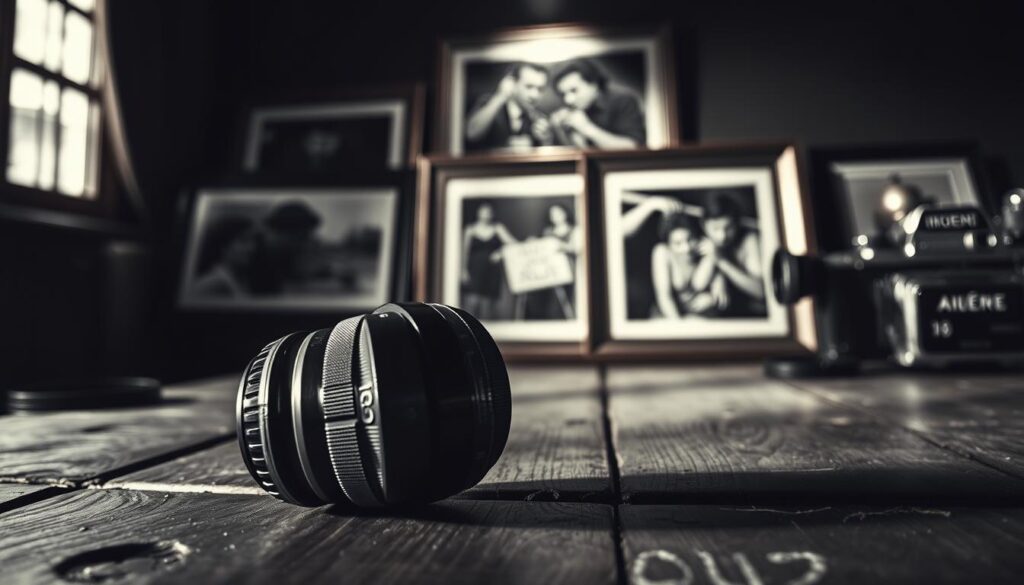
In 2017, Battle of the Sexes showed us something new. Directors Jonathan Dayton and Valerie Faris made their tennis scenes black-and-white. It’s not just old-timey.
When Billie Jean King faces Bobby Riggs, the film becomes more than a game. Monochrome makes the match a clash of eras and ideas. It’s pure confrontation.
Today’s films also explore this theme. Darren Aronofsky’s The Wrestler might be in color, but its heart is black-and-white. The gritty feel comes from classic boxing films. Ryan Coogler’s Creed training scenes pay homage to Raging Bull‘s lighting.
But sports films aren’t the only ones using black-and-white. Films like The Third Man by Carol Reed teach us about tension. The Dutch angles and shadows are perfect for a tense scene.
Carl Theodor Dreyer’s The Passion of Joan of Arc shows the power of close-ups. The camera studies Joan’s face like a detective. This intensity can make a runner’s effort seem like a journey to the divine.
Michael Mann’s Collateral uses digital shots but looks like metal. Los Angeles becomes a chessboard at night. Imagine this for a lone athlete training at dawn.
Even TV shows like The Queen’s Gambit use black-and-white well. Chess becomes a war. Every move is heavy with meaning.
Great black-and-white films don’t lack color; they replace it with depth. Sweat is silver, chalk is fog, and the ring is a moral battlefield.
These examples show monochrome isn’t just absence. It’s a way to show truth and emotion. Athletes on screen aren’t just competing; they’re becoming legends.
What is Film Grain?
Film grain is a natural texture found in film and digital images. It is caused by the physical properties of film grains, which are tiny silver halide crystals. These crystals capture light and create the grainy effect seen in photographs.
Film grain is often associated with the aesthetic of film photography. It adds a unique and organic feel to images, giving them a distinct character. The grainy texture can evoke a sense of nostalgia and authenticity, making it highly sought after by photographers and filmmakers.
While film grain is commonly associated with film photography, it can also be found in digital images. Digital cameras and software can mimic the grainy effect of film, allowing photographers to achieve a similar aesthetic in their work.
Understanding film grain is important for photographers and filmmakers who want to create visually appealing images. It allows them to experiment with different techniques and styles, adding depth and texture to their photographs.
Whether you’re a fan of film photography or enjoy the versatility of digital images, film grain is a fascinating aspect of visual artistry. It adds a unique touch to images, making them stand out and evoke emotions.
The Aesthetic of Film Grain
Film grain has a distinct aesthetic that sets it apart from other image textures. It adds a sense of warmth and organic feel to photographs, creating a visually appealing effect. The grainy texture can enhance the mood and atmosphere of an image, making it more engaging and emotive.
Photographers and filmmakers often use film grain to create a nostalgic or vintage look in their work. It can evoke a sense of history and authenticity, adding a layer of depth and storytelling to images.
Whether you’re capturing a moment in time or telling a story through images, film grain can be a powerful tool to enhance your visual artistry. It allows you to convey emotions and create a unique visual experience for your audience.
Color to Mono Conversions: LUTs, channel mixes, and pitfalls
Turning color footage to black-and-white is more than just a technical step. It’s a complete change in how you see your visuals. You shot in color, aiming for flexibility. Now, you must decide if your footage will shine in grayscale or lose its life.
Remember Moonlight‘s cinematography? It focused on African American skin tones. Adding a simple desaturation filter would ruin it. Reds and greens become the same gray, losing all detail. The careful grading work is gone.
Desaturation is a big mistake in monochrome conversion. It treats all colors the same, losing the beauty of each. A red rose and green leaf might look the same gray. Your lighting work is lost in the process.
Channel mixing is the key. It’s like painting with your image’s red, green, and blue channels. By mixing these, you control how each color turns into a gray.
For a dramatic ortho/panchro look, lower the red channel. This darkens blue skies and makes reds subtle. Adjusting the green channel can make grass look dark and ominous. This way, you shape light and shadow with color.
LUTs, or Look-Up Tables, are pre-made conversion maps. They can give your footage the look of classic film stocks. A good LUT can get you 70% of the way there.
But, relying too much on LUTs is a mistake. They’re like a famous chef’s recipe. You need to taste and adjust for your specific ingredients. Every shot is unique, and a LUT that works for one might not work for another.
A professional conversion workflow is both methodical and creative.
- Start with a Base LUT: Use a conversion LUT that matches your desired film stock aesthetic.
- Channel Mix Adjustment: Don’t just set and forget. Adjust the red and green channels to enhance skin tones and foliage.
- Shot-by-Shot Grading: Grade each shot individually. A close-up of a boxer’s face needs different treatment than a wide shot of a stadium.
- Preserve Skin Detail: Skin tones must be mapped carefully to keep texture, highlight, and shadow. A face should not look like a wax mask.
- Protect Your Contrast: Your original lighting created a specific contrast ratio. Use your channel tools to keep the brights bright and the darks dark.
The goal is to make the image feel like it was always meant to be black-and-white. The translation from color should be seamless. The emotional weight of your light and lens work should remain unchanged.
Mastering this process gives you true creative freedom. You’re not just removing color. You’re rebuilding the image in a new, powerful language. You’re chasing that perfect ortho/panchro look—or creating your own signature grayscale. It’s the final step in claiming your film’s monochrome soul.
FAQ
Q: What is the importance of contrast ratios in web design?
A: Contrast ratios are vital in web design as they ensure that text is readable and accessible for all users. They help in creating a visually appealing and user-friendly website.
Q: What is the WCAG 2.1 standard for contrast ratios?
A: The WCAG 2.1 standard requires a minimum contrast ratio of 4.5:1 for normal text and 7:1 for large text. This ensures that text is easily readable for users with visual impairments.
Q: How can I use color contrast tools to check my website’s contrast ratios?
A: You can use color contrast tools like the WebAIM Color Contrast Checker or the Snook Color Contrast Checker to check your website’s contrast ratios. These tools provide instant feedback on the contrast between different colors.
Q: What are some best practices for using color contrast in web design?
A: To effectively use color contrast in web design, it is important to choose colors that provide sufficient contrast between text and background. Avoid using similar shades or colors that may make text difficult to read. Consider using color contrast tools to ensure that your website meets the WCAG 2.1 standards.
Q: How can I create a visually appealing website with proper color contrast?
A: To create a visually appealing website with proper color contrast, it is important to choose colors that provide sufficient contrast between text and background. Use color contrast tools to check the contrast ratios and ensure that your website meets the WCAG 2.1 standards. Consider using a color wheel to find harmonious color combinations that enhance the overall visual appeal of your website.
Q: How can I ensure that my website is accessible for users with visual impairments?
A: To ensure that your website is accessible for users with visual impairments, it is important to follow the WCAG 2.1 standards for contrast ratios. Use color contrast tools to check the contrast ratios and make necessary adjustments to ensure that text is easily readable for all users. Consider using high contrast themes or providing alternative text for images to enhance accessibility.
Q: How can I create a visually appealing website with proper color contrast?
A: To create a visually appealing website with proper color contrast, it is important to choose colors that provide sufficient contrast between text and background. Use color contrast tools to check the contrast ratios and ensure that your website meets the WCAG 2.1 standards. Consider using a color wheel to find harmonious color combinations that enhance the overall visual appeal of your website.
Q: How can I ensure that my website is accessible for users with visual impairments?
A: To ensure that your website is accessible for users with visual impairments, it is important to follow the WCAG 2.1 standards for contrast ratios. Use color contrast tools to check the contrast ratios and make necessary adjustments to ensure that text is easily readable for all users. Consider using high contrast themes or providing alternative text for images to enhance accessibility.
Watchlist & Gear/Plugin Starter Pack
The theory is in your head. Let’s put it in your hands and on your screen. Your education begins with watching, then doing.
Queue up the masters. Martin Scorsese’s Raging Bull shows pain as physical poetry. Carl Theodor Dreyer’s The Passion of Joan of Arc turns agony into iconography with its extreme close-ups. Carol Reed’s The Third Man uses Vienna’s sewers as a shadow theater. Alexander Mackendrick’s Sweet Smell of Success drips with high-contrast urban poison. Michael Haneke’s The White Ribbon demonstrates modern, textured control.
Your camera bag needs character. Smart lens choices are your first major decision. Seek out vintage Soviet Helios lenses for their swirly bokeh. Find Pentax Super Takumar primes for their sharp, classic rendering. Modern cinema lenses from Zeiss or Cooke provide precision with soul. For purists, true monochrome digital cameras like the Leica M10 Monochrom deliver unmatched tonal depth.
The digital darkroom requires specific tools. FilmConvert and Dehancer plugins handle grain and halation with authenticity. DaVinci Resolve’s color page allows for sophisticated channel mixing when converting color footage. Think of these as your specialized brushes, not magic wands.
This list is your starting line. The craft demands your eye, your patience, your sweat. Now go make something stark. Make something beautiful. Make it hurt to look at—in exactly the right way.