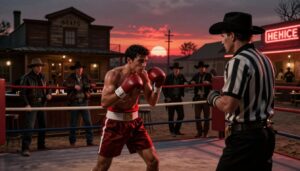
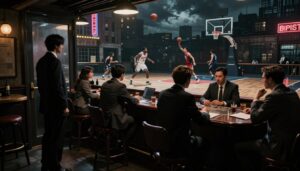
After World War II, a new genre emerged. It mixed the dark look of film noir with the intense world of sports. This mix, known as the sports noir visual style, uses deep shadows and moral gray areas. It tells stories of desperation in sports.
Post-war feelings of disappointment found a voice in these stories. There was a 23% increase in boxing films during the Red Scare. Sports became a way to talk about bigger social issues.
This article looks at the film techniques that make sports noir special. It talks about how lighting, lenses, and sound create a unique feel. We explore these elements from the 1947 boom to today’s neo-noir films.
Visual Language of Sports Noir
Chiaroscuro, a high-contrast technique, is key in sports noir movies. It uses light and dark to tell stories and evoke feelings. This method turns places into deep, emotional spaces.
The technique makes athletes look like statues. It highlights their muscles and sweat with sharp light. Shadows show their struggles better than words can.
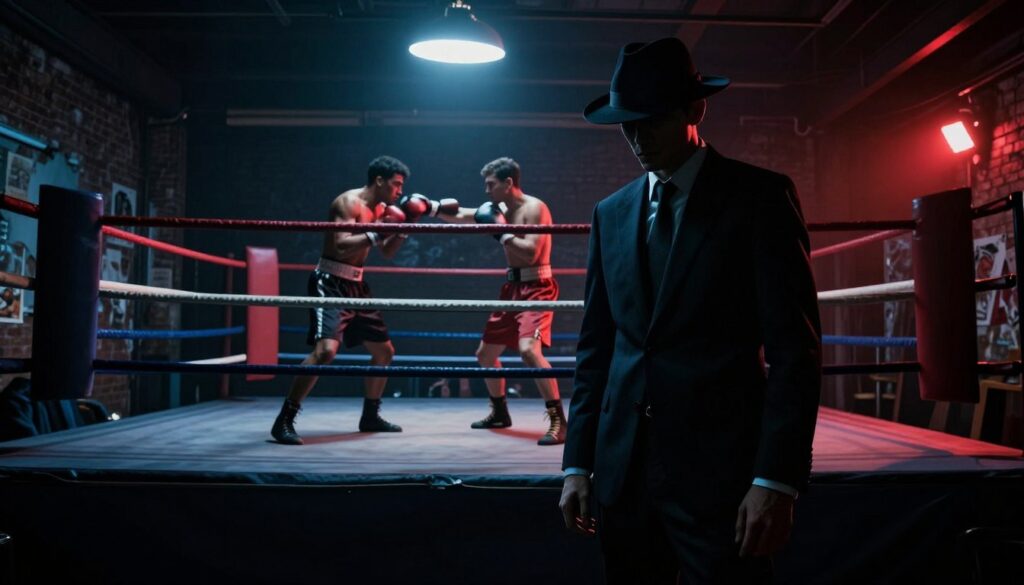
Isolation lighting is a big part of chiaroscuro. It makes one person stand out in a dark room. This shows their inner doubts or big choices.
Locker rooms and backrooms are perfect for this look. Dark shadows hide secrets and hint at corruption. The setting itself becomes a character through light and shadow.
Lighting shows who’s in charge in a scene. A referee might be very bright, looking like a boss. A corrupt official might be half-hidden, showing their moral gray area.
Camera angles add to the disorienting feel of chiaroscuro. Body and Soul (1947) used special angles to make viewers feel off-balance.
In Raging Bull, chiaroscuro makes props stand out. Boxing gloves, sweat, and blood are shown against dark backgrounds. This makes the fight scenes feel raw and simple.
| Chiaroscuro Technique | Classic Sports Noir Example | Visual Effect & Purpose |
|---|---|---|
| Sculpting the Body | High-key side lighting on boxers in The Set-Up (1949) | Transforms athlete into a monumental, suffering figure; emphasizes physical toll. |
| Isolating Characters | Single light source in a locker room in Body and Soul | Highlights moral solitude; visually traps the character in their dilemma. |
| Hierarchical Lighting | Overlit ring referee vs. shadowed cornermen | Establishes visual power dynamics and questions official authority. |
| Environmental Shadow | Deep blacks in gymnasium corners and alleyways | Suggests unseen danger and pervasive corruption within the sports world. |
These visual elements do more than set the mood. They tell the story’s core themes of ambition, corruption, and defeat. The style carries the story’s weight.
Chiaroscuro in sports noir is not just for looks. It’s a tool that shows inner struggles and makes sports a high-stakes moral drama.
Primer: Why form does the heavy lifting in noir sports stories
In sports noir, the visuals are not just a background. They are the main force that drives the story. The choices made in how things look help tell the story’s main ideas. They show the inner struggles of characters caught in webs of corruption and tiredness.
This way of using visuals makes big ideas real. Fear is shown as a shadow in a locker room. Moral decline is seen in the dirt of a gym. Feeling tired is shown in slow movements of a camera following a worn-out athlete.
The genre is like crime stories in many ways. Both deal with desperate situations and the chase for something that can’t be won. Old movies often showed heroes coming back strong. But sports noir flips this, showing how things always fall apart.
Old black-and-white movies set the basic look of the genre. They used strong contrasts to make figures stand out against dark backgrounds. Moving to color and then digital films added more options. Today, color grading is key in creating the mood of neo-noir stories.
Now, movies pick colors that match their themes. Dark greens fill secret betting places. Cool blues show cold corporate offices. These choices are not random. They help show the moral feel of each world.
How bright or dark colors are can show the mood of a scene. Less color can mean a world without hope. Bright colors can hint at danger or false beauty. This way, the look of the image shows what’s going on inside the characters.
The result is a genre where the mood is built with light, lens, and color. The visuals are not just decorations. They *are* the story of uncertainty, stress, and failure. Great color grading and how things are put together make these themes clear and strong.
Lighting: Top-light sweat sheen, hard key/soft fill in B&W vs sodium-vapor and LED palettes in neo‑noir arenas
Lighting shapes the mood of sports noir, from classic to modern. It’s key for showing conflict, morality, and mood. This has changed over time.
Old black-and-white sports noir used studio lighting. A hard key light was placed above the athlete. This made a top-light sweat sheen to show effort and weakness. A soft fill light balanced the light and dark.
This created a strong contrast, like in boxing or basketball. Arena lights flickered, showing unstable fortunes or hope.
Now, neo-noir sports stories use different lighting. Sodium-vapor lamps give a yellow glow to old places. LED lights make new places feel cold and bright.
This change affects how we feel. Old lighting showed clear choices and fate. New lighting makes us feel alone and watched. It shows a world where corruption is everywhere.
Color is also key. Classic films used black and white. But modern films, like “Champion,” use specific colors for blood. This makes the story feel real.
Lighting has changed from showing a moral world to creating a fake one. This change affects how we see stories. It moves from outside judgment to inside reality. This is shown in handheld boxing films, where light moves freely.
Camera & lenses: Long lenses compressing crowds, ringside POVs, Steadicam/handheld for fatigue; modern digital noise and
Long telephoto lenses make a crowd feel like a wall of pressure around the athlete. This makes a big arena feel small and tight. It’s a way for directors to show how cramped and trapped the athlete feels.
The lens makes the background people look like one big mass. It puts the fighter in the middle of a storm of expectations. This method is used in movies to make scenes feel more intense.
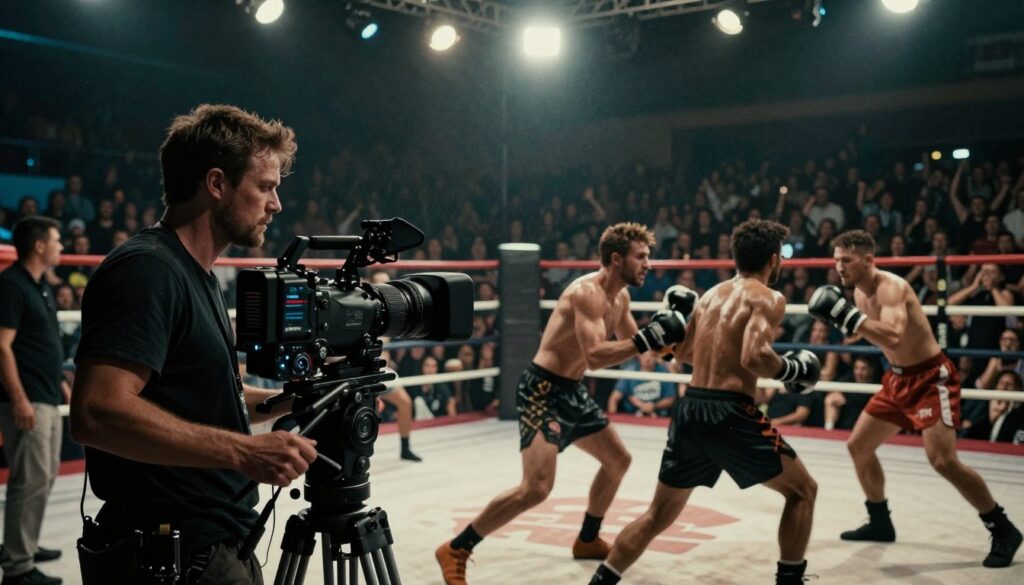
Shooting from ringside or sideline puts you right in the action. You see everything from the fighter’s point of view. It feels like you’re right there in the fight.
How the camera moves tells us about the story’s physical and mental challenges. A Steadicam gives a smooth, steady shot. It feels like you’re watching a careful plan unfold.
Handheld shots, on the other hand, make things feel real and shaky. They show how tired and confused the fighter is. This style is used in boxing movies to show the real struggle of fighting.
Choosing between smooth and shaky shots is key. It shows how hard the fight is. This choice works with sound design in fight scenes to make you feel like you’re there.
Modern digital noise adds a new feel to movies. It’s like the old film grain but digital. It can make scenes feel tense or like something’s not quite right.
The move from film grain to digital noise shows how technology changes movies. It adds a new kind of grit to stories. This texture helps make the world of the movie feel real.
| Camera Technique | Primary Visual Effect | Narrative Purpose | Notable Example |
|---|---|---|---|
| Long Telephoto Lens | Compresses space, flattens background | Create claustrophobia, isolate subject | Crowd shots in Raging Bull |
| Ringside POV | Subjective, eye-level immersion | Simulate athlete’s physical experience | Fighter’s perspective in The Set-Up |
| Steadicam | Smooth, gliding movement | Convey observation, fate, or strategy | Tracking shots in Body and Soul |
| Handheld | Unstable, shaky frame | Express fatigue, chaos, and realism | Modern sequences in Southpaw |
| Digital Noise | Gritty, pixelated texture | Suggest surveillance, tension, decay | Low-light scenes in Uncut Gems |
Every choice about the camera is made with a purpose. It’s not just about capturing the action. It’s about how we see the effort and conflict.
The change from film grain to digital noise is a big shift. But the goal is the same: to add texture and mood. These visual elements, along with sound design in fight scenes, create a full experience.
Cinematography in sports noir is all about showing the pressure and perspective. It turns physical struggle into something we can see and feel. The camera doesn’t just record; it tells the story of the fight.
Editing rhythms: real‑time bouts (The Set‑Up) vs elliptical memory (Raging Bull) vs panic montage (Uncut Gems)
In sports noir, editing rhythms change time to heighten tension, memory, and chaos. The cut shapes the viewer’s mind as much as the camera’s view.
One rhythm stretches time in real-time. Robert Wise’s “The Set-Up” builds suspense by making a boxing match last longer. Editing slows down like the fighter’s tired eyes. This makes viewers feel every hit.
A second rhythm breaks time into pieces. Martin Scorsese’s “Raging Bull” skips around in time. It shows Jake LaMotta’s memories in broken bits. This style connects with the film’s dark look.
The third rhythm is fast and frantic. Films like the Safdie brothers’ “Uncut Gems” cut scenes together quickly. It’s like being in a rush, always on edge. The bright, bold colors add to the feeling of being overwhelmed.
Each editing style has its own story. Real-time editing makes suspense real. Elliptical editing dives into the mind. Panic montage shows chaos all around. These ways of changing time are key to the genre’s look. The dark shadows and bright colors match the fast cuts.
Sound: bell, count, crowd mics; ring rope creaks; modern bass rumbles; silence as dread
Sound is key in sports noir, from the bell’s ring to the silence of dread. It sets the mood, working with cinematography sports noir to create tension.
Classic sounds are real and raw, making the action feel gritty and true. They’re not added for effect; they’re captured as is.
- The Bell: A sharp, metallic clang that marks the start and end of rounds.
- The Count: The referee’s voice, clear and commanding, over the crowd’s noise.
- Crowd Mics: Distant cheers and murmurs that change with the scene’s mood.
- Ring Rope Creaks: The sound of ropes straining, showing the ring’s tight space.
Modern sports noir adds new sounds, like deep bass rumbles. These are felt more than heard, adding to the tension.
Strategic silence is also powerful. It can make impacts quiet or focus on a character’s thoughts. This silence is heavy with anticipation.
This careful sound design makes the film’s world come alive. It’s not just background noise. For more on this, check out sports films with a noir twist. The sound in these films, like in handheld boxing films, is key to their impact.
Production design: gyms, backrooms, betting shops; how props tell corruption stories
Environments in sports noir show struggle and corruption. Gyms and backrooms are key to the story. They set the scene before anyone speaks.
Production design doesn’t aim for beauty. It crafts places of hope and despair. Each setting has a theme to convey.
- Gyms symbolize the dream of honest work. They show decay through peeling paint and broken mirrors. The chiaroscuro lighting highlights the gap between effort and reward.
- Backrooms expose the dark side. They are places of negotiation and threats. Cheap furniture and closed doors create a sense of being trapped.
- Betting shops show the addiction’s grip. They are loud and tense, filled with the sounds of risk. Racing forms and cash stacks drive the plot forward.
Props are more than just objects. A blood-stained jersey tells a story of violence. A weight scale is a tool for psychological pressure. A bag of cash in shadows shows a corrupt deal.
These objects move the story forward and reveal character. A fighter’s worn gloves show pride. A promoter’s flashy ring shows empty success. Each item carries a story.
The environment works with other film elements. Chiaroscuro lighting makes backrooms seem more ominous. The sound design in fight scenes comes from these places, adding to the tension.
Locations and props create a world of moral gray areas. They show a system where fairness is rare. Corruption is woven into the very fabric of the characters’ world.
Further viewing + craft glossary
Exploring sports noir starts with watching key films. Classics like “Champion” (1949) and “The Set-Up” (1949) are must-sees. Also, check out “Raging Bull” (1980) and recent hits like “Warrior” (2011) and “Uncut Gems” (2019).
Getting to know the technical terms is key. Cinematography sports noir uses handheld shots for a raw feel. Color grading sets the mood with black-and-white or neon colors. Sound design, with its bell rings and scores, adds to the tension.
To learn more, check out a film production glossary. It covers terms like Point of View (P.O.V.) shots and Foley artistry. These help bring the fight scenes to life.