A specific genre of storytelling finds its power in a core tension. It pits the raw, hopeful idealism of athletic pursuit against the grim realities of systemic corruption.
This conflict creates a world navigated by enduring character models. These foundational figures, or archetypes, form the skeleton of the narrative.
These models are not static relics. They evolve, mirroring profound shifts in culture, media, and economics.
The cynical hustler and the doomed palooka of the mid-20th century have contemporary counterparts. Social attitudes toward competition, money, and fame have transformed the landscape.
This analysis traces that evolution. It compares classic prototypes with their modern interpretations to reveal what these changes signify.
Archetypes Through Time
The roots of sports noir were laid in a time of unchecked competition and widespread organized crime. Post-World War II America was the perfect setting. Stories began to show the darker side of winning in sports.
These tales were more than just stories. They were comments on the real social and economic pressures. The lack of rules in boxing and the influence of mob money shaped the scene. This led to the creation of the genre’s lasting character types.
Two key figures emerged in the classic formula. The doomed boxer fought against his opponent and a corrupt system. His decline showed a moral fall. The crooked promoter was the exploitative force behind the games. He made money by manipulating matches and lives.
These archetypes had a specific role in the stories. They showed the illusion of the American dream through sports. The doomed boxer’s tragic story warned of the dangers of unchecked ambition. The crooked promoter’s schemes exposed the business side of sports. For more on these figures, see this analysis of the athlete in film noir.
The core characters evolved over time. The 1940s and 50s black-and-white films set the pattern. By the 1970s and 80s, stories got more complex. The corruption outside the ring matched the inner struggles of characters.
This evolution leads to today’s stories. Modern characters come from these original molds. Knowing their roots helps us understand their current forms. The journey of these noir athlete archetypes shows how society has changed.
| Era | Defining Context | Key Archetype Examples | Narrative Function |
|---|---|---|---|
| Classic (1940s-1960s) | Post-war disillusionment, unregulated sports, mob influence. | Doomed Boxer, Crooked Promoter, Femme Fatale. | To critique corruption and the failure of the meritocratic dream. |
| Transitional (1970s-1990s) | Rise of celebrity culture, media scrutiny, early commercialism. | Aging Contender, Cynical Sportswriter, Mob Fixer. | To explore personal identity and the cost of fame in a mediated world. |
| Modern Evolution (2000s-Present) | Globalized sports business, data analytics, social media. | Data-Driven Agent, Influencer Partner, Sportsbook “Whale”. | To examine alienation in a hyper-commercial, digitally surveilled landscape. |
Classic roster: doomed contender, cut‑man sage, crooked manager, sportswriter, femme fatale, mob fixer
In the world of mid-century sports noir, six key figures are always present. They form a closed, corrupt system. Each plays a specific role, showing the dark side of ambition and integrity.
The doomed contender is the main tragic figure. He has raw ambition and physical skill, but is destined to fail. His drive for victory is his downfall. The story explores how fame can corrupt.
The cut-man sage contrasts with the doomed contender. This older trainer offers wisdom and moral guidance. His advice is often ignored, showing the protagonist’s doomed path.
The crooked manager is all about making deals. He sees his fighter as a financial asset, not a person. This leads to the fighter’s exploitation, making money the priority.
The sportswriter is a cynical observer. He narrates the story’s decay from the sidelines. He highlights the media pressure and public scrutiny, making the story’s moral ambiguity clear.
The femme fatale introduces romantic entanglement. She is often linked to the gambler protagonist or mob interests. Her allure promises escape but delivers betrayal, showing the dangers outside the ring.
The mob fixer represents external criminal pressure. He ensures fights have fixed outcomes for gambling syndicates. His presence shows the sport is rigged, with athletic merit irrelevant.
These archetypes interact in a tightly controlled ecosystem. The manager answers to the fixer. The writer publicizes the contender’s rise, adding to the media pressure. The femme fatale may be a pawn for the mob. The cut-man watches helplessly. This interplay creates the genre’s signature atmosphere of entrapment. For a deeper look at this dynamic, explore the history of boxing noir in classic film.
The gambler protagonist is more of an environmental force than a central character in classic tales. He is the unseen customer driving the corruption. His bets create the demand for fixed fights. This shifts in modern narratives, where he often takes center stage.
| Archetype | Primary Narrative Function | Classic Example |
|---|---|---|
| Doomed Contender | Embodies tragic ambition; the exploited athlete. | Charley Davis in Body and Soul (1947) |
| Cut-Man Sage | Provides moral wisdom; voices the cost of corruption. | Trainer in Champion (1949) |
| Crooked Manager | Personifies ethical compromise; prioritizes money over man. | Nick Benko in The Harder They Fall (1956) |
| Sportswriter | Cynical observer; channels public and media pressure. | Eddie Willis in The Harder They Fall (1956) |
| Femme Fatale | Agent of romantic betrayal; a distraction or trap. | Various molls in boxing noirs of the 1940s-50s |
| Mob Fixer | Represents external criminal control; rigs the system. | Gangsters in Body and Soul (1947) |
This roster created a reliable blueprint for storytelling. Audiences recognized each character’s role immediately. The drama came from watching their inevitable collisions. The system was airtight, leaving little room for genuine victory.
Modern roster: data‑driven agent, influencer partner, sportsbook “whale,” docu‑crew, aging body on the brink
In today’s sports noir, the archetypes have changed. They come from data, social media, and gambling. The world of sports has become more corporate and digital.
This new group has five main characters. Each one shows a different challenge of modern sports.

The data‑driven agent has taken over from the old-school manager. They use numbers and brands to make decisions. This shows how sports talent is now all about business.
The influencer partner is about making money from your image. Often, it’s an athlete’s partner. They handle social media and sponsorships, living in a world of constant attention.
The sportsbook “whale” is all about big bets and gambling. This person brings a new kind of pressure. It changes the story from fixed fights to the mental strain of betting.
The docu‑crew is always watching. They’re the camera team for sports shows or behind-the-scenes content. They turn private moments into public ones.
The aging body on the brink is the classic athlete facing decline. But now, they deal with new medical options and the need to keep playing. It’s about staying in the game no matter what.
These archetypes show how sports noir has changed. They reflect the anxieties of today’s sports world. For more on these characters, check out a list of modern figures and their key traits.
How arcs changed: tragic fate vs negotiated survival; redemption clichés subverted
The sports noir genre has seen a big change. Now, characters can survive instead of always falling. This change shows a big difference between old and new stories.
Old sports noir stories often ended in disaster. The doomed boxer would lose, either in the ring or outside. The crooked promoter would get caught, in a way that felt right.
New stories are more complex. They show characters fighting to survive in a world full of power and media. Winning or losing is not always clear-cut.
This change also changes how we see redemption. Old stories often had a clear moral lesson or a last-minute save. But now, redemption is not always clear or even present. Just making it through is often the best you can hope for.
Here’s how old and new stories differ:
- Classic Arc: Characters move towards a tragic end. The doomed boxer is always doomed. The crooked promoter gets caught.
- Modern Arc: Characters deal with a corrupt system. They might win, but it’s not for long. Redemption is rare or fake.
This change shows a darker view of power in sports. Athletes have less control over their lives. The doomed boxer used to face a clear enemy. Now, athletes face a system with many parts, including the crooked promoter.
Textual examples: Body and Soul (1947), Champion (1949), The Harder They Fall (1956), Raging Bull (1980), The Wrestler
Five key films show how archetypes in sports noir have changed over time. They help us see how characters and themes have evolved.
Body and Soul (1947) and Champion (1949) set the stage for the doomed contender. These boxers are drawn into the dark side of fighting. They face archetypes like the cut-man sage and the crooked manager. The femme fatale is a symbol of danger, tempting them away from their true selves.
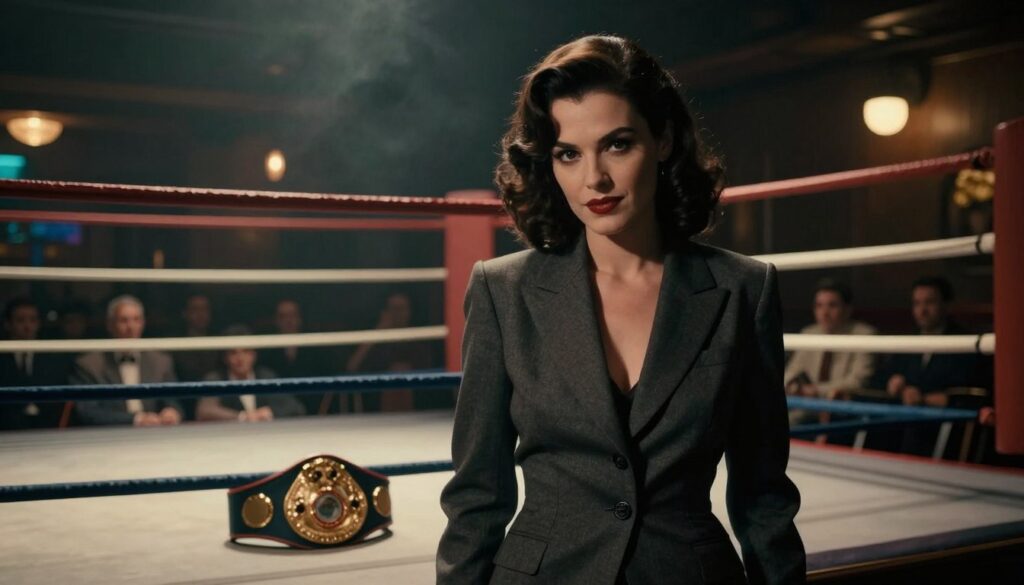
The Harder They Fall (1956) critiques the corrupt system head-on. It focuses more on the exploitative promoters than the athletes. This change highlights the machinery of corruption as the main enemy. The crooked manager becomes the main antagonist.
Raging Bull (1980) tears apart the contender’s psyche. Jake LaMotta’s struggles are deeply personal. His world is seen through his paranoia and violence. The femme fatale is now a victim of domestic abuse.
The Wrestler (2008) shows the harsh reality of aging athletes. Randy “The Ram” Robinson is a modern take on the doomed contender. His world is different, without the clear criminal threats of old noirs. The biggest threats are time, physical decline, and being left behind.
This journey shows archetypes evolving from external threats to internal struggles. The femme fatale becomes more complex, often a partner in survival. The stories shift from tragic fate to a fight for survival, often alone.
Gender & Labor: Partners as Caretakers/Critics; Women Athletes in Noir-Adjacent Tales
The way we see gender and labor in sports stories has changed a lot. Old tales often made women play small parts. They were mostly seen through their connection to men in sports.
In classic sports noir, women played two main roles. They were either the caretaker, giving emotional support in a tough world. Or they were the critic, pointing out the moral costs of chasing success.
These roles were either supportive or critical but rarely the main focus. Women’s work was mostly about managing emotions, not sports. This showed how society viewed gender and work back then.
Now, stories are changing. Women athletes are becoming the main characters. Movies like I, Tonya show a new side of sports through a female lens.
This film changes old archetypes from a woman’s point of view. Tonya Harding is both the doomed contender and a twist on the femme fatale. Her drive and skill are key, not just a side note to a man’s story.
The story also criticizes how media and sexism work. It shows how athletes’ bodies are used and judged. The old noir cynicism now targets society, not just individual luck.
This change opens up new possibilities for the genre. It moves women from the sidelines to the heart of the story. Now, we see the athlete’s own struggles with gender and pressure.
Takeaways + reading list
Sports noir has evolved a lot. Characters now face survival in a system, not just personal struggles. The main fight is between talent and the corrupt world of sports.
Stories often show athletes fighting against time. They look at how intense media pressure can harm them. The femme fatale has changed, becoming a critic or caretaker. Today’s gambler deals with sportsbooks, not gangs.
Here’s a list of key works to dive deeper. “Body and Soul” (1947), “Champion” (1949), and “The Harder They Fall” (1956) are must-sees. Martin Scorsese’s “Raging Bull” (1980) and Darren Aronofsky’s “The Wrestler” (2008) are also vital. “The Color of Money” (1986) is a great study of the gambler.
“I, Tonya” (2017) shows how media affects athletes. Walter Tevis’s “The Hustler” introduces the gambler archetype. Sports noir helps us see the dark side of sports.