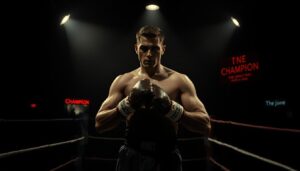
A unique film genre blends the intense world of sports with the dark mood of film noir. This mix, called sports noir, looks at corruption, fear of death, and tough choices in big cities.
The genre started in the 1940s, in the strict world of old Hollywood. The look and stories of those times are very different from today’s.
This study looks at how sports noir has changed over time. It compares old and new themes, styles, and the business side of movies.
The shift is from old movies with black and white and strong shadows to today’s bright, digital sports noir. New technology and global betting have changed the stories we see.
Hook: Why sports noir swings above its weight
The lasting charm of boxing noir and similar tales comes from their honest look at sports. Unlike the usual uplifting sports movies, this genre shows the harsh side of competition. It shines a light on the dark corners of the sports world.
Sports noir stays relevant by revealing harsh truths. It serves as a sharp critique of the world of sports, capitalism, and the high stakes of ambition. By avoiding common clichés, it digs deep into the problems of the system.
This genre keeps resonating because it tackles big, pressing issues. It tells stories of rigged games, doomed athletes, and tough choices. These themes touch on the exploitation of athletes and the way their bodies are used for entertainment.
At its heart, boxing noir explores the corruption in sports. It shows how leagues, promoters, and media are part of a flawed system. This echoes real debates about fairness in sports.
People connect with these tales because they offer a gritty, realistic view. The genre shows how ambition can both lift and destroy a person. This depth gives a more honest look at life.
Most sports movies follow a predictable path. The underdog wins, and everything turns out okay. But sports noir flips this, asking if winning is even possible in a corrupt world.
This genre is a key part of our culture. It challenges the usual, uplifting sports stories that dominate today’s sports world. By focusing on loss, compromise, and the harsh realities of success, it raises important questions about the cost of fame.
The ongoing interest in boxing noir shows that people want more than just entertainment. They crave stories that challenge power, economics, and ethics. The genre’s bold approach to these topics ensures it will continue to make a mark.
What is “Sports Noir”? Defining Traits vs. Plain Sports Drama
Sports noir is all about fatalism, moral gray areas, city pressure, and corruption. It uses the dark style of film noir in sports stories. This is different from the usual happy sports movies.
The four main traits create a unique view of the world. They help tell apart true neo‑noir sports films from just dark sports movies.
Fatalism
There’s a feeling of doom for the main character. Winning might not be as good as it seems. The character’s fate is often set by flaws or unfair systems, not just lack of effort. For example, in Body and Soul (1947), the boxer wins but loses his soul and relationships.
Moral Ambiguity
There are no clear heroes or villains. Characters make tough choices to survive or get ahead. The audience is left wondering who to support. In The Set‑Up (1949), the old fighter’s choice to fight fairly is seen as noble but doomed against big corruption.
Urban Pressure
The city feels like a character, full of tight spaces and bright lights. This setting shows the main character’s struggles and limited choices. It feels like they’re trapped.
Institutional Corruption
The sports world is often corrupt. Promoters, managers, and gangs fix games for money. This makes real success hard to achieve.
These traits make a unique genre. They are very different from the usual sports movies. Here’s a table showing the main differences.
| Aspect | Sports Noir | Plain Sports Drama |
|---|---|---|
| Protagonist Motivation | Survival, desperation, money | Glory, teamwork, personal redemption |
| Worldview | Cynical, pessimistic | Optimistic, inspirational |
| Narrative Resolution | Ambiguous, tragic, or pyrrhic victory | Clear triumph, moral lesson learned |
| Visual Style | High contrast, shadowy, claustrophobic | Bright, open, dynamic |
| Role of Sport | Avenue for corruption and exploitation | Path to self-improvement and unity |
It’s not just about the subject matter. A boxing movie can be a simple underdog story or a deep neo‑noir sports film. The latter focuses on the costs of competition, not just the wins.
Identifying a sports noir film depends on these core traits. A single dark moment isn’t enough. The story must feel doomed and morally complex. This makes a special kind of movie.
Timeline: 1940s–50s studio era → 60s–70s grit → 90s remakes → 21st‑century neo‑noir and betting culture
The sports noir genre has changed a lot over the years. It started in the 1940s with dark, shadowy films. Now, it’s about high-stakes, digital sports. This shows how the genre has adapted to new times.
In the 1940s and 1950s, films like Body and Soul (1947) and The Set-Up (1949) set the stage. They were made during the studio era. These movies told stories of corruption and doomed fighters, but they followed strict rules.
The 1960s and 1970s brought a big change. Films became grittier and more real. John Huston’s Fat City (1972) showed boxing as a hard, hopeless fight. It reflected the cynicism of the time.
The 1990s saw a comeback of classic noir themes. Filmmakers mixed old and new styles. This helped introduce the genre to a new audience before the digital age changed everything.
Today, sports noir is all about neo-noir and betting. Films like The Wrestler (2008) and Uncut Gems (2019) explore new anxieties. They use data and odds to create suspense. This era is deeply influenced by gambling culture.
| Era | Key Films & Examples | Defining Characteristics |
|---|---|---|
| 1940s-1950s (Studio Era) | The Set-Up (1949), Body and Soul (1947) | Studio-bound production; Hays Code morality tales; themes of fixed fights and urban corruption; chiaroscuro lighting. |
| 1960s-1970s (Grit & Realism) | Fat City (1972) | Location shooting; increased realism; tone of social disillusionment; focus on economic despair and athletic decline. |
| 1990s (Remakes & Reinterpretation) | Various genre hybrids and remakes | Nostalgic engagement with classic noir formulas; modernized settings; bridging traditional and contemporary themes. |
| 21st Century (Neo-Noir & Betting) | The Wrestler (2008), Uncut Gems (2019) | Themes of celebrity culture, globalized gambling, and digital anxiety; hyper-real sound and editing; deterministic narratives driven by debt and odds. |
The sports noir genre has always been in touch with its time. It shows how the genre has changed, from the strict studio era to today’s digital world.
Industrial context: Hays Code, TV’s rise, pay‑per‑view, streaming, legalized sports betting; how each era shaped tone
The entertainment business has greatly influenced sports noir. From the strict Hays Code to today’s streaming, each change has shaped the genre. These shifts have made the genre more cynical, focused on spectacle, and filled with desperation.
In the 1940s and 1950s, the Hays Code ruled. It set strict moral rules for movies. Sports noir films hinted at corruption, using visual metaphors and a fatalistic tone. The corruption was hinted at, not openly stated.
The 1960s brought network television. Sports became a part of home life. This change is seen in films from that time. The focus turned to the immediate spectacle and the athletes’ financial stakes.
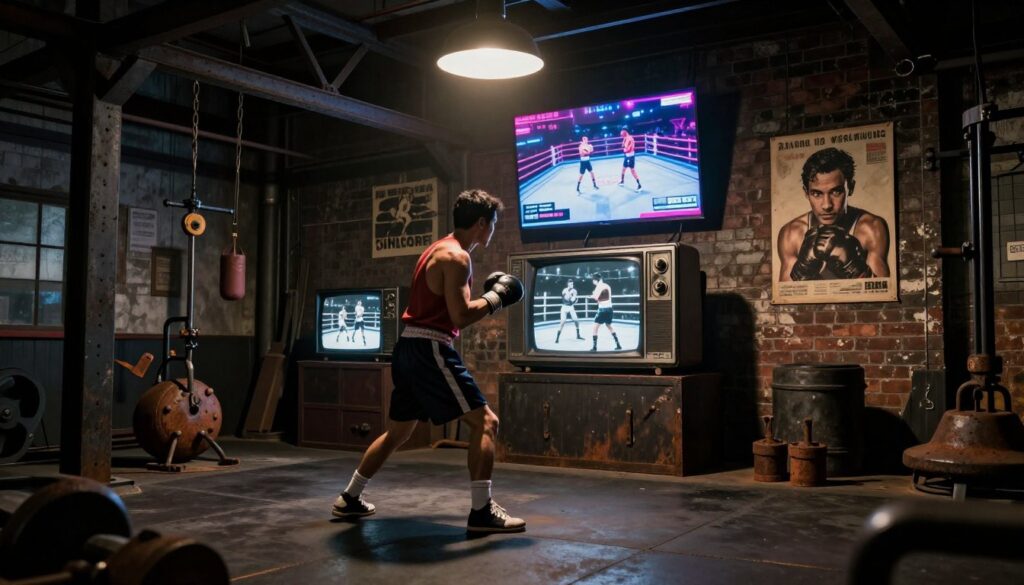
The 1980s and 1990s saw cable and pay-per-view dominate. Boxing and wrestling became big events. The athlete’s pain was seen as a way to make money. This era’s sports noir shows how violence is used to make money.
In the 21st century, streaming has changed everything. Platforms compete for viewers with content tailored to each person. This has led to stories of isolation and instant gratification. The modern sports noir hero fights against systems like social media and data analytics.
The legalization of sports betting in the U.S. has also influenced sports noir. Debt, risk, and the chance for quick money are now key themes. The gambler is now often the main character, reflecting a culture that loves to speculate.
| Era | Key Industrial Force | Tonal Impact on Sports Noir |
|---|---|---|
| 1940s-1950s | Hays Code Enforcement | Implicit criticism, moral ambiguity, shadowy aesthetics |
| 1960s-1970s | Rise of Broadcast TV | Spectacle as mass commodity, increased financial pressure |
| 1980s-1990s | Cable & Pay-Per-View | Direct monetization of violence, body as product |
| 21st Century | Streaming & Legal Betting | Fragmented identity, debt narratives, algorithmic pressure |
The industrial context shows how America’s entertainment has evolved. From the 1940s to today, the genre reflects how we pay for entertainment. The way we pay has changed the stories we tell.
Aesthetics: B&W chiaroscuro vs digital grain/neon; handheld vs classical blocking; sound design from foley to hyper‑real
Technical elements like cinematography and sound design are key in sports noir. They help show the themes of pressure and moral gray areas. The shift from classic to modern filmmaking changes how these stories are told visually and aurally.
Classic sports noir from the 1940s and 50s used chiaroscuro lighting. This high-contrast lighting, inspired by detective noir, showed stark moral lines and fate. The style was deliberate, with classical blocking and deep focus. This made characters seem trapped in their paths.
Now, sports noir has a different look. Instead of black-and-white film, it uses digital grain, color, and neon lights. These changes show the new urban pressures. The feel is urgent, like live TV, thanks to handheld camera work.
Camera movement has changed too. Old films used steady shots to build tragedy. New ones use shaky cameras to feel like you’re there. This change makes the viewer feel more involved.
Sound design has also evolved. Classic films used sound design to make sounds loud and clear. Foley artists made punches and crowds sound bigger. The music was orchestral, guiding emotions.
Today, soundscapes aim to be hyper-real. The sounds of crowds, athletes, and betting machines mix together. Music is often part of the scene or very quiet. This makes you feel like you’re in the action.
The table below shows the main differences between classic and modern sports noir.
| Aspect | Classic Sports Noir Aesthetic | Modern Sports Noir Aesthetic |
|---|---|---|
| Visual Palette | High-contrast black-and white (chiaroscuro) | Color saturation, digital grain, neon lighting |
| Cinematography | Classical blocking, deep focus, static/dolly shots | Handheld, documentary-style, shaky cam, close-ups |
| Lighting Philosophy | Artificial studio lighting to create symbolic shadow | Naturalistic and practical lighting, often from screens or signs |
| Sound Design | Expressive foley, orchestral score, clear emotional cues | Hyper-real ambient layers, diegetic sound, minimalist score |
| Overall Effect | Staged tragedy, fatalism, clear moral composition | Immersive chaos, subjective experience, ambient pressure |
This change in sports noir aesthetic is more than just technical. It shows how society views athletes, sports, and corruption. The tools used in filmmaking shape the questions asked in these stories.
Character evolution: “doomed palooka,” crooked manager, femme fatale → brand agents, sports media, analytics/gambling
The figures in sports noir have changed a lot. They moved from being about physical corruption to being about big systems. The old stories had three main characters. These characters have changed to reflect new trends in sports and media.
The doomed athlete, or “palooka,” is the heart of the genre. In the set-up by Robert Wise, boxer Stoker faces a tough fight and physical harm. Today, athletes face different challenges. They must deal with their brand and social media.
Back then, athletes could fail physically. Now, they can fail in their reputation. The pressure comes from public opinion, not just one person.
The crooked manager or promoter was a big villain in old movies. They used athletes for their own gain. In night and the city by Jules Dassin, the promoter’s schemes drive the story.
Now, big media companies and brand agents play this role. They make money off athletes’ images and performances. The corruption is now about money and power.
The femme fatale was known for her use of sex. She was a temptation or a danger. This character is not as common in sports noir today.
Now, analytics and gambling systems are the new temptations. They use data and algorithms to make money. These systems are faceless and corrupt the sport from within.
| Archetype | Classic Manifestation | Modern Counterpart | Primary Corrupting Force |
|---|---|---|---|
| Doomed Athlete | Stoker in the set-up | Brand-managed professional | Public perception & social media |
| Manager/Promoter | Harry Fabian in night and the city | Corporate brand agent | Financialization of sports |
| Femme Fatale | Moll in 1940s-50s films | Data analytics systems | Algorithmic prediction & betting |
| Systemic Antagonist | Local crime syndicate | Global sports media complex | Commodification of performance |
This change shows a big shift in culture. We now see moral failures in big systems, not just people. Athletes face a system that makes money off them, not just a fixed fight.
The old fights in the set-up are now digital battles in streaming and analytics. The city’s pressure in night and the city is now about keeping up statistics.
Characters in sports noir keep showing this change. The genre is a sharp critic of how we watch sports. It asks who really controls the game.
Case pair breakdowns:
By comparing key films, we see the genre’s changing worries clearly. This analysis looks at how main themes stay and change over time.
These pairings and key films help us understand the genre’s growth. They show how stories move from physical to mental battles.
The Set-Up (1949) vs The Wrestler (2008)
Robert Wise’s The Set-Up and Darren Aronofsky’s The Wrestler are 60 years apart. They both focus on the struggles of aging athletes. Both stories take place on the harsh edges of their sports.
The Set-Up is a 72-minute film set in one night. It shows a boxer’s fight against time in a dark, cramped city. The film’s noir style uses shadows and tight spaces to show the boxer’s doom.
The Wrestler, on the other hand, has a raw, documentary feel. It follows a wrestler in the fake violence of professional wrestling. Here, the body’s failure is the real fight.
Both films question who owns the athlete’s body. In The Set-Up, it’s the manager; in The Wrestler, it’s the promoters. Both stories end with a man walking towards his own destruction, seeking a brief moment of control.
Raging Bull (1980) as Hinge Text
Martin Scorsese’s Raging Bull is a key link. It connects the moral gray areas of classic noir with the deep psychology of today’s films. Shot in black and white, it pays homage to the 1940s’ lighting style.
Jake LaMotta’s rage drives the story. His violence is both physical and internal. The corruption is a flaw in his character, not an outside force.
Raging Bull also innovates in sound design. The punches are incredibly real and intense. This updates the sound of noir while keeping its impact. The film’s structure is detailed and harsh, like a detailed breakdown of a fighter’s mind.
It bridges the external fate of classic noir with the internal struggles of today.
Night and the City and the Gambling Impulse
Jules Dassin’s Night and the City (1950) is about a hustler in London’s wrestling world. The main character’s desperation comes from a quick-money scheme. His downfall comes from betting on his own rigged event.
The film shows how gambling corrupts everything in the city. This theme is echoed in the Safdie brothers’ Uncut Gems (2019).
Uncut Gems brings the noir gambler’s anxiety into today’s world. The main character is a jeweler and gambler stuck in debt. The city’s pressure is now constant texts, calls, and financial threats.
Both films show a man racing to make the next bet. The fatalism of the 1950s is replaced by today’s fast-paced chaos. Uncut Gems shows how the urge to gamble keeps noir tension alive.
It updates the corrupting power of betting for today’s world.
Themes then/now: determinism vs agency, community vs isolation, the cost of spectacle, labor vs ownership
Four key themes define the old and new sports noir: determinism vs agency, community vs isolation, the cost of spectacle, and labor vs ownership. These themes are found in both classic and modern boxing noir. Yet, how they are treated shows a big change, reflecting broader cultural shifts.
Classic sports noir often felt like characters were trapped by fate. They faced downfall due to one bad decision or a corrupt system. Now, modern stories focus on agency. Characters have choices, but they’re limited by media, gambling, or personal branding.
Early films showed a sense of community that was real but often wrong. It was the smoky gym or the mob-controlled arena. Today, athletes are isolated in a digital world. They’re famous but alone, living in a bubble of fame.

The cost of spectacle is a big issue. Classic films showed the physical toll of being a fighter. Now, it’s the mental wear of being famous. The athlete’s private self is lost for the sake of fame and money.
The fight between labor and ownership is at the heart of the genre. Post-war films showed this as a personal battle. Today, boxing noir shows a more complex economic scene. Ownership is big business, with leagues and media making money off athletes.
| Thematic Concern | Classic Era Expression | Modern Era Expression |
|---|---|---|
| Determinism vs. Agency | Fatalistic doom; destiny controlled by outside forces or a single mistake. | Agency exists but is constrained by systemic pressures (media, data, gambling markets). |
| Community vs. Isolation | Tangible, often corrupt community (gym, neighborhood). Provides identity and entrapment. | Digital alienation; isolation within fame; connection replaced by transactional relationships. |
| Cost of Spectacle | Physical destruction of the body for live audience approval. | Psychological erosion; loss of private self to the 24/7 celebrity-sports complex. |
| Labor vs. Ownership | Direct, personal conflict between athlete and individual promoter/manager. | Diffuse conflict with corporate entities (networks, leagues, betting platforms). |
The boxing noir genre keeps evolving. It looks at the cost of ambition in ways we can all relate to. The struggle has changed from a fixed fate to a complex battle within unseen systems.
Classroom prompts: shot‑by‑shot comparison activity; “who owns the body?” debate
Two classroom activities help students grasp the visual language and moral questions of sports noir. These activities move from talking about ideas to actually analyzing them. They fit well in film studies, media literacy, or ethics classes.
The first activity involves a shot-by-shot comparison of fight scenes. It shows how the look of these scenes has changed over time. Teachers pick a key scene from Body and Soul (1947) and a similar scene from The Wrestler (2008).
Students look at each scene frame by frame. They focus on lighting, camera movement, and editing. This helps them see how directors have changed their style and how it affects the audience.
| Film Example | Lighting | Camera Movement | Editing Style | Thematic Effect |
|---|---|---|---|---|
| Body and Soul (1947) | High-contrast chiaroscuro; deep shadows define the ring. | Static, wide shots; theatrical framing. | Longer takes; deliberate pace. | Emphasizes fate and entrapment within a corrupt system. |
| The Wrestler (2008) | Flat, digital grain; harsh fluorescent arena lights. | Handheld, intimate; follows the athlete closely. | Quick cuts; documentary-like immediacy. | Highlights physical decay and raw, isolated performance. |
The table helps students analyze the differences between the two films. They note how lighting and camera work change the mood of the scenes. This shows how the look of the film affects its themes.
The second activity is a debate on the question: “Who owns the body?” It looks at whether an athlete has control over their body or if others do. This is a big question in sports noir.
The debate sets up different sides, like the athlete, promoters, fans, sponsors, and doctors. Each side gives reasons based on movies like Raging Bull or Night and the City.
People like promoters and fans think they have a say in the athlete’s body. Sponsors see the body as a marketable asset. Doctors want to protect the athlete’s health. The athlete tries to balance these demands.
This who owns the body debate makes students think deeply about work, show, and consent. It turns complex ideas into real discussions. These classroom prompts give a full sports noir analysis, covering both form and philosophy.
Watchlist + sources
This curated watchlist offers a journey through sports noir’s history. It connects the themes and aesthetics from earlier sections.
The foundational studio era has key titles. Robert Rossen’s “Body and Soul” (1947) and Robert Wise’s “The Set-Up” (1949) are must-sees. Mark Robson’s “Champion” (1949) and Jules Dassin’s “Night and the City” (1950) round out the classics.
The 1960s and 70s brought grittier realism. John Huston’s “Fat City” (1972) stands out. Martin Scorsese’s “Raging Bull” (1980) marks a shift from classic fatalism to modern introspection.
Today, neo‑noir sports films explore new grounds. Darren Aronofsky’s “The Wrestler” (2008) and the Safdie brothers’ “Uncut Gems” (2019) are standout examples. HBO’s “Winning Time” also keeps the tradition alive.
Statistics show the genre’s enduring appeal. A 2023 study on noir aesthetics in sports found 63% of new dramas use noir-inspired visuals. This watchlist provides a factual basis for studying these films.