When did sweat-stained locker rooms become as visually arresting as Humphrey Bogart’s rain-slicked alleyways? The 1940s created a unique blend of vintage cinema and sports. It mixed moral decay with the rhythm of jump ropes. Postwar America’s fears didn’t just haunt detectives; they also crept into sports, making athletes into antiheroes.
Take Body and Soul, where John Garfield’s fighter struggles between staying true and surviving. Or The Set-Up, where Robert Ryan’s boxer faces a clock ticking down to betrayal. These films didn’t just show games; they used them to expose society’s flaws.
This was sports storytelling through a golden age of noir lens. It featured chiaroscuro lighting on bloodied noses and femme fatales with whiskey advice. Victories felt as empty as a referee’s whistle. It was like Raging Bull with more cigarettes and Rocky with fewer happy endings.
Why does this era remain impactful? It showed that sports reflect reality, not escape it. In this reflection, we see our own flaws, desperation, and beauty.
What Defines a Classic Sports Noir?
Imagine James Cagney in boxing gloves instead of a fedora. That’s what sports noir is like. These films are crime stories where sports and crime blend. The real drama happens behind the scenes.
- Protagonists shadier than a stadium’s back alley: Your “hero” is more like Jordan Belfort than Mr. Rogers. In Champion (1949), Kirk Douglas’ boxer turns corrupt. His face shows every deal he made with darkness.
- Lighting that’s part detective, part dominatrix: Sports noir lighting doesn’t just light up. It interrogates. The locker room lights are like truth serum. The ring is a shadow play where punches reveal secrets.
- Soundtracks that sweat nicotine: Forget Rocky’s music. In noir sports movies, saxophones sound like wheezing conspirators. The snare drum warns of Morse code messages. The music warns of bad choices.
What makes this genre special? It’s a mix of German Expressionism and sports. The angles and shadows reveal the dark side of sports. In Champion, a boxing match becomes a Kafkaesque journey.
Today’s sports dramas focus on redemption. Noir sports movies offer a different view. They say, “The real fix was never in the judges’ scorecards.”
Major Titles and Directors
Let’s step into the ring with the heavyweight champions of retro sports films. These influential noirs didn’t just document athleticism. They threw knockout punches at America’s postwar anxieties. You want grit? Robert Wise’s The Set-Up (1949) packs more tension into 72 minutes than most trilogies.
Every jab and feint feels like watching a time bomb disguised as a sweat-soaked towel.
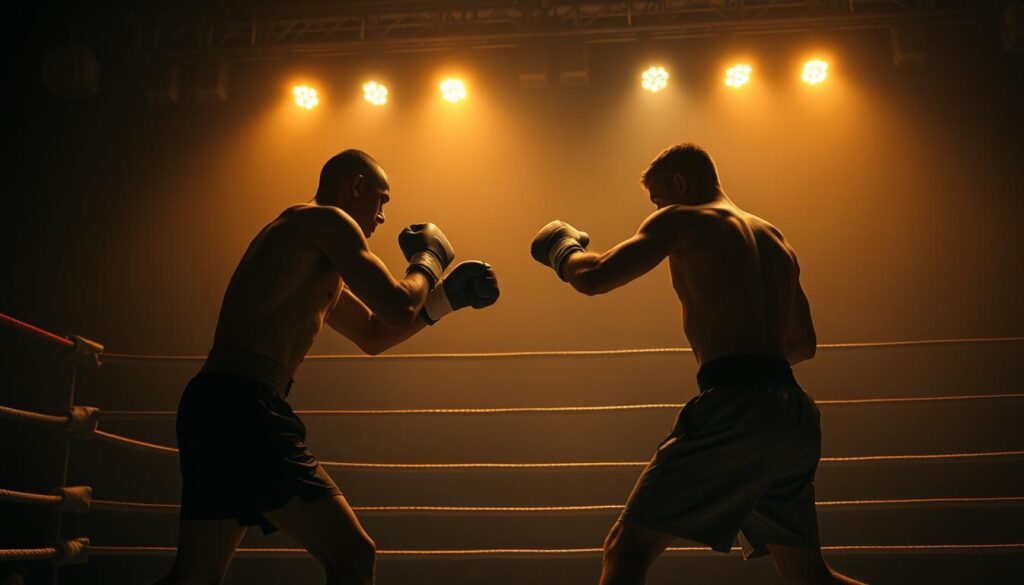
Then there’s Body and Soul (1947), where John Garfield’s performance hits harder than a Wall Street crash. Director Robert Rossen turned the boxing ring into Shakespearean theater. He added mobbed-up promoters and moral compromises that’d make Macbeth blush.
These films became film school required reading. Scorsese even tips his hat to their balletic brutality in Raging Bull.
| Film | Director | Year | Noir Element |
|---|---|---|---|
| The Set-Up | Robert Wise | 1949 | Real-time corruption spiral |
| Body and Soul | Robert Rossen | 1947 | Capitalism-as-villain metaphor |
| Champion | Mark Robson | 1949 | Moral ambiguity in victory |
What makes these influential noirs endure? They understood that sports aren’t about final scores. They’re about desperation’s choreography. Wise’s camera lingers on battered faces longer than a cutman’s cotton swabs.
Rossen frames conversations like title fights. Dialogue snaps like leather gloves on jawbones. Even the shadows seem sweaty.
Modern directors could learn from this playbook. Today’s sports dramas often mistake bombast for depth. They use CGI crowds for human stakes. But in these retro sports films, the real action happens between the rounds.
It’s in locker room whispers and diner booth ultimatums. That’s where champions – and cinematic legends – get made.
Thematic Analysis: Corruption, Fame, Desperation
Why would a home run hitter sell his swing to the mob? Or a boxing champ trade his gloves for a gun? Classic sports noir didn’t just show athletes. It explored the dark side of winning through corruption, fame, and desperation.
Corruption was the grease that made these stories run. Sports leagues were seen as corrupt, like Tammany Hall with shoulder pads. Promoters were like puppet masters, pulling strings that were dirtier than a field after rain.
Fame was fleeting, like a rookie’s fastball. Characters climbed the fame ladder, only to find it cut off. The genre showed how fame can turn into prison bars. For example, The Set-Up’s aging boxer saw his fame turn to despair.
Desperation was the dark heart of the genre. When Terry Malloy says “I coulda been a contender” in On the Waterfront, he’s not just talking about boxing. He’s questioning the American Dream. This speech is like X-rays showing broken dreams beneath the surface.
1940s audiences loved these films as much as ballpark peanuts. The Pride of the Yankees gave them a noble exit. Sports noir showed the real side of sports. It asked tough questions: What happens when the cheering stops? How many ethics can you trade for one more season?
Cinematic Techniques (Lighting, Sound, Editing)
If film noir lighting were a boxing match, sports noirs would be the underdog. They use “dynamite chiaroscuro,” where shadows hint at moral dilemmas. In Key Largo, the flickering lights make characters reveal truths through their expressions.
The Set-Up uses Dutch tilts in a unique way. The fight scene’s camera work feels like a punch to the gut. The editing is fast, showing the main character’s sanity slipping.
The sound design in Body and Soul is raw. It captures the real sound of boxing, showing dreams being crushed. In Champion, the buzzing lights in the locker room add to the tension.
These techniques make sports noirs a visceral morality play. The lighting and sound aren’t just background. They show the struggle between ambition and ethics. It’s like alchemy, turning simple elements into a reflection of America’s darkest sports dreams.
Cultural Context: Sports & Society
After World War II, America’s tensions spilled into the world of vintage cinema sports dramas. These films turned sports into a mirror of society’s big worries. For example, Robert Wise’s The Set-Up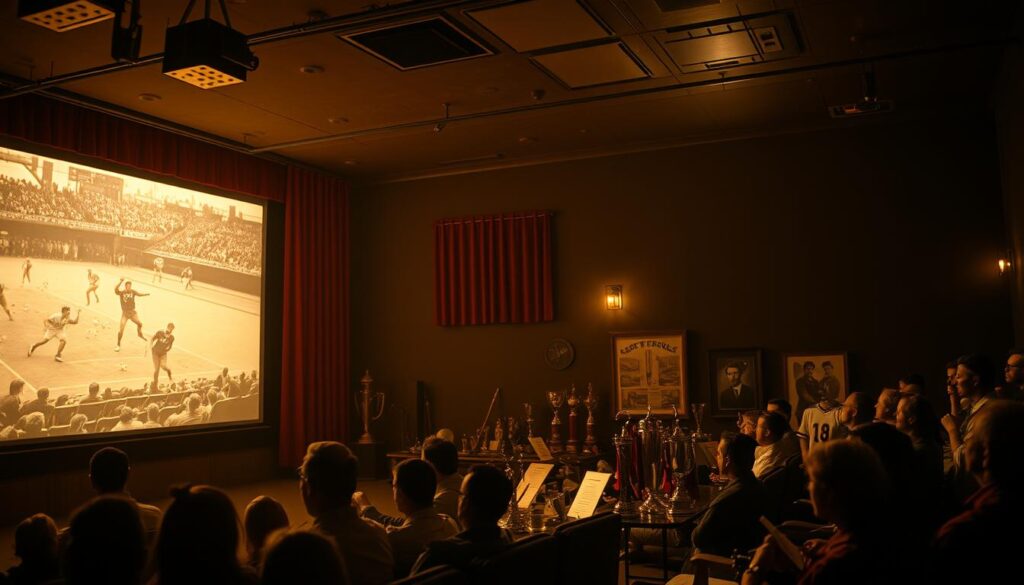
Lou Gehrig’s famous “luckiest man” speech in The Pride of the Yankees seems like a hostage video today. This is because of the cultural context of the time. These films came out when:
- 15 million WWII vets came back to a tight job market
- McCarthyism made small talk into big trouble
- Jackie Robinson’s 1947 debut showed baseball’s racial issues
Sports became a way to reflect America’s identity crisis. Boxing rings were like corporate offices, where every fight seemed fixed. Sports history analysis reveals that even victories had deeper meanings.
| Film (Year) | Social Mirror | Real-World Parallel |
|---|---|---|
| Body and Soul (1947) | Boxing corruption | Postwar labor strikes |
| Champion (1949) | McCarthy-era betrayal | Hollywood blacklists |
| The Harder They Fall (1956) | Media manipulation | TV’s rise in sports |
Notice how reporters at boxing matches tell a story of America’s decline? It’s not a coincidence. These films used sports history to question big issues. They asked if the American Dream is fair and if winning means losing yourself.
The beauty of these films is their ability to entertain and comment on society. Next time you watch a vintage cinema sports movie, look beyond the game. The real story is in the shadows.
The Lasting Influence
The DNA of influential noirs from the 1940s is all over Hollywood. Rocky shows a gritty side, like a film noir in disguise. Why does Travis Bickle’s taxi feel like it’s from a 1948 fight club? It’s because Scorsese drank in these films.
Today’s filmmakers keep borrowing from these classics. Nightcrawler uses a media-as-blood-sport idea, inspired by Body and Soul (1947). The Library of Congress sees these films as blueprints, not relics. When Raging Bull’s Jake LaMotta punches, you hear echoes of The Set-Up (1949).
| Classic Noir Element | Modern Adaptation | Cultural Throughline |
|---|---|---|
| Low-key lighting | Fincher’s digital shadows | Moral ambiguity |
| Fallen heroes | Antihero streaming series | American disillusionment |
| Urban decay | Neo-noir cityscapes | Class warfare |
These films taught us to love flawed heroes. Every Netflix true crime doc owes a debt to The Harder They Fall (1956). The golden age of noir created the blueprint for our love of messy heroes.
When you see an influencer’s “authenticity,” think noir. It’s about how much of yourself you’re willing to sell. The game is rigged, just like in noir days.
Recommendations for Further Viewing
Think you’ve seen all the retro sports films worth streaming? The real treasures hide in cinema’s dusty bargain bin. Let’s bypass the obvious picks and dive into the shadow league of films where ambition bleeds darker than a losing team’s jersey.
Champion (1949) isn’t your grandpa’s boxing flick. Kirk Douglas plays Midge Kelly like a used-car salesman with fists – all charm until he starts selling his soul round by round. The film’s real knockout? It’s less about boxing than capitalism’s body blows. Watch Douglas’ face morph from All-American hero to something you’d find on a crumpled dollar bill.
Then there’s Bogart’s farewell uppercut, The Harder They Fall (1956). It’s Citizen Kane in sweatpants – a crumbling journalist exposing boxing’s rigged economy. Bogart’s cough here isn’t just acting; it’s the sound of the American Dream wheezing its last breaths. Pair this one with rye whiskey – light beer can’t handle its punch.
For deep cuts that’ll impress film snobs and sports nerds alike:
- Body and Soul (1947): Boxing as existential crisis, with John Garfield’s face doing more acting than most Oscar winners’ entire careers
- The Set-Up (1949): Real-time desperation in 72 minutes flat – like watching a stopwatch tick toward disaster
- Tomorrow’s Game (1951): A retro sports film so obscure even IMDb shrugs. Think It’s a Wonderful Life if George Bailey threw games for the mob
These underrated noir sports films didn’t just predict today’s athlete activism – they wrote the playbook. They’re less “inspirational sports movie” than “cautionary tale in cleats.” And isn’t that the most American story of all?
Conclusion
Classic noir sports movies give us a clear view of America’s complex feelings about winning. These films didn’t just show athletes; they explored the deep side of competition. Before social media made sports seem easy, movies like “Body and Soul” and “The Set-Up” showed the true struggle.
These movies are more than just old films. They show us the dark side of sports, from corrupt promoters to athletes in dire need. Watching “The Set-Up” after learning about today’s sports scandals makes the impact even stronger. It shows us that the fight is real, not just for entertainment.
Keeping these stories alive is important. They challenge us to think deeply about our love for victory. When you watch “Champion” or “Night and the City,” you’re not just seeing a movie. You’re hearing America’s debate on what winning really means.