The structure of 56 Days feels familiar at first. A decomposing body. A confined apartment. Detectives circling the truth. It opens like a classic noir blueprint—crime as the anchor, mystery as the engine.
But the illusion doesn’t last.
Very quickly, the series abandons the idea that the crime matters most. Instead, it rewinds—back to a grocery store encounter, back to a relationship forming under quiet tension, back to something far more unsettling than murder.
The crime is only the aftermath. The real story is what led to it.
This is where 56 Days separates itself from traditional noir. It doesn’t ask who committed the act. It asks what emotional conditions made it inevitable.
Intimacy As The New Crime Scene
At its core, 56 Days is less a murder mystery and more a study of proximity. Oliver and Ciara’s relationship evolves quickly, intensifying under isolation and secrecy, creating a pressure chamber where trust begins to fracture almost immediately.
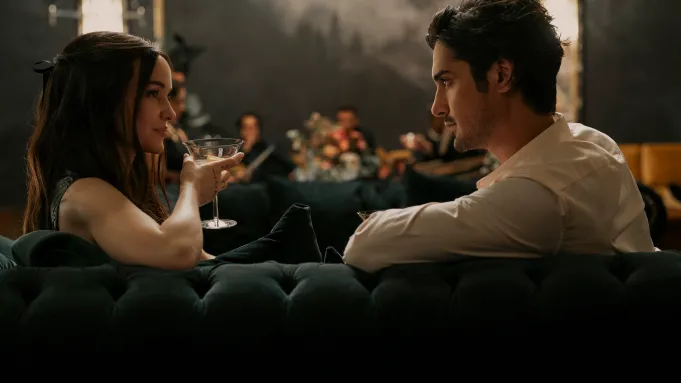
The series leans into this dynamic, presenting intimacy not as comfort—but as exposure.
Every shared moment becomes:
- A negotiation of identity
- A test of truth
- A quiet act of surveillance
What emerges is a form of psychological noir where the danger isn’t lurking outside—it’s sitting across the table.
Critics have noted how the show blends romance, paranoia, and mystery into a tightly wound narrative built on secrecy and emotional instability . But what defines its noir identity is not the crime—it’s the erosion of trust.
The Language Of Shadows In Modern Noir
Visually, 56 Days speaks in restraint.
Unlike the stark chiaroscuro of classic noir, its shadows are softer, more ambient, almost domestic. Apartments, hallways, and dim interiors replace alleyways and streetlights. The darkness doesn’t isolate characters—it surrounds them.
This shift is crucial.
Shadows are no longer just aesthetic—they are psychological. They represent:
- Hidden pasts
- Fragmented identities
- Emotional concealment
The lighting rarely exposes—it obscures. Faces drift in and out of visibility, reinforcing the idea that no one is fully knowable.
This evolution mirrors broader shifts explored in festivals driving the black noir art, where modern noir is increasingly defined not by crime, but by atmosphere, ambiguity, and internal tension.
Dual Timelines As Fragmented Consciousness
One of the defining structural choices in 56 Days is its dual timeline approach. The narrative moves between the beginning of Oliver and Ciara’s relationship and the aftermath of the crime, forcing the audience to constantly reassess what they think they know.
This isn’t just a storytelling device—it’s a psychological one.
The shifting timelines create:
- Disorientation
- Suspicion
- Emotional instability
Viewers are never grounded in a single reality. Instead, they exist in a loop of reinterpretation, where each new detail reframes the past.
This fragmentation aligns closely with psychological noir’s core principle:
Truth is never stable—it’s constructed through perspective.
When The Investigation Becomes Secondary
Despite the presence of detectives and procedural elements, the investigation in 56 Days feels almost peripheral. It exists, but it never dominates.
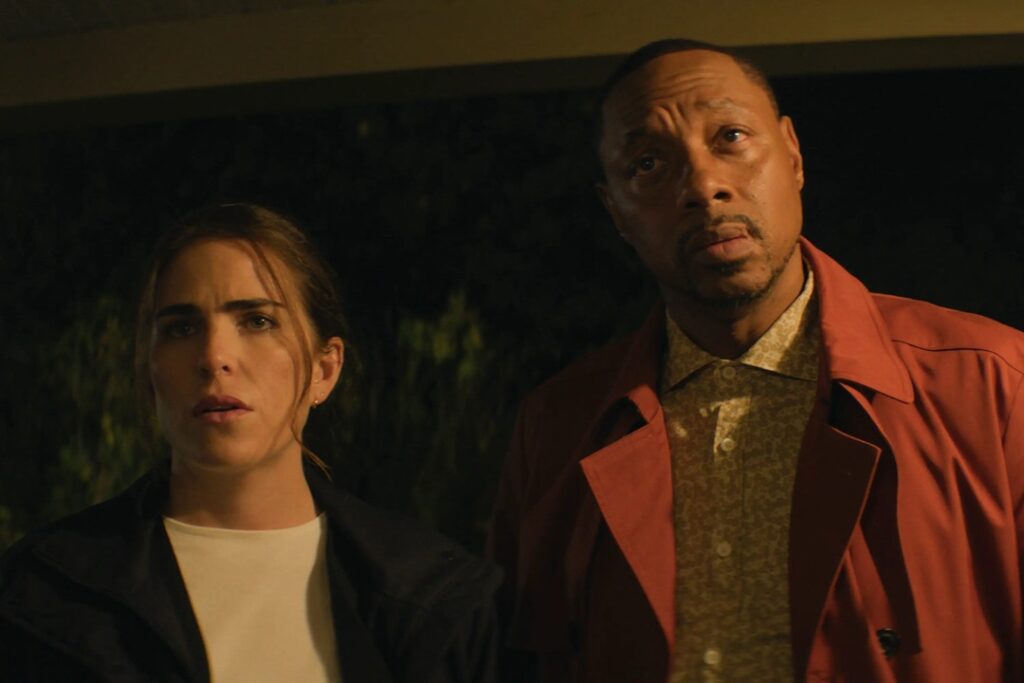
The emotional gravity remains with Oliver and Ciara.
| Narrative Focus | Traditional Noir | 56 Days |
|---|---|---|
| Central Mystery | Crime and perpetrator | Relationship and identity |
| Investigator Role | Primary driver | Structural support |
| Tension Source | External danger | Internal instability |
| Resolution Goal | Solve the case | Understand the collapse |
Even as detectives piece together evidence, the audience is drawn elsewhere—toward subtle exchanges, lingering silences, and moments where something feels just slightly off.
The crime becomes inevitable long before it is explained.
Trauma Beneath The Surface
What truly defines 56 Days as psychological noir is its treatment of trauma—not as exposition, but as presence.
Both central characters operate with layers of hidden history. Their actions are not random. They are shaped by experiences that remain partially concealed, influencing behavior in ways that feel both deliberate and unpredictable.
The series explores themes of guilt, manipulation, and emotional damage, positioning trauma as a driving force behind every decision .
In this framework, trauma is not revealed—it leaks.
Through hesitation. Through contradiction. Through the inability to fully trust or be trusted.
The Collapse Of Certainty
Classic noir often allowed for some form of resolution, even if it came at a cost. The truth, once uncovered, provided clarity—however bleak.
56 Days resists that clarity.
The more the audience learns, the less certain everything becomes. Motivations blur. Identities shift. The line between victim and perpetrator dissolves.
This ambiguity is not a flaw—it is the point.
Psychological noir thrives on instability. It rejects clean answers in favor of emotional complexity.
Streaming Noir And The New Intimacy
The rise of streaming platforms has allowed for a different kind of noir to emerge—one that prioritizes duration, subtlety, and character immersion.
56 Days exists entirely within this space.
Its pacing allows tension to build slowly. Its structure invites repetition and reflection. Its focus on intimacy transforms the genre into something quieter—but far more invasive.
According to a recent analysis of modern streaming thrillers on Collider, the series maintains a “psychologically tense and immersive atmosphere,” driven by emotional nuance rather than traditional suspense .
This is the future of noir—not louder, but closer.
A Genre That Has Turned Inward
What 56 Days ultimately reveals is how far noir has traveled from its origins.
The city is still there, but it’s no longer the primary threat. The crime still exists, but it’s no longer the central mystery.
Everything has moved inward.
- Suspicion becomes emotional
- Conflict becomes relational
- Darkness becomes psychological
The result is a form of noir that feels less like a puzzle and more like a slow unraveling.
The Darkness Between People
In the end, 56 Days doesn’t redefine noir by abandoning its roots—it deepens them.
The shadows remain. The tension persists. The sense of inevitability is stronger than ever.
But the focus has shifted.
The most dangerous space is no longer the alley or the crime scene.
It’s the space between two people who don’t fully know each other—and may never have