Imagine Sonja Henie skating in a 1938 movie, her outfits changing as fast as money on Wall Street. The film showed her talent, but not the 14 outfit swaps per film forced by studios. This was a subtle way to push consumerism, hiding it in her sparkling costumes.
Today, we might laugh at the obvious product placement. But the truth is, we’re all caught up in it. From old ice shows to modern sports movies, the theme is the same. My Lucky Star is a prime example, where every scene was a chance to sell something.
Benwell and Stokoe’s ideas on commodified identities are even more striking. Athletes were treated like walking advertisements long before Nike became a household name.
So, why do we keep watching these movies? They reflect our own struggles, like choosing personal success over teamwork. The real win is understanding how these stories shaped today’s sports world. Next time you watch a classic sports movie, think: Are you cheering for the hero, or the products they’re promoting?
What is Commodification?
Imagine a 1938 Olympic skater in My Lucky Star, showing off their skills for fur coats and cars. It’s not just product placement. It’s identity alchemy, turning human complexity into marketable goods. Commodification in sports isn’t new, but old movies show how our “I am” statements are linked to “I cost” receipts.
Foucault’s “discursive subjectivity” meets its match here. His idea that power shapes identity through language gets a Hollywood twist. What if the script is written in merchandise tags? Replace “gender norms” with “brand partnerships” in Butler’s gender performativity. Athletes become walking billboards, performing capitalism’s greatest hits.
Let’s break this down like a halftime playbook:
| Theory | Sport Cinema Parallel | Real-World Impact |
|---|---|---|
| Foucault’s Power/Knowledge | Boxing noir films framing athletes as mob property | Modern endorsement deals dictating public personas |
| Butler’s Performativity | Figure skaters becoming literal ice mannequins | Athletes crafting brand-friendly social media identities |
| Benwell’s Commodified Self | 1950s baseball films selling patriotism via cleats | Fantasy leagues monetizing player statistics |
The real magic trick? We barely notice objectification in movies because it’s wrapped in sequins and slam dunks. Humphrey Bogart’s 1947 Dead Reckoning compared boxers to racehorses, predicting today’s athletes. They have brand architects attaching logos to their DNA.
Here’s the uncomfortable truth: cheering for underdog sports movie heroes rehearses systems that turn athletes into commodities. The locker room became a showroom, and we didn’t get a program guide. Want proof? Check your fantasy league roster—then ask whose dreams you’re really trading.
Background: Sport as Spectacle and Business
Before TikTok, Jackson Haines was the first influencer. He danced for 19th-century aristocrats in Vienna. He didn’t just invent figure skating; he turned sports into dinner theater for the elite.

In the 1930s, Hollywood used Olympic stars for profit. Sonja Henie, a 1936 gold medalist, became a movie star. Her films were more than movies; they were platforms for her ice shows and fashion lines.
Ancient Rome’s gamblers would love today’s fantasy sports. The idea is the same: We’ve always paid to watch bodies in motion. From gladiator bets to modern media empires, the game has always been about profit.
The 1975 film Rollerball predicted today’s sports dystopia. It showed a world where fans own parts of athletes. Now, we have NFT athlete trading cards and TikTok verticals. The film’s most shocking idea? Fans owning fractions of athletes’ performances. Crypto bros, meet your godfather.
Sports media has always been about building empires. The ice may melt, and jerseys change, but the money keeps coming.
The Athlete as Product: From Classic Noir to 80s Hits
If Humphrey Bogart ever traded his trench coat for sweatpants, he’d fit right into the grimy gyms of Body and Soul (1947). Here’s the recipe: take one working-class boxer (Robert Ryan), add a promoter straight out of a gangster flick, and simmer in post-war disillusionment. The result? A sports noir movie that treats athletes like marked-down meat at a butcher shop. Who needs a soul when you’ve got a six-pack?
Fast-forward to 1976. Rocky Balboa jogs past cheesesteak shops while his handlers argue about percentages. The fedoras are gone, but the exploitation? It’s as fresh as ever. Stallone’s underdog story swaps noir shadows for neon optimism, yet the masculinity in sports movies remains a bruised apple—shiny on the outside, rotting underneath. Compare Ryan’s brooding rage to Rocky’s “Yo Adrian” charm: same corporate puppeteers, different decade.
But let’s talk real talk. North Dallas Forty (1979) didn’t just predict CTE scandals—it body-slammed the NFL’s pill-popping culture years before concussions became dinner-table conversation. Nick Nolte’s wide receiver pops painkillers like Tic Tacs while coaches demand “more machine, less man.” Sound familiar? The film’s locker rooms reek of Ben-Gay and broken promises, making Any Given Sunday look like a Disney special.
| Film | Contract Terms | Masculinity Lens | Exploitation Tactic |
|---|---|---|---|
| Body and Soul (1947) | Henie’s studio-controlled % of fights | Broken brute | Debt bondage |
| Rocky (1976) | 10% to manager, 20% to promoter | Romanticized warrior | Patriotic spectacle |
| North Dallas Forty (1979) | No guaranteed salaries | Chemical-dependent cog | Medical neglect |
Notice a pattern? Whether it’s 1947 or 1979, the game stays the same—only the jerseys change. The real knockout punch? These films aren’t fiction. They’re documentaries wearing shoulder pads. Next time you watch Drago snarl “I must break you,” ask yourself: Who’s really holding the leash?
Black Bodies, Race, and Commodification
Imagine Radio Raheem’s boombox playing “Fight the Power” right next to Sal’s pizza. Spike Lee’s Do The Right Thing showed us Brooklyn’s tensions. It also highlighted how black male athletes are seen as both symbols and money makers.
Today, we wonder: When companies sell social justice like special sneakers, who’s in charge?
Spike Lee and the Art of Uncomfortable Questions
Mookie’s moment in Do The Right Thing is more than just a scene. It’s a lesson in cultural criticism. Lee makes us think: Can black athletes really control their work in a system that profits from racism?
In 2024, NBA players wear “Equality” slogans but quietly fight against tax changes. It’s like history is repeating itself.
Benwell’s theory on identity marketing is even more relevant today. Modern athletes face a tough choice: Speak out against racism or stay quiet. Their jersey sales help fund arenas where ICE holds hearings. Lee warned us about this, but we just added hashtags.
Fantasy Leagues: Digital Plantations or Harmless Fun?
Fantasy sports today are like slave auctions. Players are seen as stats, not people. The black male athlete is treated like a digital item, valued by every tweet and rumor.
- 2023 Fantasy Football Drafts saw 78% of first-round picks being black athletes
- NBA 2K’s MyTeam mode made $1.2B last year selling virtual player cards
- Only 3% of fantasy platform revenues go to player NIL deals
This isn’t just about playing games. It’s cultural criticism in a jersey. When we turn LeBron’s legacy into a digital collectible or Mahomes’ skills into data, we’re not playing sports. We’re playing a game of capitalism.
Media Analysis: Changing Portrayals
If Paul Newman’s pool cue was a scalpel, Adam Sandler’s gem obsession is a chainsaw. Both cut into sports’ dark side. From The Hustler to Uncut Gems, sports films about gambling show cultural fears more than any team talk. The real win? Seeing how Hollywood turned exploitation into empowerment.
The 1980s were a big change. The Color of Money made hustling seem cool, like wearing Ray-Bans at night. Ego in sports movies changed from a flaw to a valuable trait. Athletes became like digital art pieces, even before blockchain was known.
Here are some key changes:
- Rocky III (1982): Made money look like a cartoon villain (Mr. T’s gold chains)
- Jerry Maguire (1996): Saw athletes as companies with feelings
- Moneyball (2011): Praised using spreadsheets in sports
Brad Pitt’s Billy Beane in Moneyball didn’t kill romance in sports. He made statistical murder look appealing. The film shows how using data can be seen as a fight against the odds. It makes us think: When did “show me the money” turn into “show me the metrics”?
Uncut Gems shows the raw truth. Sandler’s Howard Ratner is all about quick wins, not pride. The film focuses on Kevin Garnett’s real ring, mixing reality and fantasy. Ego in sports movies now shows the anxiety of fame, proving even self-destruction can be profitable.
Lessons for Today: Athlete Autonomy & Activism
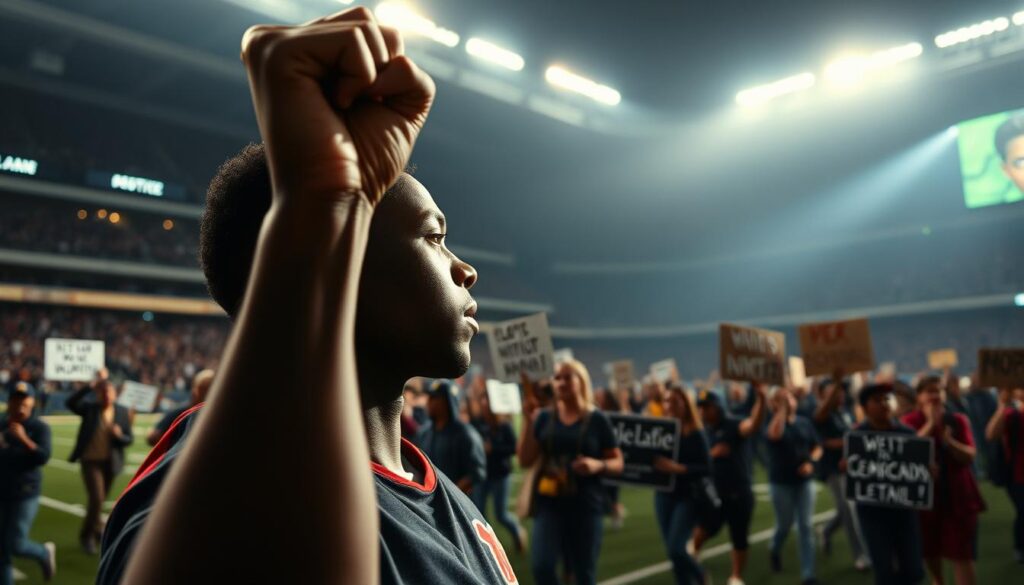
When did “shut up and dribble” become the new “smile and skate”? Today, athletes are taking control, mixing old-school negotiations with new activism. They’re not just selling jerseys; they’re sharing their views. But can they challenge the system and keep their freedom?
LeBron James is building media empires while pushing for social justice. Megan Rapinoe is using her World Cup fame to fight for equal pay. They’re not waiting for permission; they’re changing the game like tech startups.
A 2023 ESPN poll shows 63% of fans think athletes should speak out. Yet, 41% say it ruins the game’s fun. This mirrors old movies that showed tough choices, but now with social media.
Rapinoe turned Nike’s campaign into a $100M lawsuit against U.S. Soccer. She’s using capitalism to fight for change. But when ESPN shows her protest, is it activism or just entertainment?
The new playbook has three rules:
- Build personal brands stronger than team affiliations
- Negotiate morality clauses into endorsement deals
- Treat social media as both megaphone and merchandise store
Yet, every viral moment can become just another product. Maybe the modern American dream in sports films is not just winning, but telling your own story. The debate on “sellout” vs. “activist” needs a closer look.
Conclusion: Do the Old Movies Do the Old Movies Ring True?
When Jake LaMotta punched his reflection in Raging Bull, Robert De Niro wasn’t just acting. He was showing America’s love for winning at all costs. Today, sports movies offer a commentary that’s more relevant than ever. Athletes now sell workout plans and jerseys, making us question if we’re seeing progress or just a repeat.
Spike Lee’s Radio Raheem played Public Enemy in Do The Right Thing. Now, NBA stars tweet about social justice during games. The message hasn’t changed, just the way we share it. Sonja Henie’s film deals in the 1930s are like LeBron’s today, showing how sports are sold to us.
Kristina’s roller derby in “That Championship Season” feels like today’s UFC fighters. They promote energy drinks despite injuries. These stories make us wonder who’s in control – the athlete or the system that uses them?
Old movies didn’t predict our problems. They helped create them. Think about Tom Brady’s FTX ads next time you see them. Remember, Rocky’s training was just a way to sell determination. Are we buying into these stories anymore?