When European soccer officials literally kicked out their own referees last month, it was a big deal. It made me think of James Earl Jones saying: “People will come, Ray…”. It’s like our favorite stories are tainted by real-life scandals.
John Sayles’ Eight Men Out showed this contrast years ago. His 1988 film tells the Black Sox scandal story like a detective. It shows how baseball was rigged, making us say “Say it ain’t so, Joe” in a new light.
Why do we love watching these stories of cheating? Maybe because they show the dark side of sports. The 1980s films like Blue Chips and The Natural exposed the truth. They showed how money changes everything in sports.
Next time you cheer for a movie hero, think twice. Are you cheering for justice, or just a good story?
Introduction: From Real Headlines to the Silver Screen
Why do we keep watching fixing scandals on the big screen? Maybe it’s because Hollywood makes it more exciting. The move from real news to movies is a deep dive into our love for fallen heroes.
The 1919 Black Sox scandal is a prime example. Eight players were banned for life for $100k in bribes. Eight Men Out turns this into a tragic story, making Buck Weaver a Shakespearean character. It shows how real-life stories get a director’s cut with drama and moral questions.
Europol’s 2013 report on suspicious matches is shocking. Yet, movies like Vision Quest take a different path. Instead of typical villains, it shows Matthew Modine’s wrestler respecting his opponents. This is a fresh take on sports corruption movies.
An NPR interview with Transparency International’s Sylvia Schenk highlights the real battle. It’s about AI tracking $1.4 trillion in sports bets. Creed shows Carl Weathers’ character as both a mentor and a manipulator. This is a clever nod to how we like our corruption.
Tim Donaghy’s NBA whistleblowing is now a true-crime story. But who wants spreadsheets when you can have Robert De Niro talking about point spreads? It’s our way of enjoying the drama.
After the movie ends, we wonder: Are these films warnings or just entertainment? The answer is in the popcorn stains.
Anatomy of a Fix: Classic Plots
Hollywood has a playbook for sports corruption dramas. Two films, Eight Men Out and Blue Chips, show how corruption works. They expose capitalism’s grip on athletes and predict today’s college sports issues. Let’s explore these films’ lessons on corruption.
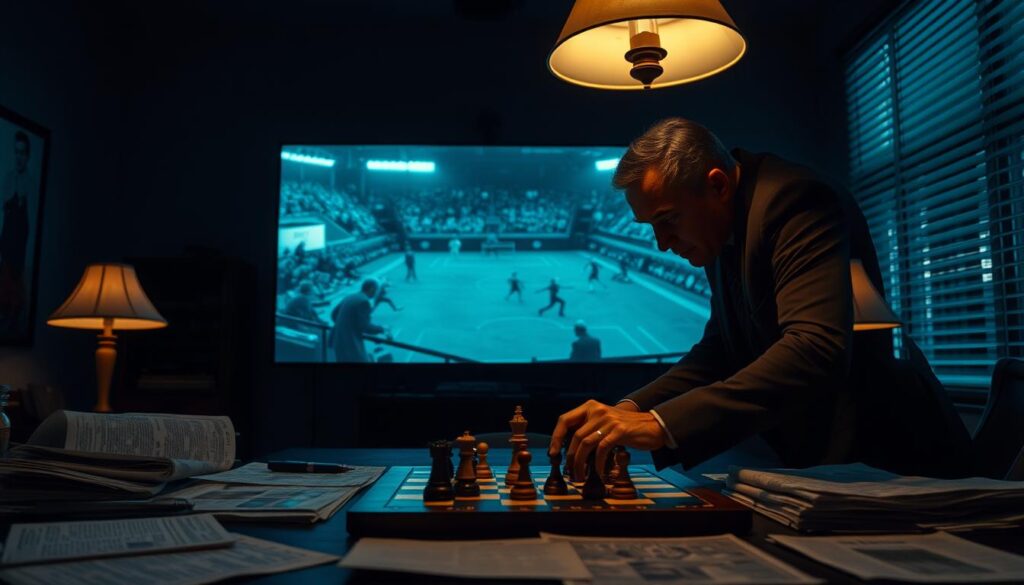
Eight Men Out and Baseball’s Scandal
John Sayles’ 1988 film Eight Men Out is more than a story about the 1919 Black Sox scandal. It’s a look at labor disputes in the Depression era. The film shows players as victims of greed, forced to cheat by a system that profits from their talent.
It’s interesting to note that White Sox owner Charles Comiskey made more from 1919 ticket sales than his players. The film’s genius is making us root for the cheaters. It’s a commentary on America’s love for underdogs.
Blue Chips: Money and Power in College Basketball
In 1994, Blue Chips showed the dark side of college basketball. Coach Bell, played by Nick Nolte, is trapped in a world of corruption. The film predicted today’s NIL issues, showing boosters giving recruits cars and cash.
Today, we see the NCAA’s policies as villains. When recruits ask for endorsement deals, we call it smart business. Blue Chips’ vision of a corrupt world has become our reality, with cryptocurrency and TikTok deals.
| Film | Scandal Type | Core Conflict | Modern Parallel |
|---|---|---|---|
| Eight Men Out | Game Fixing | Labor vs Ownership | MLB Service Time Manipulation |
| Blue Chips | Recruitment Corruption | Amateurism vs Capitalism | NIL Deals in NCAA |
These films are a double feature of American sports’ original sins. One film romanticizes the past while exposing its flaws. The other looks at our compromised future. Together, they show the real thrill in sports cinema is watching the system fail.
The Notorious Fixers: How Characters Are Portrayed
Sports movies don’t just fix games – they change how we see power. The most interesting manipulators aren’t mobsters but coaches and players. They struggle with masculinity in sports movies like it’s a greased pig at a county fair. Let’s look at three iconic schemers who change what it means to “play dirty.”
Elmo Shute from Vision Quest is like a human participation trophy. He tries to shape wrestler Louden Swain, showing how ego in sports movies can look like mentorship. On the other hand, Bad News Bears’ Buttermaker turns apathy into an art form. He’s not a villain but a burnout with a whistle.
Films can surprise us by flipping the script. Blue Chips’ Pete Bell could have been a toxic mentor cliché. But Nick Nolte plays him like a Shakespearean linebacker, debating ethics with boosters. It’s masculinity in sports movies as a mix of gridiron and Greek tragedy.
Modern takes get even juicier. NPR’s exposé on underpaid soccer refs shows why fixers feel like underdogs. When they’re underpaid, temptation comes fast. We wonder if we should condemn or secretly cheer them.
| Archetype | Example | Ego Display | Redemption Arc |
|---|---|---|---|
| Toxic Mentor | Blue Chips’ Pete Bell | Corporate sponsor negotiations | Resignation speech |
| Comic Relief | Happy Gilmore’s Shooter McGavin | “Gold jacket” monologues | None (glorious defeat) |
| Burnt-Out Guide | Bad News Bears’ Buttermaker | Beer-can leadership | Last-game speech |
Christopher McDonald’s Shooter McGavin deserves his own Hall of Fame wing. While Cusack’s Buck Weaver in Eight Men Out plays tragedy, Shooter leans into ego in sports movies as camp. He’s a walking reminder that the best fixers often fix their hair mid-putt.
Modern Takes: Documentaries and Social Media Scandals
Today, sports movies aren’t just about crooked refs and mob ties. Now, scandals pop up on TikTok and in true-crime documentaries. Netflix’s Bad Sport shows how sports scandals are like horror movies, where everyone’s guilty.
I, Tonya changed how we see sports movies. It made us question if we created Tonya or she us. This is different from 1985’s Vision Quest, where women had more power.
- Then: Journalists as heroes exposing fixed matches
- Now: Reddit threads solving doping mysteries before press conferences end
- Next: AI-generated deepfakes of LeBron shaving points… for crypto?
Zendaya’s Challengers is a tennis drama with a love triangle. It’s like Fifty Shades of Clay Court, with excitement that’s almost too much. And have you noticed how documentaries now feel like prequels to movies like Uncut Gems? The truth and fiction lines are blurred.
Modern sports noir movies show how we’re all involved in scandals. When a college QB’s Venmo history is a key plot point, it’s not just a movie. It’s a reflection of our own sports fantasies.
The Ethics Debate: Fans, Athletes, and Betrayal
In The Fighter, Micky Ward’s family bets on him to fund his career. This raises a question: Are sports fans part of the corruption they claim to hate? The film shows a messy family, with Wahlberg’s idealism against Bale’s self-interest. Fans want athletes to be pure, but ignore the system that turns dreams into bets.
Think about this:
- We cheer for Rudy Ruettiger’s win but ignore the exploitation he faces
- Documentaries show athletes as heroes or villains, never as workers
- Social media turns debates into hashtag fights (#JusticeFor… #Cancel…)
This isn’t just about sports movies. It’s about the American Dream as a rigged game. The RWKD concept says we prefer myths over reality. We forgive steroid scandals for a good story. But in Vision Quest, when the wrestler collapses, we see his cracked lips, not the crowd cheering.
Modern fandom is like a toxic relationship. We want athletes to be role models but take their money. We get angry about scandals but watch documentaries about them. The truth is, our love for underdog stories helps crush them. Next time you watch a sports film, ask: Am I cheering for the athlete – or the story?
Conclusion: What Manipulation Stories Tell Us About Ourselves
Sports movies about cheating aren’t just about sports. They show our deep distrust of systems. Films like Rocky and The Iron Claw explore big themes. They show how we feel about our world.
These movies, like Blue Chips and Eight Men Out, tell us more about our culture than sports. They reveal our fears and doubts. They make us think about our own values.
Vulture’s review of Creed III hit the nail on the head. Today’s sports movies focus on loneliness, not teamwork. They compare old-school sports movies to today’s isolated stories. This change shows how we’ve changed.
NPR noted how important communication is. But in The Iron Claw, the Von Erich family’s silence is heartbreaking. It shows how hard it is to connect in today’s world.
Every movie with a gambling plot tells us a truth. The house always wins, it says. Netflix’s Untold: Crime & Penalties shows how cheating works in our world. It’s all about getting attention.
So, what do these movies leave us with? A crowd leaving the theater, checking their phones. The real story isn’t the cheating. It’s how we see ourselves in those characters. It’s a sad truth.