
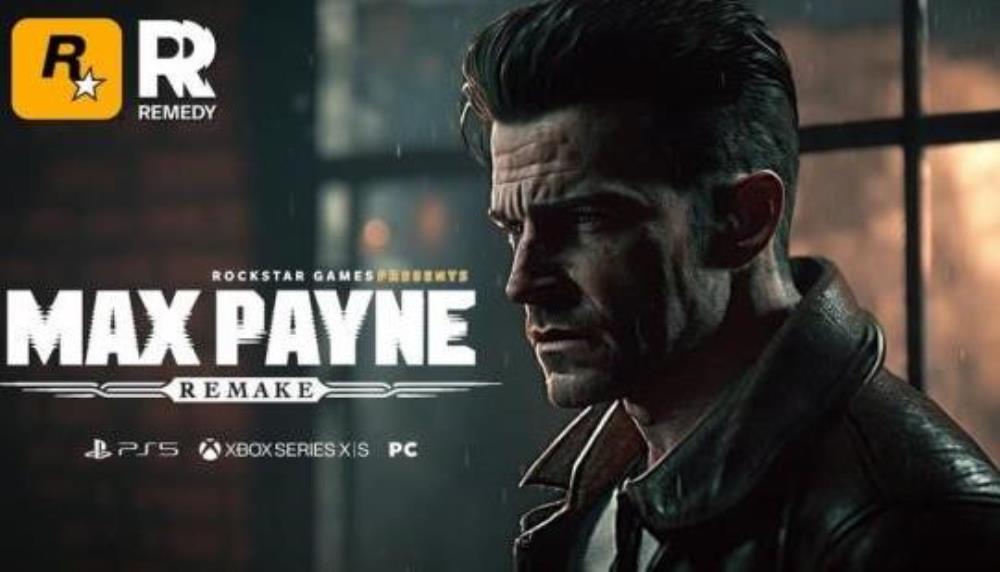
Before cinematic cutscenes became standard and before narrative-driven games dominated the industry, Max Payne (2001) introduced something radical: a voice that never stopped thinking.
Developed by Remedy Entertainment and written by Sam Lake, the original game fused hardboiled noir with interactive storytelling, using inner monologue not as flavor—but as structure. Every movement, every shootout, every pause in the action was filtered through Max’s fractured psyche.
Now, with the Max Payne 1 & 2 Remake officially announced by Remedy in partnership with Rockstar Games, the return of this narrative device signals something larger than nostalgia.
It signals the return of psychological noir as a playable experience.
Inner Monologue As Narrative Architecture
In classic noir cinema and literature, the inner monologue served a clear function: it guided the audience through ambiguity. Characters like Philip Marlowe or Walter Neff did not simply act—they interpreted, reflected, and distorted reality through language.
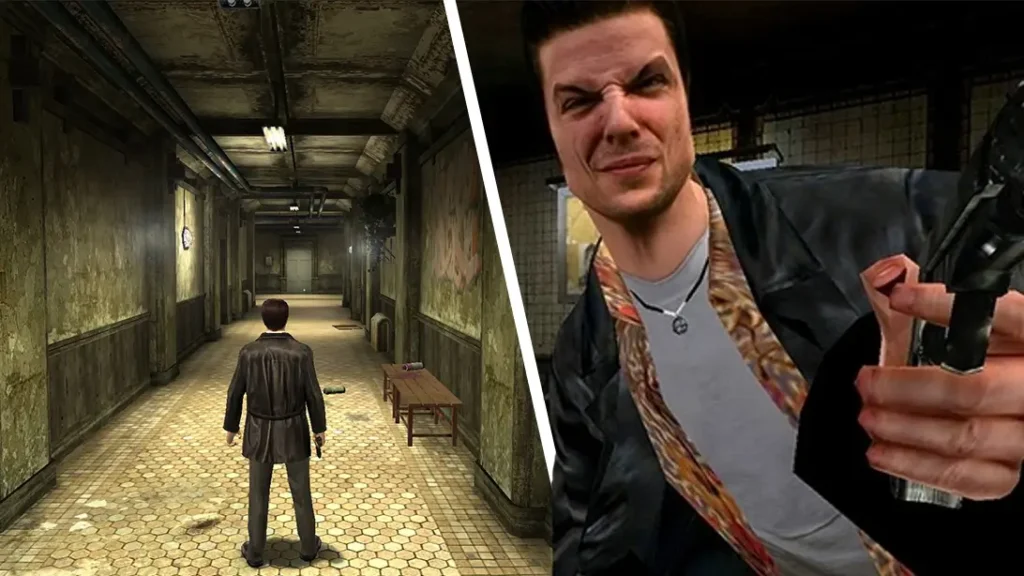
Max Payne translated that directly into gameplay.
The player does not just control Max.
They inhabit his thoughts.
| Narrative Element | Classic Noir Film | Max Payne (Original) | Remake Potential |
|---|---|---|---|
| Inner Monologue | Voiceover narration | Constant psychological framing | Fully immersive audio design |
| Perspective | Guided by protagonist | Player-controlled but mentally filtered | Hybrid of agency + subjectivity |
| Tone | Cynical, reflective | Fragmented, trauma-driven | Potentially more nuanced and layered |
The remake presents an opportunity to evolve this structure using modern tools—spatial audio, dynamic dialogue systems, and real-time narrative triggers.
But the core remains unchanged:
The story is not what happens. It is how Max processes it.
Trauma As Gameplay, Not Backstory
One of the defining aspects of Max Payne has always been its treatment of trauma.
Max’s story—rooted in the murder of his wife and child—was never presented as a distant motivation. It was immediate, recurring, intrusive. The infamous nightmare sequences, where the player navigates blood trails and distorted environments, turned psychological pain into playable space.
In the remake, this approach is expected to deepen.
Modern engines like Northlight (Remedy’s proprietary engine) allow for:
- Environmental distortion tied to character state
- Seamless transitions between reality and hallucination
- More fluid integration between narrative and mechanics
This evolution aligns with the broader trend explored in our psychological noir gaming analysis, where games increasingly prioritize internal experience over external action.
The result is a form of storytelling where trauma is not explained.
It is experienced.
Bullet Time And The Language Of Emotion
Max Payne is often remembered for introducing bullet time mechanics into mainstream gaming. But what made it effective was not just technical innovation—it was thematic alignment.
Bullet time slowed the world down, allowing players to react with precision.
But it also mirrored Max’s mental state:
- Heightened awareness
- Emotional detachment
- A sense of isolation within chaos
The remake has the potential to expand this mechanic beyond action.
Imagine:
- Bullet time triggered by emotional peaks rather than combat alone
- Environmental slowdown tied to narrative tension
- Visual distortion reflecting psychological overload
This would transform bullet time from a gameplay feature into a storytelling language.
Noir Aesthetics In A High-Fidelity Era
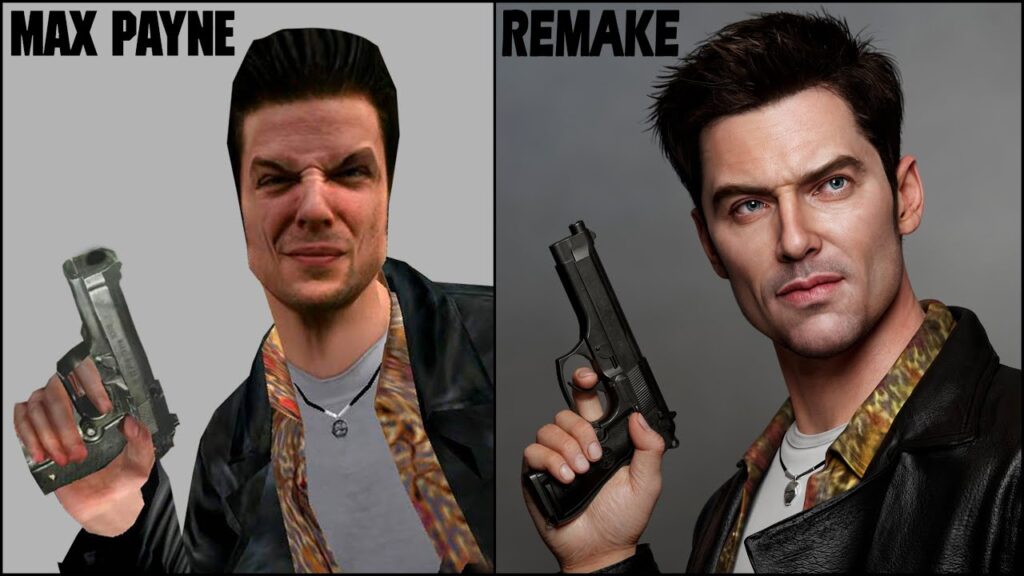
Visually, the original Max Payne relied on comic panel cutscenes, stark lighting, and limited animation to convey its tone. These constraints became strengths, reinforcing the fragmented nature of the narrative.
The remake removes those constraints.
With modern rendering capabilities, the noir aesthetic can evolve into something more immersive:
- Dynamic lighting systems creating real-time shadow interplay
- Facial animation capturing subtle emotional shifts
- Environments that feel lived-in, decayed, and psychologically charged
This shift mirrors what we’ve seen in modern noir adaptations across media, where realism enhances—not replaces—stylization.
For a broader context on how noir aesthetics are evolving across platforms, see this analysis of noir storytelling trends in modern media.
The Return Of The Isolated Protagonist
In an era dominated by ensemble casts and branching narratives, Max Payne represents something increasingly rare: a singular, isolated protagonist.
Max does not rely on companions. He does not share perspective. The world is filtered entirely through his experience.
This isolation is central to noir.
It creates:
- Emotional distance
- Narrative focus
- A sense of inevitability
The remake’s challenge is to preserve that isolation while updating interaction systems. Modern players expect more agency, but too much external influence risks diluting the core identity of the story.
Linear Storytelling In A Nonlinear Era
One of the most interesting aspects of the remake is its commitment to linear storytelling.
In a market dominated by open worlds and player-driven narratives, Max Payne remains structured, controlled, deliberate.
| Storytelling Model | Open-World Games | Max Payne Structure |
|---|---|---|
| Player Agency | High | Focused and directed |
| Narrative Flow | Branching | Linear progression |
| Emotional Impact | Variable | Intensely curated |
| Replay Value | System-driven | Story-driven |
This structure allows for something modern games often struggle to maintain: consistent emotional pacing.
Every moment is intentional. Every sequence builds toward a psychological endpoint.
The Influence On Modern Noir Games
The impact of Max Payne extends far beyond its original release.
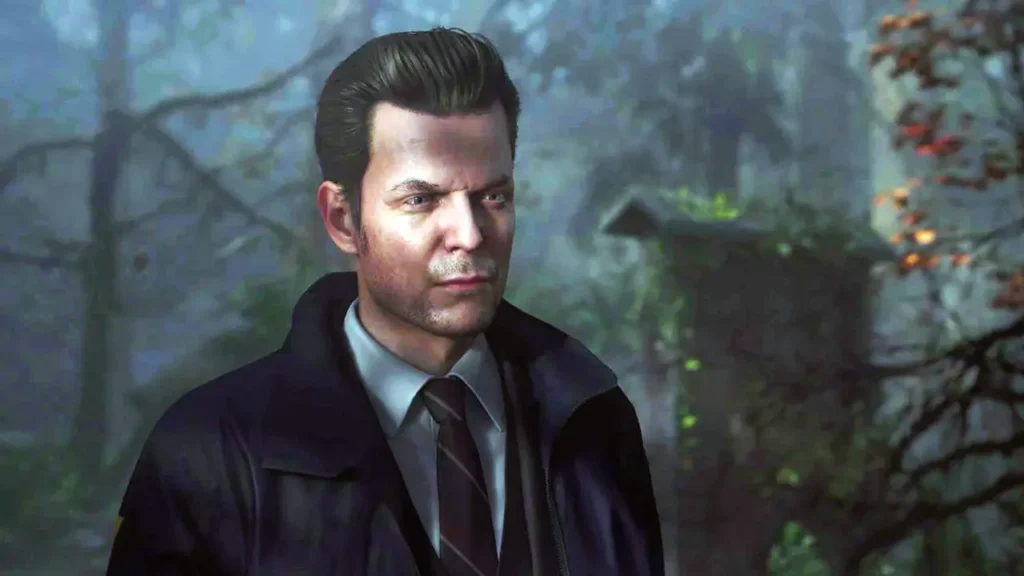
Its DNA can be found in:
- Alan Wake 2 and its narrative layering
- Disco Elysium and its internal dialogue systems
- Control and its psychological environmental design
These games expand on ideas first explored in Max Payne, but none replicate its singular focus on inner monologue as the primary narrative device.
This makes the remake not just a return—but a recalibration.
A Genre Returning To Its Voice
What the Max Payne remake ultimately represents is a return to something noir has always depended on:
Voice.
Not just dialogue. Not just narration.
But a continuous, internal presence that shapes how the story is experienced.
In modern gaming, where visual spectacle often dominates, this return to voice signals a shift:
- From external action to internal reflection
- From spectacle to interpretation
- From player freedom to emotional immersion
It reinforces the idea that noir is not defined by setting or plot.
It is defined by perspective.
The Thought That Never Ends
If the remake succeeds, it will not be because it modernizes mechanics or enhances visuals.
It will succeed because it preserves the one element that made Max Payne unique:
The feeling that the story never stops thinking.
That every action is accompanied by interpretation. That every moment is filtered through a mind that cannot disengage.
And in that constant internal dialogue, noir finds its most powerful form—not as something we watch, but as something we inhabit.