

Its identity was shaped by concrete—tight streets, shadowed corners, crowded anonymity. But The Undertow, Netflix’s upcoming crime series slated for 2026 release, signals a decisive shift away from that tradition.
The darkness is no longer confined to urban space.
It moves outward—toward coastlines, open horizons, and environments that feel expansive but function as traps. Set against a rugged shoreline, The Undertow follows characters drawn into a web of crime, secrets, and long-buried tensions where the landscape itself becomes part of the narrative.
The alley has been replaced by the ocean.
Coastal Noir And The Illusion Of Escape
At first glance, coastal settings appear to offer something noir has always denied its characters: escape.
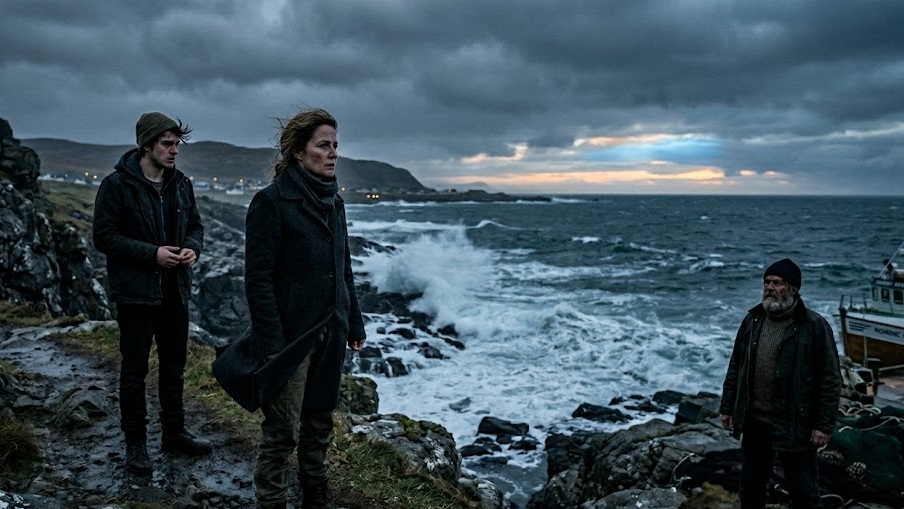
Open water suggests freedom. Distance. Possibility.
But coastal noir transforms that illusion into something more unsettling.
| Element | Classic Urban Noir | Coastal Noir (The Undertow) |
|---|---|---|
| Environment | Confined, dense city | Open, expansive coastline |
| Escape | Limited but imaginable | Visible but unreachable |
| Threat | Hidden within shadows | Embedded in landscape and distance |
| Emotional Tone | Claustrophobic tension | Isolated exposure |
The openness does not liberate—it isolates.
Characters are not hidden by crowds, but exposed by emptiness. The horizon becomes a boundary rather than a promise.
The Ocean As A Narrative Force
In The Undertow, water is not just a visual element—it is a structural one.
The ocean introduces instability:
- Tides shift
- Currents pull
- Depth obscures
This creates a natural metaphor for noir storytelling. Truth behaves like water—moving, reshaping, refusing to remain fixed.
The series uses this dynamic to reinforce its central tension:
- What is visible is not necessarily stable
- What is hidden is not necessarily gone
The ocean does not conceal truth. It distorts it.
Isolation Without Confinement
One of the most significant evolutions in coastal noir is how it redefines isolation.
Traditional noir isolates characters through confinement—small spaces, narrow environments, physical restriction. Coastal noir achieves the same effect through the opposite means.
Space becomes overwhelming.
Characters in The Undertow exist in environments where:
- There are fewer people
- Fewer places to disappear
- Fewer distractions from reality
The result is a form of psychological exposure. There is nowhere to hide—not from others, and not from oneself.
This extends the thematic direction explored in How to get to heaven from Belfast, where noir shifts toward relational proximity and emotional tension, placing the burden of conflict within personal connections rather than external systems.
Community As A Closed System
Despite its open geography, coastal noir often operates within tightly bound communities.
In The Undertow, the coastal town functions as a closed system:
- Histories are shared
- Relationships are long-standing
- Secrets are collectively maintained
This creates a paradox.
The world appears open, but the social structure is closed. Outsiders are noticeable. Insiders are trapped by familiarity.
The investigation becomes less about uncovering unknown elements and more about navigating known ones.
Crime That Surfaces Slowly
Unlike urban noir, where crime often erupts suddenly, coastal noir allows it to surface gradually.
The pacing reflects the environment:
- Slow, deliberate
- Shaped by accumulation rather than explosion
Tension builds through small shifts—conversations, glances, discoveries that feel minor until they begin to connect.
According to early coverage of Netflix’s 2026 crime lineup, The Undertow is positioned as a slow-burn thriller that prioritizes atmosphere and character depth over rapid plot mechanics, reflecting a broader trend in streaming storytelling.
The Aesthetic Of Natural Darkness
Visually, coastal noir abandons the artificial lighting of classic noir in favor of natural elements.
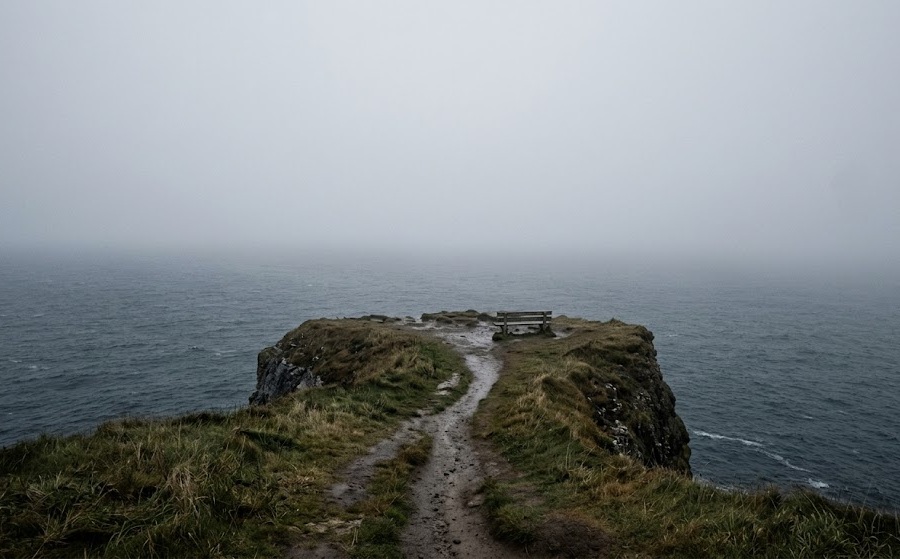
- Overcast skies
- Diminished sunlight
- Reflections on water
The darkness is not imposed—it emerges organically.
This creates a different kind of visual tension. Scenes are not heavily stylized, yet they carry an underlying unease. The environment feels real, but emotionally unstable.
Light does not clarify. It diffuses.
Characters Pulled By Invisible Forces
In The Undertow, characters are rarely driven by clear, singular motives.
Instead, they are influenced by forces that feel difficult to define:
- Past relationships
- Unspoken obligations
- Emotional currents they cannot fully control
This aligns with the metaphor at the center of the series:
People move like water—pulled, redirected, shaped by forces beneath the surface.
The investigation becomes less about identifying a single cause and more about understanding a network of influences.
Streaming And The Expansion Of Environmental Noir
The rise of streaming platforms has enabled the growth of subgenres like coastal noir.
Longer runtimes and episodic structures allow:
- Environment to play a central role
- Characters to develop gradually
- Tension to build through atmosphere
This shift reflects Netflix’s broader investment in international and location-driven storytelling, as highlighted in recent coverage of its 2026 slate on coastal noir series development.
The platform is not just expanding stories—it is expanding where those stories can exist.
When The Crime Dissolves Into The Landscape
One of the defining characteristics of The Undertow is how the crime itself becomes inseparable from the environment.
It is not an isolated event.
It is something that emerges from:
- The geography
- The community
- The history embedded in both
| Narrative Element | Traditional Noir | Coastal Noir |
|---|---|---|
| Crime | Central event | Environmental consequence |
| Investigation | Linear progression | Gradual unfolding |
| Setting | Background | Active influence |
| Resolution | Partial clarity | Lingering ambiguity |
The story does not separate the crime from its context.
It allows them to merge.
A Genre Moving Toward Natural Forces
What coastal noir represents is a shift in how noir conceptualizes power.
In classic noir:
- Power belonged to individuals
- Or institutions
In coastal noir:
- Power belongs to environment
- To time
- To forces that cannot be easily controlled
The characters are not just navigating a crime.
They are navigating a system that includes nature itself.
The Pull That Cannot Be Escaped
In the end, The Undertow redefines noir not by abandoning its core principles, but by relocating them.
The darkness remains. The ambiguity persists. The tension is as present as ever.
But it no longer resides in the city.
It exists in:
- The movement of water
- The silence of open space
- The relationships that cannot be undone
Because in coastal noir, the danger is not something you encounter suddenly.
It is something that pulls you in—slowly, inevitably, and without escape.