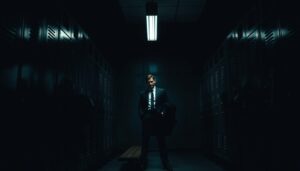
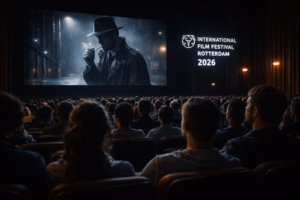
Few films have shaped the visual identity of science fiction as profoundly as Blade Runner. When Ridley Scott’s original film premiered in 1982, it fused dystopian futurism with the atmosphere of classic film noir: rain-soaked streets, morally conflicted detectives, and cities illuminated by flickering neon.
Decades later, that influence remains unmistakable. Now the upcoming series Blade Runner 2099 promises to bring that cinematic legacy into a new medium. Rather than a single feature film, the television format offers an opportunity to expand the cyber-noir universe through long-form storytelling, deeper character development, and immersive world-building.
The project signals something larger than a continuation of a beloved franchise. It represents the growing presence of science-fiction noir on television, where complex narratives and atmospheric visual design can unfold across multiple episodes.
The Legacy Of Blade Runner’s Noir Identity
The Blade Runner universe has always drawn heavily from noir traditions. The story centers on investigators navigating morally ambiguous worlds where technology blurs the boundary between humanity and machinery.

This narrative structure closely mirrors the detective archetypes of classic noir cinema. A lone protagonist moves through a corrupt urban landscape, uncovering truths that challenge their own identity.
Visually, the connection is equally strong. Rain, shadows, and neon reflections define the aesthetic language of the series.
| Noir Element | Classic Film Noir | Blade Runner |
|---|---|---|
| Urban isolation | Dark city streets | Mega-cities illuminated by neon |
| Moral ambiguity | Conflicted detectives | Blade Runners questioning their role |
| Shadow-heavy lighting | Chiaroscuro cinematography | Neon reflections and futuristic gloom |
| Femme fatale archetypes | Mysterious women | Synthetic identities and shifting loyalties |
By combining noir storytelling with futuristic technology, the franchise helped establish what many now call cyber-noir.
Why Television Changes The Scale Of Cyber-Noir
While both Blade Runner films delivered immersive worlds, their stories were confined to the limited runtime of cinema. Television offers a different narrative rhythm.
A serialized format allows creators to explore:
- Multiple investigative threads
- The political structures behind corporate control
- The social consequences of artificial intelligence
- The psychological toll on those tasked with policing synthetic life
Instead of one detective navigating a single mystery, a television series can portray an entire ecosystem of investigators, corporations, and artificial beings struggling for autonomy.
This broader scope aligns perfectly with noir storytelling, which often thrives on complex webs of power and deception.
The Expanding World Of Cyber-Noir
Cyber-noir blends the visual mood of classic noir with futuristic technological themes. Instead of smoky jazz clubs and mid-century offices, the genre places its characters inside sprawling digital cities filled with holographic advertisements, surveillance networks, and corporate skyscrapers.
Despite the futuristic setting, the emotional core remains consistent with classic noir: distrust, isolation, and existential doubt.
Modern cyber-noir narratives often explore questions that earlier noir films only hinted at:
- What defines human identity in a technologically augmented world?
- Who controls information in hyper-connected societies?
- Can artificial intelligence possess moral agency?
These themes make cyber-noir particularly well suited to contemporary audiences navigating rapid technological change.
Visual Atmosphere In The Blade Runner Universe
One of the defining characteristics of the Blade Runner franchise has always been its visual atmosphere. The city itself feels alive — towering architecture layered with digital billboards, perpetual rain, and dense urban crowds.
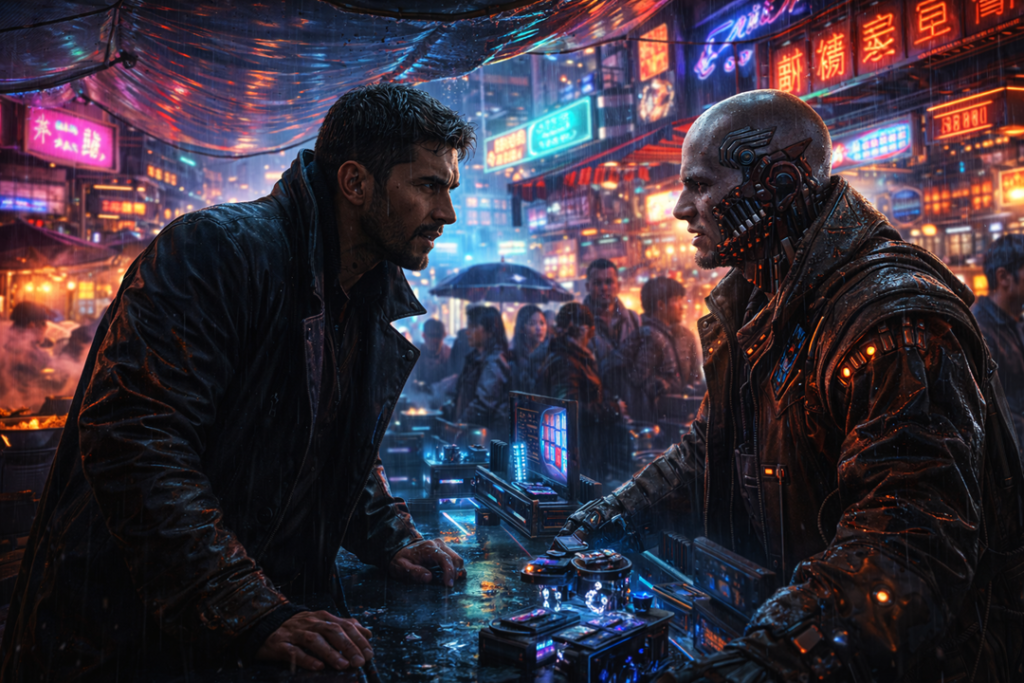
This visual language draws directly from noir cinematography but adapts it for futuristic environments.
| Visual Technique | Traditional Noir | Cyber-Noir Evolution |
|---|---|---|
| Low-key lighting | Shadows conceal characters | Neon reflections dominate cityscapes |
| Rain-covered streets | Atmospheric tension | Hyper-reflective surfaces amplify light |
| Urban density | Claustrophobic alleyways | Massive vertical megacities |
| Smoke and fog | Mystery and concealment | Industrial haze and digital smog |
In the Blade Runner universe, these techniques create a sense that the environment itself participates in the narrative.
The city does not simply host the story — it shapes it.
Why Cyber-Noir Resonates Today
Part of the enduring appeal of cyber-noir lies in its ability to reflect contemporary anxieties. Classic noir emerged during a period of postwar uncertainty, exploring themes of corruption and disillusionment.
Cyber-noir addresses modern equivalents.
Artificial intelligence, corporate power, and mass surveillance create new forms of uncertainty about identity and autonomy. Stories set in these environments often blur the line between hero and antagonist.
This ambiguity mirrors the moral complexity found in many noir detectives.
Our earlier exploration of cyber-noir video games and digital detective stories demonstrates how these themes are expanding across media. Interactive storytelling, streaming television, and cinema are all contributing to the genre’s continued evolution.
The Influence Of Blade Runner On Modern Visual Culture
The aesthetic influence of Blade Runner extends far beyond film and television. Its cyber-noir design has shaped video games, graphic novels, and digital art for decades.
Many contemporary futuristic cityscapes — filled with neon signage, rain reflections, and dense vertical architecture — draw directly from its visual blueprint.
Film scholars frequently cite Blade Runner as one of the most influential science-fiction films ever produced. The British Film Institute’s examination of the history and influence of Blade Runner highlights how the film redefined futuristic visual design and established a new cinematic vocabulary for dystopian storytelling.
Television adaptations like Blade Runner 2099 will likely continue expanding that vocabulary.
A New Era For Noir Storytelling
With the arrival of Blade Runner 2099, noir storytelling enters yet another stage of evolution. The genre that once flourished in black-and-white crime films now thrives in digital worlds illuminated by neon and holographic light.
The core themes, however, remain unchanged.
A detective searching for truth.
A city hiding its secrets.
A world where the line between justice and survival grows increasingly blurred.
As science fiction continues to explore the boundaries of human identity, cyber-noir may prove to be one of the most powerful storytelling frameworks for the future of television.
The shadows are still there.
They are simply glowing now.