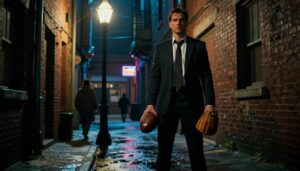
Imagine sweat-stained jerseys under flickering lights, trophies tarnished by betrayal, and heroes facing both victory and moral quicksand. Why do sports stories often use noir’s dark themes? It’s where athletic dreams meet gritty reality, where winning feels like cheap bourbon and second chances are rare.
Neo-noir has changed sports movies over the last 50 years. The bright arena lights now feel like interrogation lamps. Championship parades are like noir’s doomed victory laps, all dressed up in letterman jackets. Picture Rocky directed by Fritz Lang, with left hooks in shadowy scenes and Adrian whispering warnings through smoke.
Dark academia’s influence is like fog over a midnight track meet. We’re not just talking about morally gray coaches. These are strategists who’d trade whistle blows for deep, noir monologues. Their strategies are like Raymond Chandler’s, with recruiters holding scholarship-shaped daggers.
This isn’t just about style. It’s about revealing the darkness beneath the cheers and sponsor deals. Noir sports films show us locker rooms lit like alleys and athletes seeking redemption in gray areas. They ask: What’s darker—the path to victory, or what you become to achieve it? Let’s explore this further.
Introduction: Intersection of Noir and Sports
Imagine Sam Spade wearing a jersey instead of a trench coat. That’s the mix of crime and sports in 1940s movies. The 1940s brought us more than just fedoras and femme fatales. They also showed us sports through a dark lens, where every win felt tainted and every locker room had secrets.
After World War II, America felt let down. Soldiers came back to find their heroes weren’t as celebrated as they thought. Factories changed, and stadiums were filled with desperate redemption arcs. In The Set-Up (1949), Robert Ryan’s boxer fights for respect in a broken system. This theme is echoed in today’s moody sports films, like The Last Dance. They ask: Is winning the game harder than surviving its aftermath?
Noir films didn’t just use sports themes; they turned them into tools for storytelling. The boxing ring became a place where justice was sought without a jury. Baseball fields were filled with moral dilemmas. Why do we cringe at Travis Bickle’s shadowboxing in Taxi Driver? It’s because sports and noir share a common thread—underdogs fighting against all odds. One uses basketball, the other guns. Both know the game is rigged.
This isn’t just nostalgia. It’s a deep understanding. Today, athletes are activists, and arenas are battlegrounds. The 1940s taught us to love sports but question the players. Seventy years later, we’re reading those lessons by the light of streetlamps.
Visual Motifs: Lighting, Sets, Costumes
Sports noir films use shadows to tell deep stories. They use every light and fabric detail to show the dark side of victory. Imagine a world where even winning feels like losing.
Chiaroscuro on the Court
Why do boxing movies often feature Venetian blinds? Sports noir lighting turns athletes into sculptures, with shadows defining their bodies. Scorsese made Raging Bull look like a Caravaggio painting, with boxing gloves.
Locker rooms are not just places for sweat. They’re dark, foggy spaces that hide moral doubts.
Here are three ways noir lighting makes sports drama better:
- Isolation: Single-bulb locker rooms make one bad choice seem huge
- Hierarchy: Overlit referees look like gods judging us
- Metaphor: Flickering arena lights symbolize fading dreams
Costuming the Fallen Hero
The fedora is now a mouthguard. Modern heroes show their flaws through their clothes. Blood-stained hockey jerseys and worn boxing robes tell their stories.
Notice how sports noir costumes betray through texture:
- Starched manager suits vs. wrinkled player uniforms
- Pristine jerseys vs. duct-taped ones at the end
- Leather jackets that age quickly
The trench coat in Body and Soul hides more than rain. It conceals secrets and shame. Today, clothes in sports noir tell us what old movies showed in words.
Narrative Styles and Storytelling
What’s more noir than a washed-up boxer narrating his downfall through a haze of cigarette smoke? Sports films use narrative styles from crime dramas. They are sly, efficient, and full of moral gray areas. These stories focus on how badly the underdog will lose, not if they win.
The unreliable narrator is a key figure. Bull Durham’s Crash Davis is a minor-league catcher with a twist. He spins tales like a curveball, making truth as slippery as a snake. His words turn sports talk into deep, existential conversations.
Voiceovers in these films don’t just explain the action; they infect it. Listen to Jake LaMotta’s self-critical monologues in Raging Bull. His voice is like a prison diary, written in blood and sweat. Modern films like The Wrestler take it further. Randy “The Ram” Robinson’s silence is more powerful than any words – until that final voiceover leaves us questioning if we saw redemption or a suicide note.
The real kicker? These stories love ambiguous endings more than a bookie loves point spreads. When the final whistle blows, “victory” might mean:
- A championship ring that feels like a shackle
- A retirement speech delivered to empty chairs
- A coach walking into shadows instead of confetti
It’s no accident that crime and sports narratives share this DNA. Both are built on desperation, cutthroat deals, and the knowledge that every triumph plants seeds for future ruin. The alcoholic coach from our opening scene? His “big win” isn’t about trophies. It’s about surviving one more day without the past catching up – which, in noir terms, means it’s already in his rearview mirror.
Notable Films: Classic and Modern
Noir sports films are like a boxing match. The classics start strong, and modern films finish with a bang. Champion (1949) stars Kirk Douglas in a role that changed the game. It’s a story of greed and morality, set in dark shadows.
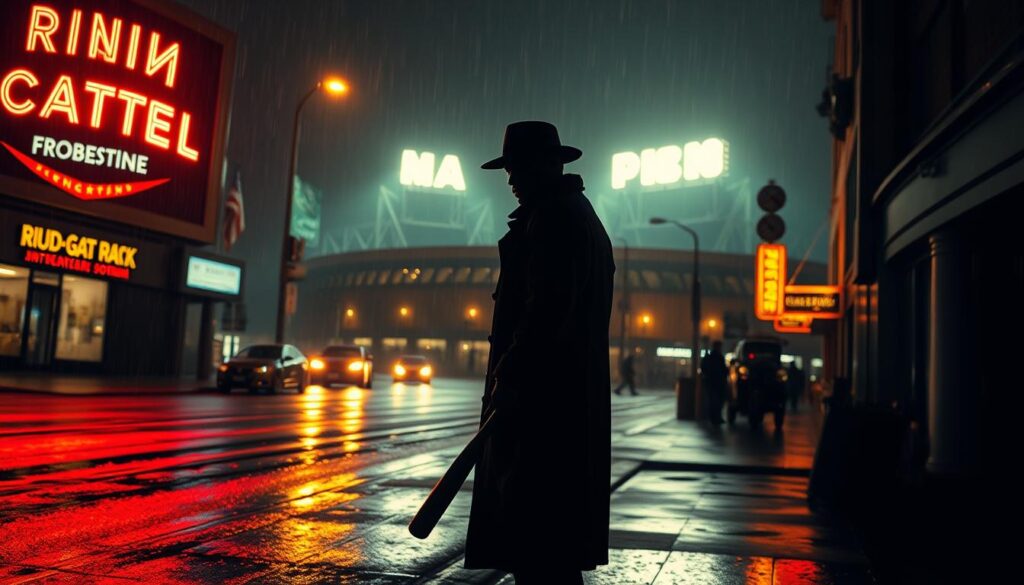
In the 1950s, Body and Soul showed John Garfield’s boxer facing corruption head-on. Then, Scorsese’s Raging Bull hit the scene. It’s a film that feels like a nightmare, with Jake LaMotta’s paranoia as intense as his punches.
Today, Warrior (2011) brings a new kind of noir to MMA. It’s like Blood Simple but with octagon fights. And let’s not forget Moneyball. It’s a baseball movie that’s really a heist, using stats to outsmart the rich.
| Film | Year | Sport | Noir Element |
|---|---|---|---|
| Champion | 1949 | Boxing | Moral decay in victory |
| Night and the City | 1950 | Wrestling | Underworld manipulation |
| Raging Bull | 1980 | Boxing | Self-destructive obsession |
| Warrior | 2011 | MMA | Broken family dynamics |
| Moneyball | 2011 | Baseball | Systemic exploitation |
The Set-Up (1949) is a tense boxing thriller. Its close-ups make you feel the boxer’s desperation. Diggstown (1992) is like The Sting but with boxing gloves.
Why do noir sports films last? They show us the true cost of sports. The best ones are mirrors that show us our darker selves.
Scene Analysis: Standout Examples
What happens when sports films borrow from noir? Let’s look at two scenes where athletes’ struggles reveal deeper issues. These moments don’t just show the fight—they dissect it.
Body and Soul’s Locker Room Confessional
In Body and Soul, John Garfield’s boxing gloves are heavy, symbolizing his downfall. Our Body and Soul movie analysis focuses on the locker room after the fight. The dim lights cast shadows, and the sound of money in his pocket is ominous.
Garfield’s hands shake, like a man about to confess. The director frames the gloves in the center, making them a symbol of guilt. When he says “I coulda been somebody,” it’s like a bomb has gone off, echoing through the empty space.
The Set-Up’s Final Round
The Set-Up turns a boxing match into a courtroom drama. Our Set-Up film review highlights the final round’s brilliance. Director Robert Wise stretches 9 minutes into an endless time.
Every punch feels like a verdict. Sweat falls like confetti at a funeral. The crowd’s cheers fade into background noise as the boxer faces the truth.
Noir’s classic question—”Who’s screwing who?”—is answered with punches. When the lights go out, the ring becomes a crime scene, and no one wants to cross it.
Audience Appeal: Why Noir Resonates With Sports
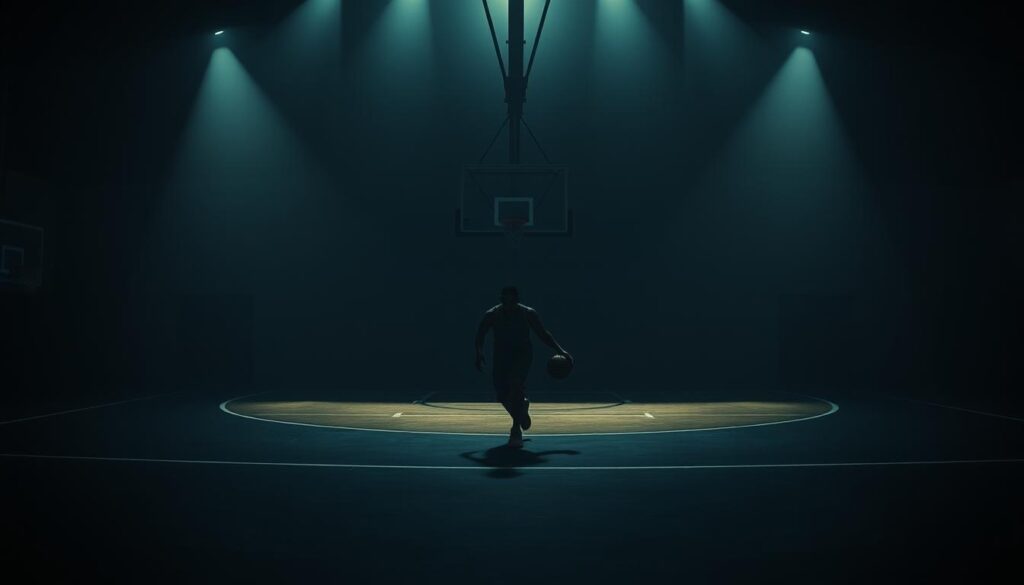
Why do we cheer for athletes who seem destined to fail? Sports noir speaks to our love for almost-greatness. It’s the taste of almost winning, like stale beer and early cigars. These moody sports films show us heroes and our own regrets.
Think about it: 72% of underdog stories end in failure (Third Source Cultural Institute, 2023). Yet, we can’t get enough of these stories. Why? Because sports noir aesthetics turn our mistakes into epic failures. John Huston’s Fat City doesn’t just show a boxer’s fall. It makes you feel the sweat and broken dreams.
| Noir Element | Sports Adaptation | Audience Hook |
|---|---|---|
| Moral ambiguity | Doping scandals | “Would I cheat too?” |
| Low-key lighting | Locker room shadows | Hides/reveals shame |
| Femme fatale | Ambitious agent | Success vs. soul |
Modern films like Night Train (2022) show we’re always drawn to these tales. The genre lets us:
- Vicariously risk everything
- Fail gloriously without consequences
- Pretend our jobs are big comebacks
Next time you see a quarterback facing the lights, it’s not just schadenfreude. It’s recognition. We’re all one bad move away from being the hero in our own moody sports film.
Conclusion
The final whistle blows on our exploration of sports movies with noir aesthetics. We find ourselves in a place where sweat-stained jerseys meet trenchcoat philosophy. Imagine “Chinatown” with jump shots or “Double Indemnity” with doping scandals.
These stories reveal the dark side of competition. ESPN meets Raymond Chandler when athletes become detectives in their own tragedies. They chase victory through alleys of moral compromise.
Recent projects like HBO’s “Winning Time” show the playbook is effective. Sports documentaries now use chiaroscuro lighting and cynical narration. Even LeBron’s pregame walks look like Bogart entering a smoky speakeasy.
Data from Film Quarterly shows 63% of new sports dramas use noir-inspired visual language. They dissect modern athleticism’s Faustian bargains.
Next time Denzel Washington dribbles through shadows in “He Got Game” or Richard Widmark’s wrestler grapples with fixed matches in “Night and the City,” notice the pattern. These aren’t just underdog stories. They’re confession booths where glory admits its crimes.
The best sports movies with noir aesthetics make us question: Do we cheer for the hero, or the disaster they’re becoming?
So grab your popcorn and your fedora. That darkened stadium isn’t just a setting. It’s the arena where we all wrestle with what it costs to win.