Let’s be honest. Most modern sports footage looks like it was shot through a freshly Windexed window into a hyper-real video game.
It’s clean. It’s crisp. And it’s about as emotionally resonant as a stock photo. We’re not here for that.
We’re here for the sweat-stained jerseys and the gritty texture of the arena. We crave the filmic bloom of stadium lights—the visceral, remembered feel of a classic sports documentary. You know, the ones that smelled vaguely of popcorn and hope.
This isn’t about slapping a filter on a LOG clip. This is forensic aesthetic reconstruction. We’re dissecting the DNA of that retro sports mood, from the choice of film stock to the very glass that bends light with personality.
Consider me your slightly sarcastic lab partner in this cinematic experiment. We’re digging into the tools, like the characteristic stretch of anamorphic lenses, that build memory, not just resolution.
First question: what’s your canvas? Your foundational format matters more than you think. It sets the stage for everything that follows.
Choosing Format: 16mm, 35mm, or Digital Emulation
The debate over 16mm, 35mm, or digital tricks isn’t about being true. It’s about what your audience wants to believe. Each choice tells a different story about sports.
16mm is like a worn-out baseball mitt. It captured the 1970s NFL like a shaky home camera. The grain is textural violence. Imagine those ABC Wide World of Sports segments where you could smell the arena.
16mm gives you immediacy through its flaws. The softness, with spherical lenses, makes muscles look like paintings. It’s for real sweat and authenticity, not polished stories.
35mm is for champions and big stories. It’s Rocky running up the Philadelphia Museum of Art steps. The grain is finer, making images feel monumental.
Choosing 35mm means you’re building a legend. The colors are richer, and the image has heft. It’s forgiving with lighting but keeps that film soul. It works well with spherical optics for a classic look.
Digital emulation isn’t cheating; it’s magic. Aim for the spirit of film, not perfect replication. It’s about adding grain and artifacts to digital footage.
Start with clean digital footage and add film-like touches. Understand how film stocks affect color. Digital emulation works best with modern anamorphic capture, creating a unique look.
Which format do you choose? For raw, urgent stories, go with 16mm. For epic tales, 35mm is your choice. For a mix of digital ease and analog feel, start with emulation.
Your format choice affects your post-production, lens choices, and schedule. Pick wisely. Your audience might not know why your documentary feels like a 1982 time capsule. But they’ll feel it, and that’s the magic.
Lens Personality: Vintage spherical vs modern anamorphics
Choosing a lens for retro sports cinematography is about finding the right vibe. Your lens is like the narrator, adding its own unique touch to your story.
Vintage spherical lenses are like the seasoned coaches of cinema. Think of old Super Baltars or Cooke Speed Panchros. They have a softer look and add a touch of flare to your shots. This makes skin and muscle look like they were painted.
Modern anamorphics are the star athletes of lenses. They’re built for high performance and have a wide, epic look. Their bokeh turns chaos into something beautiful.
For retro sports, you might want a mix of both. You want the wide look of anamorphics but the warmth of sphericals. This mix is where the magic happens.
One way to achieve this is by using diffusion filters with modern anamorphics. These filters soften the image, making it feel more like a memory.
Using diffusion helps balance between old and new. Too little, and your film looks too modern. Too much, and you lose the detail that makes it compelling.
Here’s a quick guide:
- Vintage Spherical: Adds organic flare and a softer look. Great for close, gritty moments.
- Modern Anamorphic: Offers high contrast and precise detail. Ideal for wide, heroic shots.
- The Hybrid Approach: Mixes modern anamorphic with diffusion. Gives you the best of both worlds.
The hybrid approach is sneaky. It uses today’s tech to mimic yesterday’s look. The diffusion layer adds character and a sense of history.
Your choice shows your perspective. Do you want to be in the action or watch from afar? Vintage spherical gets you close, while modern anamorphic gives you distance.
The right diffusion filter lets you find a middle ground. It’s like finding the perfect seat in the arena. You feel the energy but see the whole picture.
Diffusion & Filters: Promist, nets, streaks, and sweat glow
Exploring beyond the lens, we find the world of physical filters. These filters add layers of grime, sweat, and glory to your shots. It’s not about hiding flaws. It’s about amplifying atmosphere to make it a character in your frame.
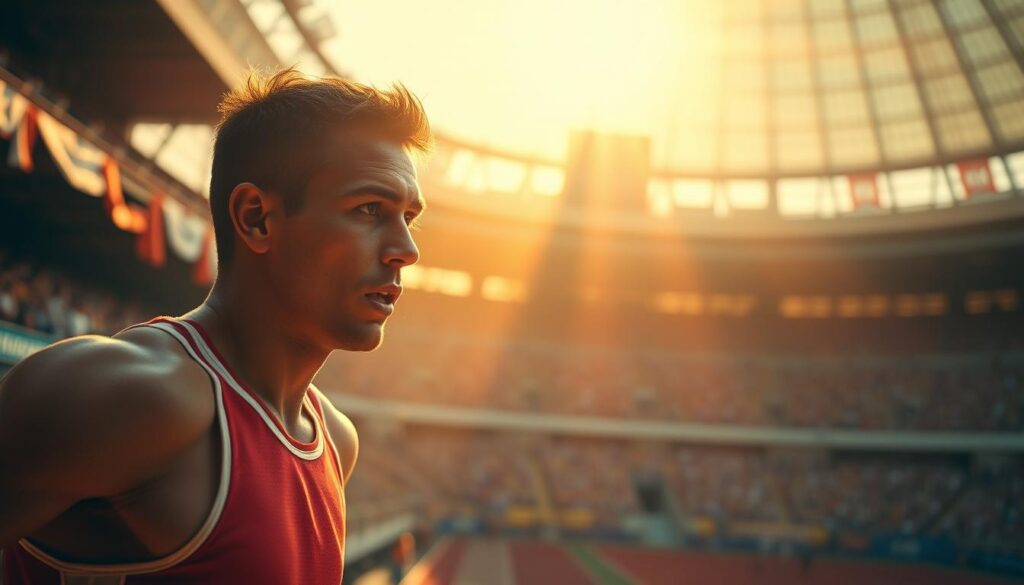
The Black Pro-Mist softens portraits and highlights with a gentle glow. Sweat on a boxer’s brow shines with a nostalgic glow. Stadium lights bloom, blending into shadows. It’s about capturing light, not just recording it.
Filters create optical events in-camera. Your film emulation LUT then reacts to these events. This creates a beautiful mix of physics and software.
Nylon stockings over the lens barrel add a unique blur. This softens details while keeping contrast strong. It makes the air feel thick and tension palpable.
For anamorphic shoots, streak filters add a touch of hot sauce. Use them sparingly for a subtle chromatic bleed. A faint flare can mimic old lenses, adding to the period feel.
Here’s a quick breakdown of this tactile toolkit:
- Black Pro-Mist (1/4 or 1/2): For iconic highlight bloom and “sweat glow.” It lowers contrast, so adjust lighting or post-processing.
- Nets (Black or White): Stretched over the lens for organic diffusion. Black nets keep contrast; white nets offer a dreamier look. Ideal for intimate moments.
- Streak Filters: For controlled anamorphic-style flares. Pair with anamorphic lenses for enhanced character, or use on spherical lenses to hint at the format.
- Classic Softs/Diffusion: For a uniform, less halation-heavy softening. Ideal for a gentle, overall patina without the glow of a Pro-Mist.
The magic happens when in-camera textures meet your digital film emulation process. Filters provide the raw data—the bloom, streaks, and softened details. The emulation adds grain, color, and halation, making it feel organic to the chosen “stock.” It’s the final step in baking the retro mood into the pixels.
Shutter Angle and Motion Blur for Punch and Pace
The 180-degree shutter rule is like a warm hug for movies. But sports need something more exciting and unpredictable. This rule gives us smooth motion, like what our eyes are used to. But sports are different, full of superhuman moments and urgency.
Think of shutter angle like a heartbeat. A fast, sharp pulse versus a slow, gentle beat. By using a 90 or 45-degree shutter, you cut down motion blur. Each frame becomes a sharp, frozen moment of action.
This method gives a vintage feel. Remember those gritty boxing films or frenetic 1970s football highlights? The motion was choppy and electric. A 45-degree shutter makes you feel the excitement.
Now, let’s look at the other side. A 270-degree shutter makes motion blur smooth and dreamy. It’s great for slow-motion scenes or celebrating after a win. This wider angle adds poetry to the action, making it feel more emotional.
Many filmmakers make a mistake. They pick their shutter and then choose a LUT later. But these choices should go together. The look you create in-camera affects the color you use later.
A high-shutter image needs a gritty LUT. Think of high-contrast colors with deep blacks and bright saturation. For a 270-degree blur, use a softer, more muted LUT. Your color palette should match the motion.
| Shutter Angle | Shutter Speed (24fps) | Motion Blur | Visual Feeling | Retro Sports Use | LUT Strategy |
|---|---|---|---|---|---|
| 45° | 1/192s | Very Low | Hyper-crisp, anxious, staccato | Punch impacts, frantic plays, instant replays | High-contrast, gritty, saturated looks |
| 90° | 1/96s | Low | Sharp, urgent, tense | Fast breaks, boxing jabs, sprint finishes | Moderate contrast, vibrant tones |
| 180° | 1/48s | “Natural” | Smooth, conventional, cinematic | Standard coverage, wider establishing shots | Versatile, film-emulation LUTs |
| 270° | 1/32s | High | Fluid, dreamy, lyrical | Slow-motion, montages, emotional moments | Soft, desaturated, halated LUTs |
Don’t just use a “vintage sports” LUT without thinking. The magic comes from combining time and color. A 90-degree shutter needs a bold LUT. A 270-degree sequence calls for something soft. It’s all about the timing.
When planning your shoot, think about the scene’s rhythm. Is it fast and sharp, or slow and smooth? Choose your shutter angle like a conductor picks the tempo. Then, create your LUT to match that rhythm. Your final product will feel truly retro.
Color‑to‑Mono Pipeline: Channel mixing, ortho skintone trick
The lazy filmmaker hits desaturate; the sage reaches for the channel mixer. Converting to black and white isn’t about removing color. It’s about translating it. Every color in your frame gets a say in the final look.
Desaturation is like dictatorship. Channel mixing is like democracy. It lets each color channel have its own voice.
Your color image has red, green, and blue channels. When you convert to monochrome, most software averages them. But what if you could give one channel more weight?
That’s channel mixing. It lets you control the tones. You can make red cheeks darker or blue shadows almost disappear.
Channel mixing is like god-like control over tones. It adds texture to the image. You’re not just making it black and white. You’re sculpting with light.
The secret sauce is the orthochromatic skintone trick. Real ortho film was blind to red light. Red lips looked dark, and sun-beaten skin had deep shadows.
You can mimic this digitally. Lower the red channel in your mix. Your athlete’s face will transform, looking rugged and weathered.
This effect is not subtle. It’s a historical fingerprint. It makes your footage look like archive material.
The ortho trick turns modern faces into period icons. It makes your runner look like they belong on a 1960s sports magazine cover.
Pairing this with anamorphic footage is magic. The lens flares and bokeh balls become stunning tonal gradients. The backgrounds become creamy and textured.
Anamorphic gives you visual poetry. Channel mixing gives you the rules to translate it. Together, they’re alchemy.
Start with a muted color grade. Then mix your channels. Apply the ortho skintone adjustment last. The transition should feel like revealing the truth.
This pipeline is emotional. It turns a highlight reel into a historical document. It makes sports feel eternal.
Your black and white should feel like it was discovered yesterday. It should look like it was found in a dusty archive. That’s the power of proper translation.
Texture in Post: Grain plates, halation, gate weave
Digital photos are too perfect. We need to add real texture back in. It’s like making a fake flaw look real. Digital photos are clean, but film was messy.
Grain is key. Not just any grain, but high-quality scanned grain plates that fit your film. 16mm grain is rough, 35mm is smooth. The wrong grain feels wrong.
Apply grain in a way that feels natural. It’s not just a filter. It’s the image’s unique touch.
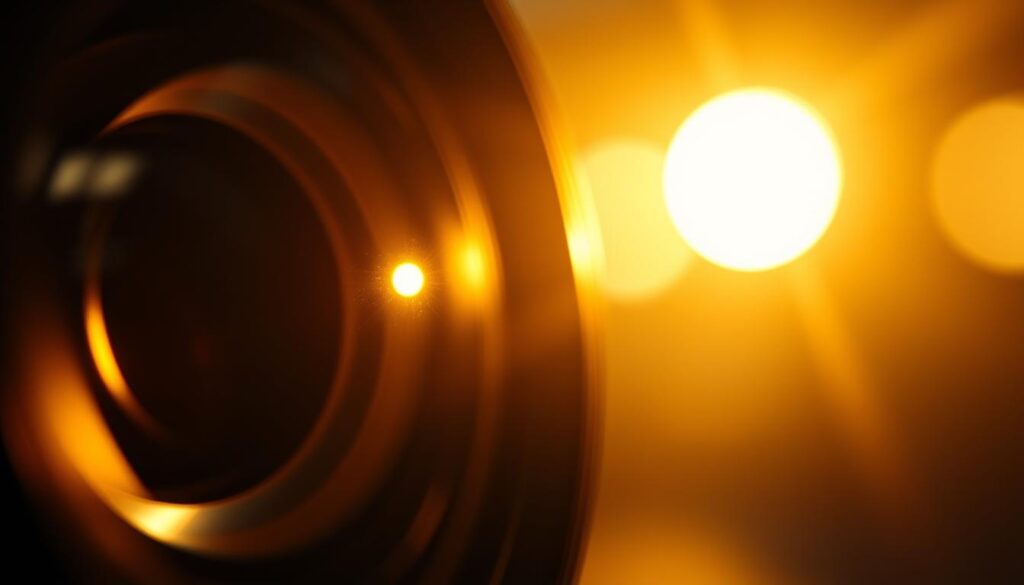
Halation adds a warm glow to bright spots. It’s like light bleeding through the film. Use it sparingly to avoid looking fake.
Gate weave makes the film move, even when it’s not supposed to. It adds life to static shots. It’s the film’s heartbeat.
Grain, halation, and gate weave are the heart of film texture. They add character and feel. When combined with spherical lenses, the magic happens.
A spherical lens brings out the best in these textures. The result feels real, like it’s been found, not made. It’s not just a video; it’s a piece of history.
We’re beating digital by making our photos feel real. We celebrate the imperfections. Grit means soul.
Framing Athletes: Close‑focus faces vs wide physicality
Think of your frame as a therapist’s couch for athletes: are we analyzing their psyche or observing their physical theater? This isn’t just composition—it’s narrative jurisdiction. The retro sports aesthetic understood this better than most, treating each framing decision as a psychological contract with the viewer.
The close-up, that intimate invasion. A boxer’s face between rounds, every bead of sweat a punctuation mark in his struggle. The tremor in an eye that hasn’t yet admitted defeat. This is subjective cinema at its rawest. We’re not watching sport; we’re auditing a soul.
Technically, this intimacy demands specific tools. Longer lenses compress space, isolating the athlete from the chaotic background. Shallow depth of field turns everything but those eyes into a painterly blur. And here’s where a touch of diffusion works its magic—softening skin just enough to romanticize the struggle without erasing the grit. It’s the visual equivalent of a sympathetic whisper.
Contrast this with the wide shot. The full physicality of a sprinter’s launch, a linebacker’s tackle, a diver’s arc against concrete sky. Here, the arena becomes a character. The crowd’s roar is almost visible in the negative space. This is objective cinema—we’re witnesses to spectacle, not confidants to pain.
For these landscape-of-sport moments, wider lenses emphasize environment and scale. You pull back on the diffusion, prioritizing the gritty detail of cracked asphalt, stained turf, or sweat-slicked gym floors. Every texture tells part of the story.
The retro approach favored deliberate framing over frenetic coverage. Consider these two distinct philosophies:
- The Portrait of Effort: Longer lenses (85mm, 135mm). Shallow depth. Slight diffusion. Static or subtle handheld. We’re inside their mind.
- The Landscape of Sport: Wider lenses (24mm, 35mm). Deeper focus. Minimal diffusion. Establishing or environmental. We’re witnessing their world.
Modern sports coverage often drowns in whip-pans and chaotic multicam. The vintage sensibility preferred composed frames that breathed. Or purposeful handheld that felt like a teammate’s perspective, not a drone’s surveillance. It understood that sometimes the most powerful movement is an athlete standing perfectly, gathering themselves.
This framing psychology extends to how you approach sports photography as well. The same principles apply—the intimate portrait versus the epic scene. The choice dictates everything from lens selection to your proximity to the action.
So before you shoot, ask: Am I framing a face or a force? The answer determines whether you need the delicate diffusion of a close-focus moment or the crystalline clarity of wide physicality. In retro sports aesthetics, this wasn’t a technical choice. It was the director deciding whose story we’re telling—the individual’s internal battle, or the sport’s external theater.
HDR and Monochrome: Managing highlight roll‑off
Digital cinema aims to capture every photon. But for a retro sports look, we must bury dynamic range. HDR, which shows shadow details and keeps highlights, is the opposite of what we want. We aim to remember things imperfectly, like memory does.
Film doesn’t clip to pure white like digital cameras do. It shoulders off gracefully, like a tired athlete. This roll-off is key to the filmic look. Bright skies don’t just stop; they bloom and compress, often turning a certain color.
Your grading suite is like a reconstruction site. You’re removing information to mimic film’s forgetfulness. A good film emulation LUT or power grade knows this. They make bright lights glow like orbs, not show the filament.
In monochrome, the roll-off is everything. Without color, the shape of your brightest tones defines the image’s soul. A harsh digital white looks wrong. But a soft, shouldered highlight feels right, like sweat on a boxer’s brow.
| Visual Scenario | Digital Default | Film Emulation Goal | Emotional Impact |
|---|---|---|---|
| Highlight Clipping | Hard clip to pure white | Soft shoulder with color tint | Harsh vs Luminous |
| Sky Rendering | Detailed cloud texture retained | Bloomed, compressed highlights | Clinical vs Dreamy |
| Practical Lights | Bulb filament remains distinct | Glowing orbs with halation | Technical vs Emotional |
| Skin Highlights | Sweat beads stay separate, detailed | Sweat creates luminous glow | Realistic vs Stylized |
Every digital “improvement” works against our retro goals. HDR gives too much info in shadows and highlights. Our job is to strategically lose information. Let shadows crush and highlights bloom.
The best film emulation tools get this. They’re not just applying a color curve. They rebuild the photochemical response, including how film reacts to overexposure.
Think of it this way: digital wants to remember everything. Film was okay with forgetting. Our film emulation work should embrace forgetting. Let bright skies bleach out and stadium lights become abstract shapes.
So, when working with HDR footage for a period sports piece, don’t fight to keep every detail. Fight to lose the right ones. Your highlight roll-off is the emotional signature of your image. Get it wrong, and you’ve got a modern documentary. Get it right, and you’ve got a memory.
Budget Recipes for Indie Filmmakers
Forget the Panavision truck. The retro sports look wasn’t born in a rental house. It came from using what you have—grainy stock, imperfect lenses, and any light you can find. Your budget is your guide.
Recipe one calls for a single character lens. Use the Helios 44-2 with its swirly bokeh on your digital camera. Its flaws are your mark. This lens tells more than perfect glass ever could.
Recipe two uses found lighting. Stadium fluorescents give off a sickly green glow. Locker room bare bulbs create harsh shadows. Don’t fight these lights. Gel them to make them period-accurate and free.
Recipe three is all about DIY. Stretch a nylon stocking over the lens for dreamy diffusion. A bit of petroleum jelly on a filter blurs edges like memory. These tricks are classics because they work.
Recipe four happens in post-production. Smart LUTs are your equalizer. A custom set of LUTs mimics Kodak film stocks. Add affordable grain plates and subtle halation. The right LUTs turn your digital capture into film history.
This method isn’t about faking a budget. It’s about real grit. It’s about making the most of what you have. Your limitation is your look.